

World Space Week 2026 Kicks off With 'Rocket Revolution' Theme Highlighting Reusable Rockets
The 4–10 October programme will feature exhibitions, model-rocketry activities and discussions about how lower launch costs could expand missions to Earth orbit and the Moon
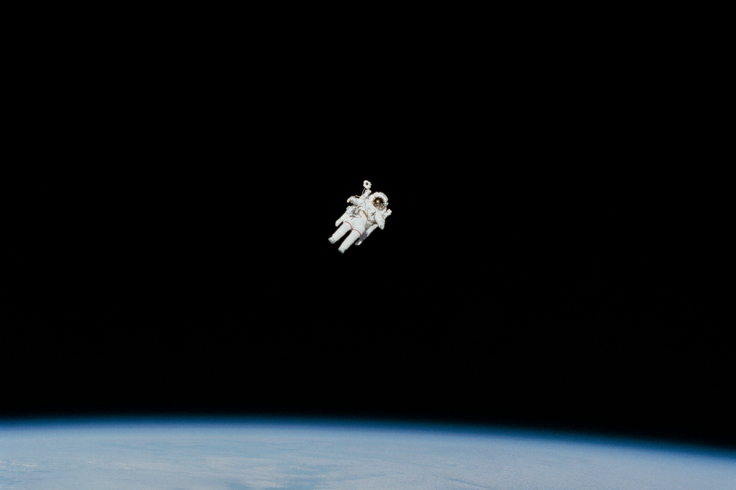
World Space Week 2026 has officially commenced its global observance, placing cheaper, more frequent launches and reusable rocket technology at the heart of its landmark 'Rocket Revolution' programme.
Running from October 4 through October 10 2026, across about 100 countries, this year's international event highlights how commercial operators and rapidly evolving launch systems are fundamentally transforming who can reach orbit.
Dennis Stone, president of the World Space Week Association, emphasised that the theme directly reflects unprecedented increases in space access alongside plunging launch economics.
Coinciding with significant milestones, ranging from SpaceX achieving a historic thirty-seventh flight for a single Falcon 9 booster to innovative European Space Agency museum collaborations featuring Pokémon characters, World Space Week 2026 underscores how falling costs and reusable engineering are unlocking new frontiers for science, satellite deployment, and future lunar exploration.
How Cheaper Launches Change What Reaches Orbit
Rocket stages built to fly again can reduce the need to manufacture a new vehicle for every mission. Space.com reported that more commercial launch providers and smaller vehicles are also giving organisations different ways to place spacecraft in orbit.
A study published in 2026 estimated that the average cost of sending one kilogram to low Earth orbit fell by about 96% between 1960 and 2025, The Economic Times reported. It put the figures at approximately £68,100 ($87,023) and £3,030 ($3,868), respectively. These are industry-wide estimates, rather than the price of a particular launch.
One example of reuse came on 25 August 2026, when a SpaceX Falcon 9 first-stage booster flew for the 37th time, according to Space.com. Its rocket carried 29 Starlink satellites on that mission. The booster returned for recovery, while the rocket's upper stage delivered the satellites to orbit.
More launches can put communications satellites, navigation systems, weather instruments and Earth observation spacecraft into service. Their data helps people stay connected, check locations and forecasts, and track changes affecting farmland, forests and areas hit by disasters.
Exhibitions, Model Rockets and a Space Shuttle
The ESA and The Pokémon Company International have created an exhibition that combines space science with Pokémon characters at sites across Europe.
Participating museums are also hosting Pokémon GO activities, including an Astronaut Pikachu encounter. The museum game activities are scheduled to continue until 30 April 2027.
BBC StoryWorks plans an online event to premiere the first film in Space Renaissance, a series about applications of space technology on Earth.
At Florida's Kennedy Space Center Visitor Complex, a World Space Week Expo is scheduled for 9 October beneath the Space Shuttle Atlantis exhibit, bringing visitors together with space agency and industry representatives.
Students and rocket clubs are also being encouraged to launch model rockets. In the United States, planned activities include Vulcan models supplied by United Launch Alliance and Estes.
Organisers also listed national programmes led by Saudi Arabia's Ministry of Education and the Pakistan Space and Upper Atmosphere Research Commission (SUPARCO), involving schools and the public.
The association said organisers logged 50,000 events across 102 countries in 2025. This year's programme includes museum exhibitions, classroom activities and public events alongside technical discussions about future missions.
The Moon and the Milestones Behind the Week
The World Space Week Association and Moon Village Association have announced a webinar on how changing launch technology could support multiple missions to the Moon.
Titled 'One Moon, Many Missions,' it will bring together participants from the National Aeronautics and Space Administration (NASA), Texas Instruments and the international lunar community to discuss technology and cooperation.
World Space Week 2026 begins on the anniversary of Sputnik 1's launch on 4 October 1957, when the first human-made satellite reached orbit.
The celebration concludes on October 10, marking the Outer Space Treaty's entry into force in 1967. Established by the United Nations General Assembly in 1999, the week continues to inspire future generations.
© Copyright IBTimes 2026. All rights reserved.