Why Did SpaceX Cut Starship's First Orbital Flight Short? Musk's 10-Hour Mission Ends After Just Three Hours
The 14th test flight marked a major milestone for the giant rocket, though the mission was cut short and ended with the upper stage breaking apart over the Pacific
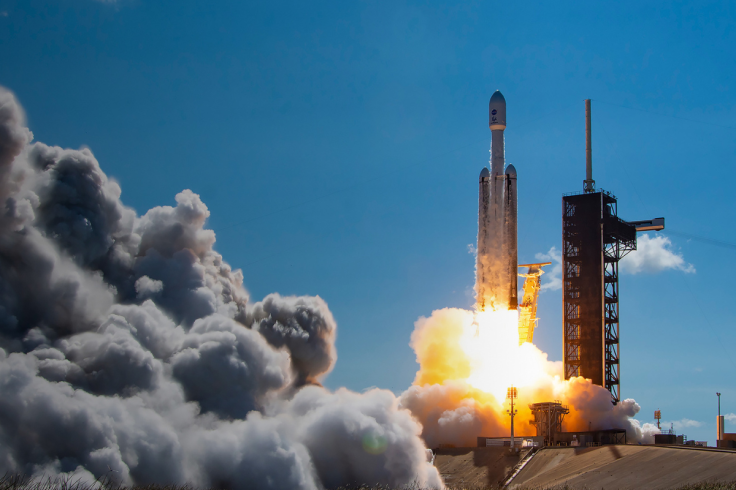
SpaceX's Starship completed its first orbital flight on Monday, reaching orbit, deploying a batch of next-generation Starlink satellites and then splashing down in the Pacific Ocean after about three hours, well short of the roughly 10-hour mission originally planned by SpaceX.
For context, this was Starship's 14th test flight and the first in which SpaceX attempted to send the giant vehicle into orbit rather than on a brief suborbital hop.
Previous flights had followed suborbital trajectories and returned to Earth roughly an hour after launch, while this time Starship was expected to circle Earth six times before a planned landing off the coast of Chile.
Minutes after lifting off from Starbase in Texas, one of Starship's six engines failed, prompting what SpaceX's livestream described as internal debate over whether to abandon the push for orbit altogether.
Engineers pressed ahead and the vehicle completed its orbital insertion burn roughly 26 minutes after launch. SpaceX confirmed that all 26 Starlink V3 satellites on board were deployed successfully, saying they would 'greatly expand the network's capacity and user speeds'.
Early Return Raises Questions Over Starship Flight Cut Short
About 90 minutes into the flight, SpaceX said Starship would 'take our first checkpoint and come back early', dropping the plan for a longer stay in orbit. The deorbit burn was brought forward to roughly two hours and 12 minutes into the mission, with splashdown targeted just after the three-hour mark.
SpaceX had not publicly explained the decision at the time of publication. The company had been approached for comment and had not given a technical reason for the shortened mission, the earlier deorbit or the initial engine failure.
Unlike July's 13th test flight, which ended in a comparatively soft splashdown, Monday's return finished in a large fireball after the upper stage splashed down in the Pacific. The booster had already made a controlled splashdown in the Gulf of Mexico shortly after launch.
The 'chopstick' catch of a returning Super Heavy booster, first achieved in October 2024, was not attempted this time, leaving both stages in the ocean rather than recovered intact.
Starship, Starlink and the Stakes Behind the Shortened Mission
Despite the shortened flight, SpaceX described the mission as 'wildly successful', highlighting that Starship had reached orbit for the first time and survived re-entry. NASA administrator Jared Isaacman, posting on X, called it a 'gorgeous launch' and praised the company for managing 'every step in a safe, responsible, and especially inspirational way'.
The flight is central to SpaceX's effort to expand Starlink, its satellite internet service and, as of the second quarter, its only profitable business segment. Starship is designed to carry substantially more satellites per launch than the Falcon 9, and the company already operates more than 11,000 satellites in orbit.
The 26 satellites launched on Monday carry more powerful solar arrays and communications systems than earlier versions. SpaceX has also said it aims to begin demonstrating space-based AI computing infrastructure by late 2027.
NASA is separately working with SpaceX to develop a version of Starship as a crewed lunar lander for its Artemis programme. Monday's flight showed the vehicle achieving a key milestone by reaching orbit, while SpaceX continues developing the vehicle against timelines previously outlined by Musk.
© Copyright IBTimes 2026. All rights reserved.
- Recommended For You