

'Beginning of a New Era': Germany's Isar Aerospace Launches First Commercial Rocket Into Orbit From Continental Europe
German start-up Isar Aerospace successfully launches first commercial rocket from continental Europe
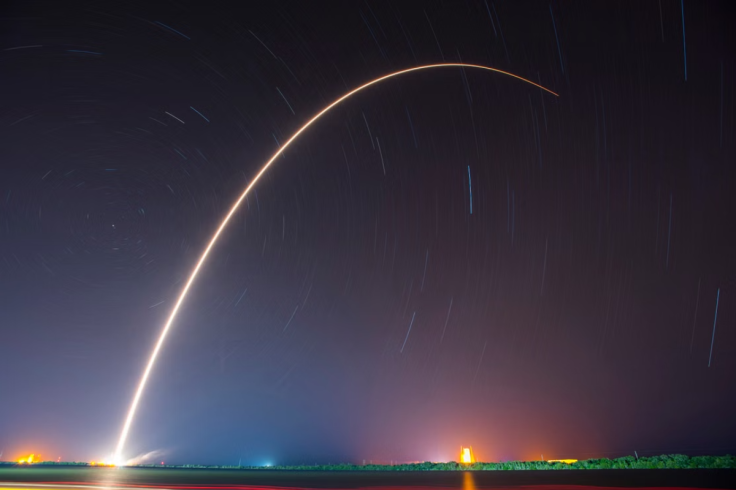
A German startup has pulled off what no private European company had achieved before. Isar Aerospace's uncrewed Spectrum rocket reached orbit on Saturday, becoming the first commercial rocket to do so from continental Europe.
The 28-metre, two-stage rocket lifted off from the Andøya Spaceport in Arctic Norway at 10.12pm CEST, carrying five CubeSats and a technology experiment, according to Isar Aerospace and the European Space Agency. It marks a breakthrough for a continent that has relied heavily on SpaceX and launch sites outside Europe.
We made history. On just our second flight, we became the first commercial space company from Europe to deliver satellites into orbit. Mission 'Onward and Upward' successfully lifted off and deployed payloads into orbit. A new chapter for European spaceflight. More:… pic.twitter.com/AWvqG2l8Mn
— Isar Aerospace (@isaraerospace) September 5, 2026
Second Attempt Succeeds After 2025 Test Flight
This was not Isar's first try. The company's maiden Spectrum flight in March 2025 lasted about 30 seconds before the launch vehicle was terminated and fell into the sea in a controlled manner from the same Norwegian site.
No one was injured in that incident, and Isar said the test generated valuable flight data and experience. Eighteen months on, the company said the mission, named 'Onward and Upward', successfully reached orbit and deployed its payloads.
Isar co-founder and chief executive Daniel Metzler said that access to space remains one of the biggest constraints for the industry. He also said the privately owned firm remains well funded and that a stock market listing 'is not on the table' for now.
Defence Contracts Dominate Order Book
Isar was founded in 2018 by Metzler and two former classmates, Josef Fleischmann and Markus Brandl, while all three were students at the Technical University of Munich. The company takes its name from the river that runs through the Bavarian capital.
Defence customers now account for roughly 60 per cent of Isar's order book, and Isar has said its launch capacity is booked through 2028. A new 40,000-square-metre facility near Munich is being brought online as the company scales production, with Isar targeting up to 40 launches a year in the longer term.
The company has raised hundreds of millions of euros from investors and employs more than 400 people.
In August, Isar signed a contract with the European Space Agency worth approximately €197.8 million under the European Launcher Challenge, a programme designed to expand competition among European launch providers and strengthen Europe's access to space.
Großer Glückwunsch an Isar Aerospace für den erfolgreichen Start der Trägerrakete Spectrum. Das erste Mal vom europäischen Kontinent aus in die Erdumlaufbahn. Das ist der Beginn einer neuen Ära.
— Bundeskanzler Friedrich Merz (@bundeskanzler) September 6, 2026
Why Isar's Orbit Success Changes Europe's Space Calculus
German Chancellor Friedrich Merz, who visited Isar's launch site in March, called Saturday's flight 'the beginning of a new era'. EU defence and space commissioner Andrius Kubilius echoed that sentiment on X, writing that 'Europe's independent access to space just got a major boost'.
The launch matters beyond one successful flight. Europe has spent years building independent capacity, yet its main rockets launch from South America and operators often use SpaceX.
A European rocket launched from European soil gives the continent another option, and with defence spending already driving Isar's order book, that independence matters beyond the commercial market.
The timing adds further weight, as European governments have grown increasingly wary of depending on US-owned infrastructure for access to space and communications, particularly as Starlink has become central to connectivity in conflict zones.
A European launch provider gives European institutions and militaries an additional choice they have not reliably had before. Isar's next challenge is proving Saturday's success can be repeated at scale.
The company says it already has five more rockets in production, and with its launch capacity booked through 2028, sustaining that cadence, rather than delivering a single successful flight, will determine whether Europe has made meaningful progress in closing the gap or simply taken a first step.
© Copyright IBTimes 2026. All rights reserved.