

Your Selfie Could Soon Sit in Your Medical Record as AI Learns to Predict Cancer Survival
Independent experts say the tool needs testing against doctors' judgement and across more diverse patient groups
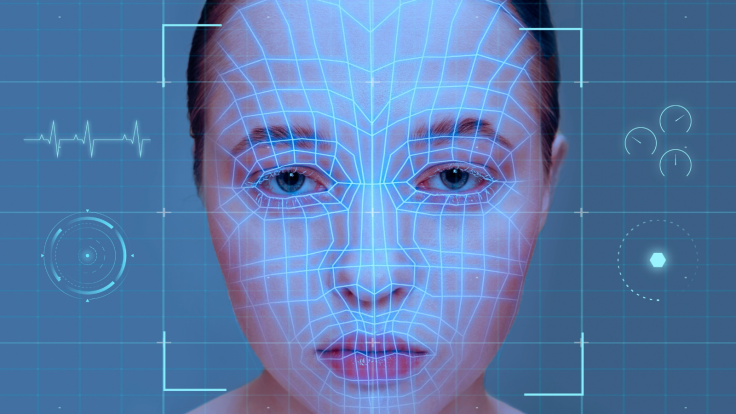
A single photograph of a cancer patient's face can help predict their risk of dying, according to researchers at Mass General Brigham in Boston. They say the AI tool is not yet ready for the clinic.
Their study, published on Monday 19 October in The Lancet Digital Health, describes what the team says is the first AI algorithm that can directly predict cancer survival from a face photograph. 'To our knowledge, this is the first report of an AI algorithm that can directly predict cancer patient survival from a simple face photograph,' the researchers wrote.
How the Tools Work
The researchers trained a foundation model, FAHR-Face, on more than 40 million face images. They then used it to build two tools. FAHR-FaceAge estimates a person's biological age from facial appearance, while FAHR-FaceSurvival predicts survival outcomes in patients with cancer.
In a test group of 3,820 cancer patients, 64 of the 122 with the highest risk scores died within 90 days of their photograph being taken, according to Scientific American. In a separate group of more than 38,000 patients, those who looked older than their chronological age also had a higher risk of dying.
Professor Miroslaw Bober of the University of Surrey, who was not involved in the research, said the study's validation in an independent group of nearly 5,000 cancer patients in the Netherlands was an important strength, according to the Science Media Centre.
The two scores work better together. 'When we put both the face age and face survival scores into a clinical prognostic model, we do better at survival prediction than either one alone,' said Dr Raymond Mak, a radiation oncologist at the Mass General Brigham Cancer Institute and the study's corresponding author.
Researchers Say It Will Not Replace Doctors
The team says the aim is to help oncologists judge which patients can cope with intensive treatment. 'As the population ages, physicians need better ways to estimate physical reserve and frailty before recommending intensive treatments such as radiation, surgery or systemic therapy,' Mak said.
He was clear that the scores are designed to inform clinicians, not overrule them. 'Our goal is to make face photograph-based health assessment more quantitative, consistent and scalable so it can support personalized treatment decisions rather than replace physician judgment,' he said.
Mak told Scientific American he hopes a model like this could eventually serve as an extra data point in doctors' decisions and as an early-warning system for disease.
Mak said the team was struck by how consistent FAHR-FaceAge was across pose, lighting, facial expression and makeup. It was also stable across most plastic surgery procedures, with only a small shift after rhinoplasty. Bober cautioned that smiling or changing the lighting altered the AI's age estimate by around two years on average, and considerably more in some cases.
An AI model can predict whether you’re likely to die of cancer from a single photo of your face, according to new research.https://t.co/i79IbLhhWZ
— Scientific American (@sciam) October 19, 2026
Why Experts Say It Is Not Ready
Bober described the study as a promising proof of concept that is not ready for clinical use. The tool ranks patients by relative risk within a group, he said, but its scores have not been validated as individual survival probabilities.
He also said the study did not show that the predictions add clinically useful information beyond doctors' own assessments of a patient's general health and fitness, which were not measured. The facial-age measure was not significantly associated with survival for Black patients after adjustment, although the separate survival model was.
The survival model was trained on a Boston-area cancer population that was majority white, according to Scientific American. Mak and his colleagues are working to expand their training sets to include a wider diversity of faces.
Matthew Liao, director of the Center for Bioethics at New York University, who was not involved in the research, said the tool could help identify people who need extra care. But he warned that an error could mean someone who needs care does not receive it, and raised the possibility of insurers or employers using such technology to make decisions about coverage or hiring.
Mass General Brigham has filed a US provisional patent application on next-generation facial health algorithms, which Mak and two co-authors disclosed. Mak also reports advisory and consulting roles with several drug and medical-device companies. Bober is chief technology officer of an AI company, Forecom.AI, and has consulted for pharmaceutical firms and NHS organisations.
The researchers are also running an online, institutional review board-approved FaceAge Research Study, in which members of the public can upload a photograph and receive a research estimate of their facial age.
Until it has been tested across more hospitals and patient groups, and against doctors' own judgement, the tool remains a research system.
© Copyright IBTimes 2026. All rights reserved.