

Former DOGE Insider Admits the Initiative Fell Short of Savings Goals but Defends Working With Musk
Former DOGE insider Tyler Hassen admits the initiative missed its $2 trillion savings target while defending his work with Elon Musk
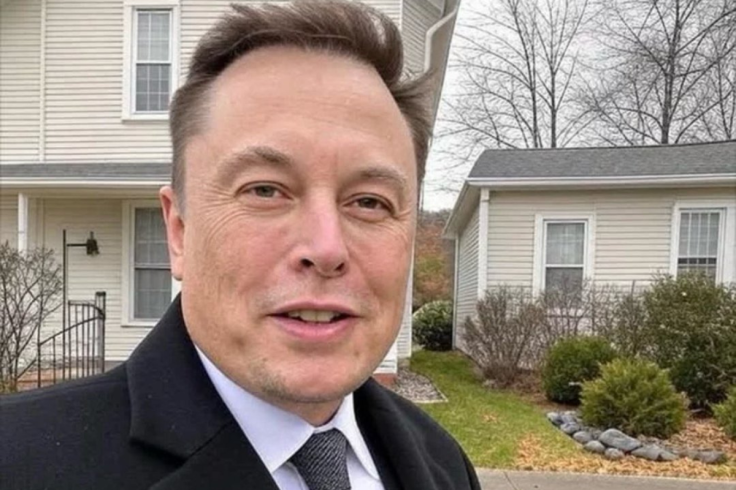
Tyler Hassen, a former senior official in the Trump administration's Department of Government Efficiency, has acknowledged that DOGE fell far short of the $2 trillion (£1.51 trillion) savings target associated with Elon Musk, while defending his 11 months inside the initiative.
Hassen, a 43-year-old Houston business executive, joined the government cost-cutting effort after contacting Musk through business connections.
His memoir, Inside DOGE: The Real Story from a Senior Insider, was published by Republic Book Publishers on 22 September 2026 and aims to 'set the record straight' about a project he believes was widely misunderstood.
Former DOGE Insider Describes His Role
The news came after Hassen's period inside DOGE, which was established by President Donald Trump through Executive Order 14158. Musk spearheaded the initiative, but it was a Trump administration programme, rather than Musk's personal department.
Hassen initially brought his experience in 'turning around distressed companies' to the Department of the Interior. He later became Acting Assistant Secretary of Policy, Management & Budget, a role that placed him inside the administration's effort to reduce spending and reorganise federal operations.
His work involved examining grants, reorganising departmental structures and considering whether functions could be consolidated. Hassen remained at the Interior Department until November, according to reporting on his account of the 11-month assignment.
DOGE became associated with federal job cuts, cancelled contracts, legal challenges and the administration's effort involving the US Agency for International Development. Critics also accused the initiative of operating with insufficient transparency, while its supporters argued that secrecy helped staff focus on a politically hostile and legally complicated task.
Hassen offers a more favourable account in his book. He argues that the public debate around federal workers often treats them as separate from the wider workforce, rather than as employees operating within a system that can be reviewed and reformed.
'It showed up in the way career staff spoke about 'the workforce' as something apart, almost sacred,' Hassen wrote. 'Until we can say out loud that government is a workforce like any other, noble in purpose, human in composition, and subject to reality like everything else, reform will look like cruelty before it looks like competence.'
The passage sets out Hassen's broader argument. He does not claim that DOGE solved the government's financial problems. Instead, he presents its work as an attempt to challenge federal structures that he believed had become difficult to change from within.
DOGE Savings Fell Short of Target
Hassen described working 14-hour days, including nights and weekends, during the most demanding phase of his assignment. He said that schedule meant seeing his young daughter only a handful of times.
The role also brought him into several politically sensitive episodes. He travelled to California during wildfires to question officials about why the state's largest water plant was not operating properly.
At the Interior Department, he handled the government's registration of the geographic-name change to 'Gulf of America' in the Geographic Names Information System.
Hassen also presented Musk during weekly meetings. 'We would talk about certain departments for 45 minutes, and how can we fix this, and we'd stay until 2 in the morning,' he said.
DOGE staff often avoided public attention because they wanted to concentrate on their work and feared personal attacks. In his account, lawsuits, congressional scrutiny and resistance within the federal bureaucracy also complicated the initiative.
The financial results remain more contested. Hassen acknowledged that DOGE fell well short of the $2 trillion savings target publicly associated with Musk.
A Government Accountability Office review released in August 2026 found significant problems with DOGE's reported savings figures. The GAO said DOGE had reported $110.3 billion in savings from contracts, grants and leases as of 7 July. It found that some estimates were incorrect or lacked supporting evidence.
The watchdog also found that DOGE followed its stated methodology for only 27.5% of the contract savings it reported. A further 60.7% came from contracts where the methodology was not followed, while 11.8% could not be assessed because contract identifiers were missing.
Those findings provide an independent assessment of the savings claims, separate from Hassen's personal account. They do not establish that every DOGE action failed, but they raise clear questions about how the initiative calculated and presented its results.
Hassen nevertheless argues that DOGE succeeded in drawing attention to the federal budget deficit, even though it did not eliminate it.
'Did we eliminate the deficit? No. Of course not,' he said. 'But we made it on the top of everyone's minds, albeit briefly, for a few months, that this deficit is something that we need to fix.'
His memoir now places that claim alongside the GAO's findings, leaving readers with two competing measures of DOGE's legacy, public awareness of the deficit and verifiable savings. The argument over which matters more is unlikely to end with the book's publication.
© Copyright IBTimes 2026. All rights reserved.
- Recommended For You


