

'Earth Is Just a Tiny Rock': White House UFO Adviser Says Aliens Would Not Care Who the President Is
Dr Avi Loeb argues hypothetical extraterrestrial visitors would overlook human political divisions

Dr Avi Loeb, the Harvard astrophysicist appointed to lead a new UAP scientific advisory council, has said extraterrestrials would not care who the president is, arguing that 'Earth is just a tiny rock' in cosmic terms.
The Harvard astrophysicist and cosmologist, who chairs the Unidentified Anomalous Phenomena Science Advisory Council, made the remarks in an interview this week as the Trump administration continues to release previously classified UAP files under a February directive.
To recall, Loeb, 64, was named chairman of the outside advisory council in June, a move that drew criticism from some peers over his polarising theories about alien life. The council was established by the Office of the Director of National Intelligence in response to President Donald Trump's February directive and advises a broader UAP Governance Board.
Aliens Would Not Care Who the President Is
In the interview, Loeb was asked how aliens might view human politics if they landed tomorrow. His answer was blunt.
'They wouldn't care about the United States, and they wouldn't care who its president is,' he said, adding that any visitor from interstellar space would likely regard territorial disputes and national identities as relatively unimportant.
'A visit by aliens, if they arrived, they likely wouldn't care much about how we've divided up the land on Earth's surface,' Loeb said.
'Anything we care deeply about, disputes over territory, nationality, ethnic origin, the things we read about constantly in the news probably isn't important at all to a visitor from far away, because Earth is just a tiny rock, a few millionths of the mass of the sun, left over from the sun's formation.'
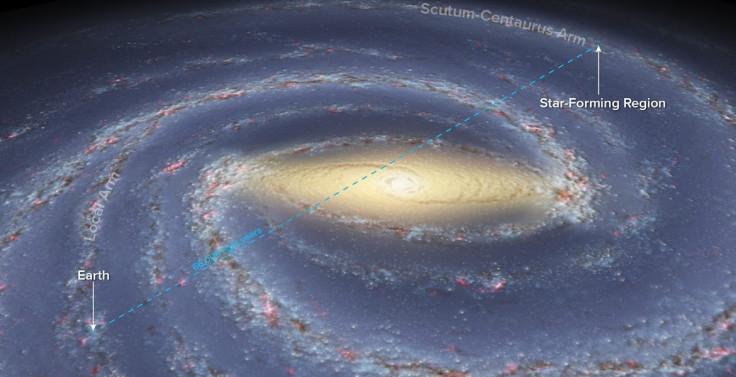
He went further, noting that Earth represents only a tiny fraction of the Milky Way. For a civilisation capable of crossing interstellar distances, the way humans have divided one small planet would probably matter very little.
Loeb framed potential contact as a scientific opportunity rather than a political moment. 'If they arrive in our backyard before we arrive in theirs, they're probably far more advanced,' he said.
'We've had just one century of modern science and technology since the discovery of quantum mechanics... If they've had a thousand years, a million years, or a billion years since their equivalent discovery, who knows how much more advanced they'd be? For us, it's an opportunity to learn.'
UAP Files Keep Coming as Loeb Council Begins Work
he comments come as the Department of War continues releasing declassified UAP records under the Presidential Unsealing and Reporting System for UAP Encounters, known as PURSUE.
The fifth tranche, posted on 7 August 2026, followed four previous releases beginning on 8 May and included material from several government agencies. The official PURSUE database contains documents, photographs and videos covering decades of reported incidents and historical government investigations.
That disclosure effort traces back to a February 2026 directive from President Trump ordering agencies to identify and release government files related to UAPs and extraterrestrial life. The Department of War, as the Pentagon is now called, has been publishing batches on a rolling basis through its PURSUE portal since May.

Loeb's advisory council supports the broader UAP Governance Board, which met for the first time in June amid claims from some congressional Republicans that the government is concealing evidence of alien life. Loeb has been sceptical of those assertions.
'My impression is the government is baffled by not being able to infer the nature of some of these objects,' he told the Associated Press earlier this year.
There is no established evidence that UAPs represent extraterrestrial spacecraft, and Loeb has himself cautioned against assuming unexplained objects are alien in origin. His remarks about how extraterrestrials might view Earth are therefore hypothetical rather than claims that alien visitors have been confirmed.
What the Science Says and What It Doesn't
Loeb's point is simple but provocative. Human politics, borders and leadership are parochial by cosmic standards.
If a civilisation were capable of traversing light-years, our headlines about presidents and prime ministers might not rank highly on its agenda.
That does not mean contact is imminent, or that UAPs are alien craft. No publicly released evidence has established either proposition.
Instead, Loeb has argued that unexplained phenomena should be investigated scientifically before conclusions are drawn.
For now, the files continue to be released, the council is in place and Loeb is making clear where he stands. Earth may be home, but from a cosmic perspective, he argues, it is only a tiny part of a vastly larger universe.
© Copyright IBTimes 2026. All rights reserved.