

'We're Potentially the Klingons': Robert Bigelow Tells Donald Trump Why Aliens Have Not Contacted Us
Bigelow discusses UAPs, extraterrestrial presence, and the challenges of disclosure with Trump
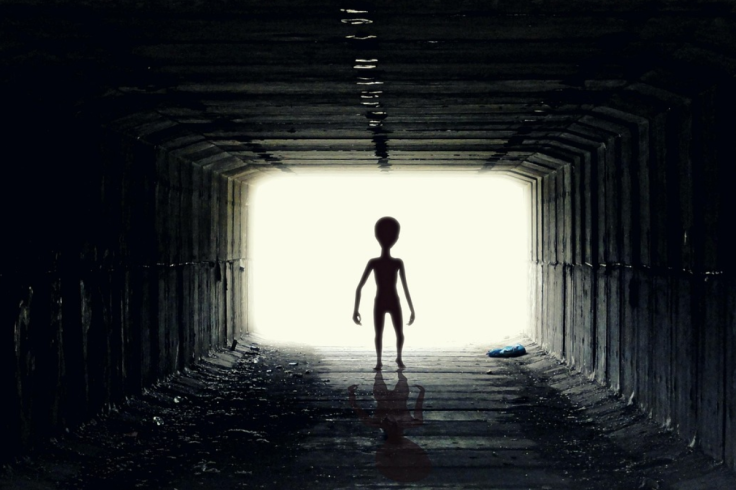
Billionaire aerospace entrepreneur Robert Bigelow says he spent more than an hour briefing Donald Trump in the Oval Office on unidentified anomalous phenomena (UAPs), alleged non-human intelligence and the crash of a SpaceX rocket stage into the Moon.
Bigelow said he prepared seven reports for the president, including one focused on UAPs, extraterrestrials and disclosure. He claimed he asked Trump to publicly acknowledge what he believes is a non-human presence on Earth, while arguing that disclosure should begin with a simple presidential confirmation rather than the release of thousands of classified files.
'A non-human intelligent presence has been on Earth for a very long time,' Bigelow said, amid renewed debate over UAP disclosure. Bigelow's account remains unverified and does not establish the existence of extraterrestrial activity on Earth, so his claims should be treated with caution.
'We're Potentially the Klingons' and the Disclosure Problem
Bigelow's position is not that a president could simply release every file connected to UAPs. He said even presidents might not have access to the most highly compartmentalised Special Access Programmes, meaning that any attempt at disclosure would involve more than a single announcement from the Oval Office.
'Disclosure is a process,' Bigelow explained. He was also reluctant to blame private corporations entirely for withholding information, arguing that 'the entire United States government has been complicit.'
Bigelow also spoke about the position of whistleblowers who may possess important information but remain bound by secrecy agreements. He said Trump's promises to protect them would not be enough and argued that granting full amnesty should be treated as a priority.

'What they know is irreplaceable,' Bigelow said, describing whistleblowers as 'your biggest asset walking around.'
It is a forceful argument, but also an awkward one. If the people who allegedly hold the most valuable information are legally prevented from speaking, then public disclosure depends on the same gatekeepers giving them permission to speak. That is not exactly a straightforward route to transparency.
Bigelow's answer to a more basic question is even more provocative. If another intelligent species has observed humanity for so long, why has it not contacted us?
Why Aliens May Have Kept Their Distance
Bigelow believes humanity's lack of spiritual maturity could be part of the explanation. He pointed to the proliferation of weapons and the danger humans could potentially pose to another species.
'We are a danger to another species. We're potentially the Klingons,' he said.
The reference, drawn from Star Trek, gives the argument a memorable edge. In Bigelow's interpretation, humanity may not be viewed as an emerging civilisation ready for contact, but as an unpredictable species whose technological progress has outpaced its judgement.
It is a highly speculative theory, but it speaks to the uneasy contradiction at the centre of the disclosure debate. Humans want evidence that they are not alone, while Bigelow argues humanity may be giving any hypothetical outside intelligence reasons to keep its distance.
The Oval Office discussion also reportedly included the SpaceX rocket stage that struck the Moon, an incident that highlighted a very different concern about activity beyond Earth.
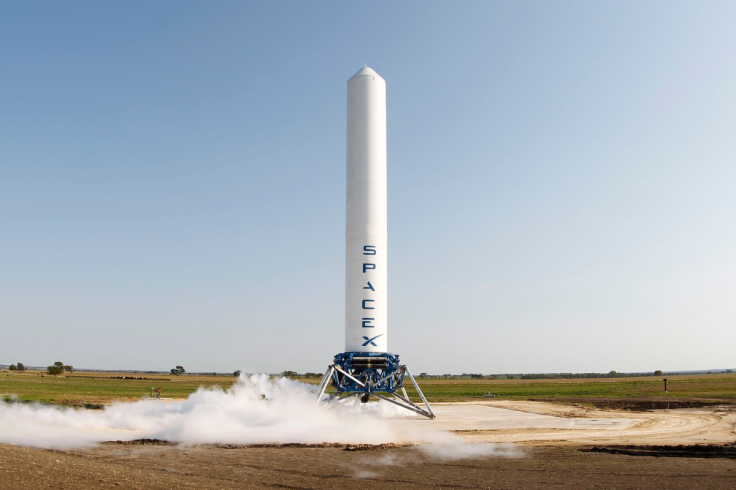
The Falcon 9 upper stage weighed about four tonnes and was roughly the size of a school bus. According to the supplied account, it had spent 18 months drifting through space after deploying two lunar landers.
Normally, rocket stages involved in such missions are guided back towards Earth. In this case, the Falcon 9 had reportedly used too much fuel for that option. It was left in a looping, unstable orbit, with the gravitational pull of the Earth, Sun and Moon gradually pushing it towards a collision.
The rocket eventually hit the far side of the Moon early on Wednesday morning. No one was aboard, so the event posed no danger to human life. Its significance was instead tied to the growing amount of discarded equipment travelling through space, where even an apparently inert object can eventually find itself on a collision course.
South Korea's Danuri lunar orbiter reportedly released before-and-after images showing the aftermath of the impact. Those images offered a rare visual record of the crash, while Bigelow's briefing returned the conversation to a less tangible question, one that remains unanswered despite his confidence.
If humanity is being watched, Bigelow has yet to provide publicly verifiable evidence establishing it. If it is not, his warning about what humans might look like from a distance still offers a provocative thought experiment.
© Copyright IBTimes 2026. All rights reserved.
- Recommended For You


