

Economists Warn of Permanent AI Layoffs and Weigh Donald Trump's Stimulus Options in a Potential Tech Bust
Furman fears lasting job losses, while economists disagree on how Trump might respond if the AI investment boom falters
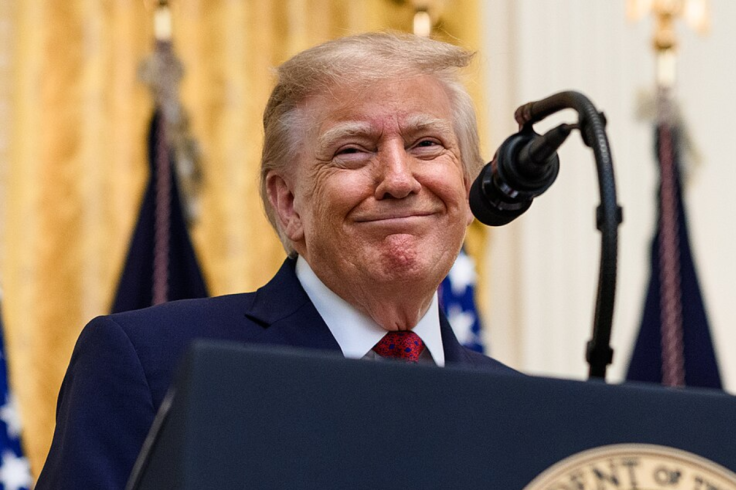
Jason Furman warned that AI-related layoffs could become lasting during a recession in a 12 November discussion with Paul Krugman and Jared Bernstein, as the economists assessed a possible AI bubble and Donald Trump's potential response.
The discussion followed a surge in industry investment. Bernstein questioned whether revenue justified the spending, while the economists examined how a reversal might affect the US economy and whether Washington would agree on financial support.
Furman's deepest concern centred on employment. He feared that a recession could become the point at which companies would not rehire workers after AI-related layoffs, allowing those job losses to persist.
'That terrifies me,' he stated.
His concern extended the discussion beyond whether technology shares were overvalued. It raised the possibility that the employment consequences of a recession could last beyond the initial downturn, even as the economists remained uncertain about whether an AI bubble would burst.
AI Bubble Concerns Focus on Spending and Revenue
Bernstein considered an AI bubble probable. He cited more than $1 trillion (£755 billion) in industry capital spending since 2024 and about $6 trillion (£4.53 billion) planned through 2030.
He put industry revenue at just under $300 billion (£226.71 billion), below the $2 trillion (£1.51 trillion) to $3 trillion (£2.27 trillion) he estimated would be needed to justify the investment. His assessment rested on the gap between the scale of spending and the revenue he believed necessary to support it.
Those spending figures covered different periods. The amount since 2024 represented investment already undertaken, while the figure extending through 2030 concerned future plans.
Furman would not rule out an AI bubble but expressed reservations about his own analysis. He recalled describing Tesla as a bubble in 2017, explaining his caution about his current assessment.
Krugman also expressed uncertainty about his judgement. Although all three economists considered a bubble possible, their assessments differed in confidence. Bernstein's view that one was probable went further than the reservations expressed by the other participants.
How an AI Bubble Could Affect the US Economy
Furman estimated that about 75 per cent of data centre investment was imported. Krugman consequently suggested that a decline in spending would be felt mostly in Taiwan and Korea.
For the United States, they agreed that the main channel would be the wealth effect from stocks. Their discussion therefore distinguished the impact of lower investment spending from the consequences of declining stock market wealth.
Furman put the boom's contribution to growth at six- to seven-tenths of a percentage point. Bernstein stated that Mark Zandi's estimate was seven-tenths of a point.
However, Furman observed that stock market busts alone rarely caused recessions. A decline in share prices would therefore not necessarily produce the downturn they were discussing.
Bernstein raised a separate concern about the financing behind the boom. He worried that opaque borrowing and circular financing could amplify a bust, adding another potential source of economic damage to the decline in share prices.
Trump's Fiscal Response to an AI Bubble Remains Uncertain
Krugman offered a conditional forecast that a bust within two years of the discussion would bring no fiscal response because the White House and Congress would be unable to agree.
Furman declined to predict Trump's reaction. He pointed to the president's aggressive response during COVID and suggested that Trump might want to sign stimulus cheques.
His assessment left open the possibility of action where Krugman anticipated political disagreement. Neither account established what measures the administration would pursue if a bust occurred.
Bernstein highlighted the budget deficit during the discussion, putting it above 6 per cent of GDP.
© Copyright IBTimes 2026. All rights reserved.