Bats Don't Fight Viruses, They Live With Them: Scientists Say Their Secret Could Help Humans Beat Cancer
Exploring the unique genetic traits of bats that contribute to their long lifespan and disease resistance
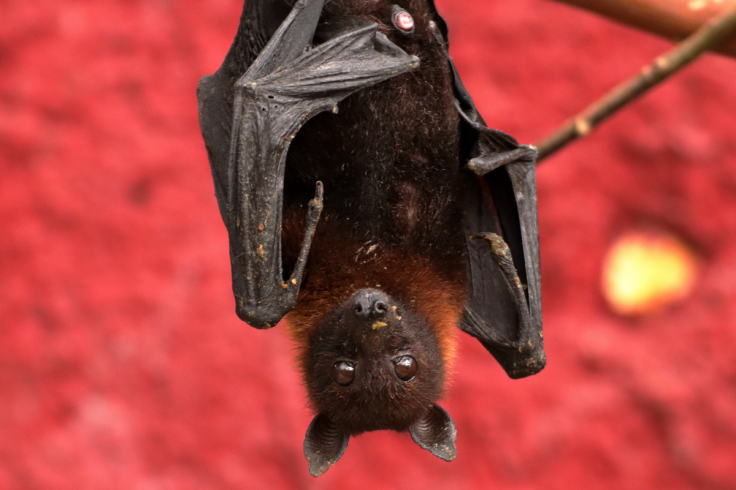
A new study found that the same set of genes that allows bats to live a long life also protects them from getting sick. This biological trait could help humans understand cancer more.
Bats are considered the longest-lived mammals based on size. Generally, the smaller the mammal, the shorter the lifespan. Bats may live 10 to 20 years, which is at least three times more than the average lifespan of other mammals of similar size. A Siberian bat is said to live twice as long as humans.
Understanding Bats' Resilience
'Bats have evolved this incredible fitness capacity, this incredible ability to deal with disease and this incredible ability to be able to prevent cancer,' said Juan Manuel Vazquez, author of a study at the University of California, Berkeley.
Vazquez and 32 others published the study titled 'Insights Into Longevity and Virus-Driven Adaptation from Myotis Bat Genomes' in the journal Nature.
He explained: 'That means that, by understanding how bats have evolved to do all these things that other mammals haven't, we can find completely new and unexpected ways of dealing with the normal things that cause human diseases.'
The study involved capturing, doing biopsy and releasing different species of bats. Close to 300 cell cultures from 32 species were collected. The researchers were able to identify biological ways the bats survived, ultimately 'outliving' fellow mammals on a lifespan-to-size basis.
The study found that little brown bats, scientifically known as Myotis lucifugus, were found to clear out damaged cells before these could harm them. The immune factor is called PKR, which Myotis species were seen to have more of, multiplying their ability to fight a wide range of viruses.
Viral Tolerance Versus Resistance
While these viruses can be transferred to humans, bats are not affected. This makes bats zoonotic reservoirs with an ability known as viral tolerance. This is different from humans, who usually fight viruses through resistance.

'The genus Myotis is one of the largest clades of bats, and it exhibits some of the most extreme variation in lifespans among mammals, alongside unique adaptations to viral tolerance and immune defence,' the research's abstract read.
It continued: 'We show that the recurrent evolution of longevity seen in Myotis is associated with positive selection in cancer pathways, and demonstrate a unique response to DNA damage in primary cells of the long-lived Myotis lucifugus. Together, our results suggest that bats' remarkable longevity and immunity are linked through pleiotropic adaptations to viruses and ageing-related disease.'
Bats are nearly immune to cancer, as another study noted. 'We hypothesize that some bat species have evolved enhanced p53 activity as an additional anti-cancer strategy, similar to elephants,' a University of Rochester team of researchers said. P53 is said to be the gene that scans for DNA damage.
Fathima Athar and 14 others published the research titled 'Limited Cell-Autonomous Anticancer Mechanisms in Long-Lived Bats,' in the journal Nature Communications. The group stated: 'The absence of unique cell-autonomous tumor suppressive mechanisms may suggest that in vivo bats may rely on enhanced immunosurveillance.'
In practice, this means bats regularly scan their body for mutated cells and destroy them before they can develop into cancerous tumors.
© Copyright IBTimes 2026. All rights reserved.
- Recommended For You