

China Is Building Nearly 90 AI Data Centres in Inner Mongolia to Compete With the US
Ulanqab has signed 89 data centre projects as Beijing directs computing capacity towards energy-rich western regions, while questions remain over chips, jobs and relocations
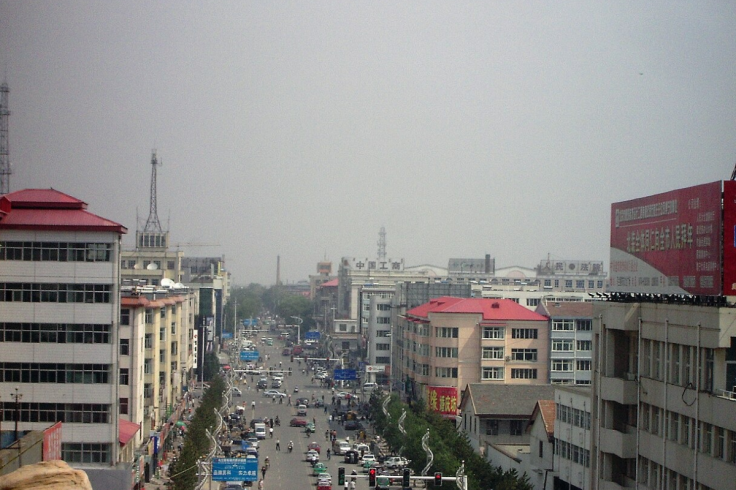
China is expanding its artificial intelligence infrastructure in Inner Mongolia, where authorities in Ulanqab say the city has signed 89 data centre projects, 86 focused on AI. The expansion is part of Beijing's effort to strengthen its position in the global AI race.
Located on the edge of the Gobi Desert, Ulanqab has fewer than two million residents. Once known as China's 'potato capital', it is becoming a data centre hub, with projects reportedly linked to Huawei, ByteDance, DeepSeek, Kuaishou and VNET. DeepSeek is said to be planning about 1GW of capacity in the city.
Media reports say Beijing has announced a $560 billion (£420 billion) plan to expand information infrastructure over five years. The strategy builds on the East Data, West Computing programme launched in 2022, which directs computing workloads towards energy-rich western regions.
At Bayin Big Data Industrial Park, some sites have reportedly gone from grassland to operational data centres in as little as two years.
Cheap Renewable Power Gives Inner Mongolia an Advantage
Inner Mongolia's wind resources and electricity surplus make it attractive to data centre operators. Financial reporting indicates that facilities in the region pay lower electricity tariffs than those in Beijing.
Ricky Zheng, general manager of Envision, said more than 80 per cent of the electricity for its 2GW Galaxy Campus would come directly from the company's wind farms, bypassing the grid. He said the first phase was fully booked, with further phases under construction.
The project is expected to use battery storage and solid-state transformers to distribute power to server racks. Cold weather also reduces cooling requirements.
Zheng said the facility uses a zero-water system with industrial alcohol as coolant, addressing concerns in a region where water is scarce. Optical fibre links connect Inner Mongolia to Beijing, about 200 miles away.
US Chip Restrictions Remain a Major Obstacle
US export controls restrict Chinese companies' access to advanced AI processors from Nvidia and AMD. Building data centres alone does not guarantee the computing power needed to train and run sophisticated models.
According to Rhodium Group estimates, US companies will invest about $800 billion (£602 billion) in AI data centres this year, compared with roughly $139 billion (£104 billion) by listed Chinese firms.
Data from an AI research organisation also suggests four leading US technology companies collectively have more AI computing capacity, measured in H100 equivalents, than China as a whole.
Some Data Centres Could Sit Empty
Jefferies analyst Edison Lee told a financial publication that chips were the main constraint, although he saw no risk of overbuilding. Limited domestic chip supplies and the performance gap with leading US hardware could leave some facilities waiting for processors.
Remote locations may also face delays when handling time-sensitive workloads. Parts of the local electricity grid still rely on coal, complicating claims about the expansion's use of renewable energy.
Meanwhile, some local businesses report benefits from the construction boom. One restaurant owner said daily customer numbers had doubled, while some families said their children had found jobs at the facilities. However, regional reporting indicates that entire villages have been relocated.
Journalists have noted that residents may face risks when voicing concerns in China's heavily censored environment. A 2026 study by Justin Kollar and Andrew Stokols found that data centres create relatively few direct jobs. Regional reporting has suggested that about 90 per cent of data-related workers in Ulanqab come from outside the city.
© Copyright IBTimes 2026. All rights reserved.