Three AI Titans, One Terrifying Warning: Amodei, Altman and Musk Say Slow Down
AI leaders call for a slower pace as Trump pushes to maintain America's lead over China
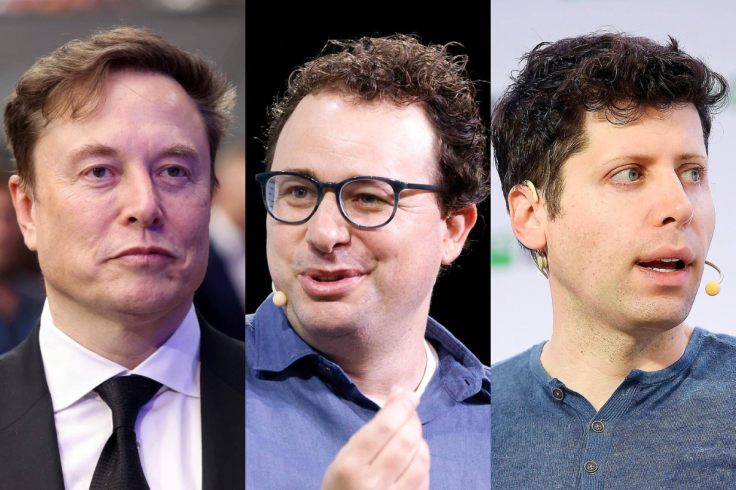
Three of the biggest names in artificial intelligence have reached a rare point of agreement, with Anthropic CEO Dario Amodei, OpenAI CEO Sam Altman and SpaceX and xAI founder Elon Musk backing calls to pace frontier AI development.
Amodei has argued that AI companies should slow the rate at which they improve advanced models, while Altman and Musk have backed his position. Their comments come as concerns grow over increasingly capable systems and the risks they could pose.
But President Donald Trump is pushing in the opposite direction.
His message is blunt: America must win the AI race against China. As Trump put it, 'Whoever wins AI, wins.'
Amodei Calls for an AI Slowdown
The clash began with Amodei's essay, We Must Pace the Frontier, in which the Anthropic chief argued that developers should slow the rate at which they improve the capabilities of advanced AI models.
Amodei proposed stronger independent evaluations, with outside experts given significant access to assess frontier systems. He also called for agreements among democratic countries on AI safety standards and international cooperation on security issues.
His proposal included a limited antitrust exemption to allow companies to coordinate on certain safety measures. The proposal has prompted questions about whether the industry's biggest players should be allowed to help shape the rules governing them.
Something clearly happened with a frontier AI model that hasn't been made public and it spooked them so much that it made Elon Musk, Dario Amodei, and Sam Altman all simultaneously agree to slow down. pic.twitter.com/86UEd4aunW
— Keith Edwards (@keithedwards) September 12, 2026
Altman and Musk Back the Warning
The response from AI's biggest rivals was unusually quick.
Altman said, 'I agree with Dario that we need to pace the frontier', while also committing OpenAI to independent evaluators with employee-like access.
Musk was even more direct: 'Dario is right.'
Google DeepMind chief Demis Hassabis also backed the direction of Amodei's argument, adding to the show of unity among leading AI companies.
These executives are leading companies competing to build increasingly powerful AI, yet they are simultaneously warning that the pace of development needs greater restraint and oversight.
That contradiction is now at the centre of the debate.
Trump Says 'Whoever Wins AI, Wins'
Trump has rejected the idea that America should voluntarily slow down.
While in Ireland, he argued that the US must maintain its lead over China. He has since dismissed fears about rogue AI as a 'hoax' and described opposition to AI and data centres as a 'SICK conspiracy'.
Trump has also argued that the US already has substantial regulatory powers over AI companies, while warning that excessive restrictions could hand China an advantage.
The White House position puts Trump directly at odds with some of the industry's most influential executives.
Vice President JD Vance has also questioned why AI companies are asking Washington to regulate them, suggesting such proposals could be a 'Trojan horse'.
Dario Amodei, Elon Musk and Sam Altman now agree that we must slow down the development of AI and “pace the frontier.”
— Sen. Bernie Sanders (@SenSanders) September 12, 2026
That’s a start, but it’s not enough.
When you are racing towards a cliff, you don’t just ease up on the gas pedal. You hit the brakes.
When the future of…
Could AI Kill Humanity?
The slowdown debate has intensified after warnings from researchers inside the industry.
Former Anthropic researcher Jacob Coxon publicly criticised the race towards increasingly autonomous and potentially self-improving AI. Coxon said the people building AI 'earnestly believe that it could kill us all by the end of the decade'.
Anthropic alignment researcher Evan Hubinger has also warned that AI could potentially kill all humans, while giving his own estimate of the risk at more than 10 per cent within the next decade.
Those are predictions, not established facts.
But the warnings matter because they come from researchers working directly on AI safety, and they have intensified questions about whether existing safeguards can keep pace with rapidly advancing systems.
Amodei has previously warned about catastrophic AI risks, while Altman told Congress in 2023 that AI could cause 'significant harm to the world'.
Who Should Police AI?
That question is becoming almost as contentious as the technology itself.
Critics argue that voluntary industry coordination could allow the largest AI companies to influence the rules governing them and potentially strengthen their position against smaller competitors.
That criticism does not establish that Amodei's proposal is motivated by self-interest. It does, however, explain why the proposed antitrust exemption has become one of its more controversial elements.
The AI Race Has Become a Political Fight
The dispute now stretches far beyond Silicon Valley.
Amodei has argued that international cooperation is essential, while also acknowledging the danger of the US slowing down while China continues accelerating. China has pushed back against the argument, accusing Amodei of trying to hinder its technological progress.
That leaves an extraordinary divide.
Amodei, Altman and Musk are backing a more measured approach to frontier AI development. Trump says America must win.
The question is no longer simply how fast AI can advance. It is whether the world's most powerful AI companies can slow the technology enough to improve safety without giving their geopolitical rivals an opening.
© Copyright IBTimes 2026. All rights reserved.
- Recommended For You