China Can Build Kung FU Robots—but It Still Cannot Teach Them To Work
Spirit AI predicts a potential breakthrough in natural-language control by 2027, while household robots remain years from becoming genuinely useful

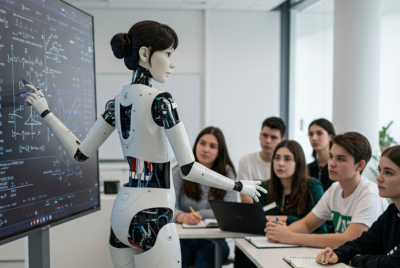
China's humanoid robots can sprint, dance and even perform backflips, but teaching those machines to reliably carry out ordinary work remains a much harder challenge. The gap between spectacular physical demonstrations and useful, general-purpose labour is now one of the biggest questions facing China's rapidly expanding robotics industry.
Spirit AI, a Chinese start-up developing the software that controls humanoid robots, believes a major breakthrough could arrive by mid-2027.
Co-founder and chief scientist Gao Yang told Reuters that robots could soon understand natural-language instructions and carry out a series of physical actions, describing the expected advance as a potential 'ChatGPT moment' for robotics.
Yet the same company says household robots are still years away from becoming genuinely useful. Spirit AI currently reports a 90% success rate for simple tasks in structured living-room environments, while more difficult actions such as unscrewing a bottle cap and handling unfamiliar objects remain problematic.
China's Humanoid Robots Make Physical Progress
Chinese robotics companies have made striking progress on the physical side of humanoid machines. Robots can now walk, run, dance and perform athletic movements that would have seemed unrealistic only a few years ago.
But impressive movement is not the same as useful labour. A robot performing a rehearsed routine operates in a controlled environment where its actions and surroundings are predictable, while a worker has to recognise objects, adjust to changes and recover when something goes wrong.
Gao told Reuters that when Spirit AI was founded, robots were generally capable of performing isolated tasks such as pouring water or folding clothing. The company now says its machines can handle continuous workflows across larger spaces.
Spirit AI has already deployed tens of its Moz1 wheeled humanoid robots on production lines at battery manufacturer CATL and retailer JD.com. The company has raised more than $670 million since being founded in 2024 and was valued at about $2.9 billion in September 2026.
The Hard Part Is Teaching Robots To Adapt
The central problem is not simply making a robot move. It is giving it enough understanding to decide what to do when circumstances change.
Spirit AI employs about 1,000 contractors who collect real-world movement data in homes and factories. Workers wear equipment that records actions such as opening refrigerators, unlocking safes and cutting vegetables, and the company says it has collected hundreds of thousands of hours of such data.
That approach reflects a broader problem in embodied artificial intelligence. Computer simulations can teach machines about rigid objects, but physical environments contain cables, clothing, food and other flexible objects that behave unpredictably.
The same problem appears in physical training environments. Gao told Reuters that simulators handle rigid bodies well, but flexible objects such as deformable electric cables remain difficult to model. At other robot-training facilities in China, operators may have to repeat a movement more than 50 times to produce one sufficiently precise 'clean' example.
Why 2027 Could Be a Turning Point
Gao expects robots to reach an important stage by mid-2027, when people could give machines instructions in ordinary language and expect them to attempt a sequence of physical actions. He predicts initial industrial applications within one to two years, followed by commercial service uses.
That distinction matters. Industrial environments can be designed around robots, with fixed layouts and repeatable tasks, while homes are far less predictable. Gao expects robots to take considerably longer to become useful in household settings.
The wider market also shows the scale of the challenge. The International Federation of Robotics said about 7,000 humanoid robots were sold globally in 2025, compared with roughly 542,000 conventional industrial robots installed in 2024. Many humanoids were still being used for research and AI development rather than routine commercial labour.
China's robotics industry is therefore making progress in building machines that can perform selected jobs, but the unresolved challenge is teaching them to generalise: to understand an instruction, deal with unfamiliar objects and complete useful work without being programmed for every step.
That is the difference between a robot that can perform kung fu and one that can reliably carry out useful work in the unpredictable environments where people live and work.
© Copyright IBTimes 2026. All rights reserved.
- Recommended For You