Michelle Keegan Reveals Why The Blame's Emma Crane Stops 'Turning the Other Cheek' To Police Misogyny
The six-part crime drama follows Crane as a murder investigation exposes corruption, institutional cover-ups and sexism within her fictional police department
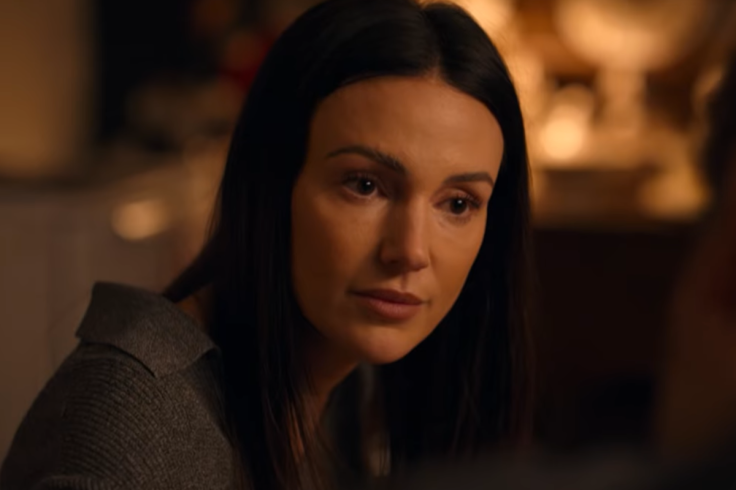
Michelle Keegan has revealed why her detective heroine Emma Crane finally stops 'turning the other cheek' to misogyny in ITV's new crime drama 'The Blame', saying the character can no longer stay quiet once behaviour inside her own police force becomes impossible to ignore.
Keegan plays DI Emma Crane in the six-part thriller, which follows her investigation into the murder of teenage figure skater Sophie Madsen in the fictional town of Wakestead.
The case soon becomes entangled with corruption, institutional cover-ups and deeply rooted misogyny within the police department. For Keegan, Emma's strength is one of the qualities that made the character particularly compelling.
Michelle Keegan on Emma Crane's Fight Against Misogyny
Keegan has described Emma as one of the strongest female characters she has played, portraying her as someone with a strong moral compass who is prepared to challenge the behaviour of colleagues when she believes it is wrong.
'I think Emma goes on such a journey in the show,' she said in a recent interview. 'At the beginning, she's aware of the misogyny. She turns the other cheek because it's a way of dealing with it. She doesn't know how to deal with it because that's how you survive in these male-dominated industries and environments.'
That changes as Emma investigates Sophie's death. What begins as a conventional murder investigation gradually forces her to examine the culture of the police station itself. 'What happens with Sophie is a catalyst for her to blow the whistle on it and say something needs to change, there has to be a change, it can't continue,' Keegan added.
The drama presents a workplace where sexist behaviour can be dismissed as banter, while some officers are reluctant to challenge their colleagues. Emma's response is to question the culture rather than simply accept it.
The storyline also draws on real-world police misconduct scandals. The series incorporates material inspired by actual cases involving inappropriate messages exchanged by serving officers, while the fictional Wakestead force provides the setting for the drama's wider exploration of institutional sexism.
'The Blame' Goes Beyond a Murder Mystery
Although 'The Blame' begins with the discovery of Sophie's body, the series is intended to be more than a straightforward whodunnit. Emma and fellow detective DI Tom Radley, played by Douglas Booth, are tasked with finding out what happened to Sophie.
As they investigate, however, their attention is drawn towards secrets and behaviour within their own department.
ITV describes the series as a story in which Crane must navigate both the murder investigation and the 'treacherous politics' inside her own team. The broadcaster has also highlighted the show's themes of police corruption, exploitation and misogyny.
Keegan said the scripts immediately stood out to her because they offered several layers beyond the central mystery. 'I remember reading them, and I was hooked straight away,' she said, explaining that although the drama is a thriller and a whodunnit, it contains 'so many more layers to it'.
That combination allows Emma's personal battle against misogyny to develop alongside the search for Sophie's killer.
Why Emma Refuses To Stay Silent
A key part of Emma's character is that she does not simply endure the behaviour around her. Instead, she becomes increasingly willing to confront what she sees.
The contrast is also explored through Booth's character. Speaking about the show's themes, Booth said the drama examines the difference between refusing to participate in sexist behaviour and actively challenging it.
He described the problem as one in which people can keep their 'head below the parapet', raising the question of when remaining silent makes someone complicit.
That tension is central to Emma's journey. She is not investigating misogyny as a subject separate from her police work; she is experiencing the consequences of that culture while trying to solve a murder.
The series also uses disturbing fictional police messages based on real-world misconduct investigations to show how apparently casual behaviour can become part of a wider institutional problem.
Michelle Keegan Hopes the Drama Starts a Conversation
Keegan has said she hopes 'The Blame' encourages viewers to think about sexism and misconduct beyond the fictional police station. She has also spoken about feeling a responsibility to start conversations about workplace behaviour and encourage people to feel more comfortable speaking up when they encounter it.
At the same time, the actress has stressed that the series remains a crime thriller first, with twists and revelations driving the story forward.
As Emma continues investigating Sophie's death, however, the detective finds herself confronting a second mystery: not simply who killed the teenager, but how deeply the culture around her has allowed misogyny to take hold.
For Emma Crane, turning the other cheek is no longer an option. Her pursuit of justice increasingly means challenging the people and system she works alongside.
© Copyright IBTimes 2026. All rights reserved.
- Recommended For You