US Prosecutors Accuse Huawei of Decades-Long Scheme To Steal Trade Secrets, Evade Iran Sanctions
A $1.3 billion emergency transfer throws fresh fuel on the explosive US case accusing Huawei of decades of alleged trade-secret theft and sanctions violations
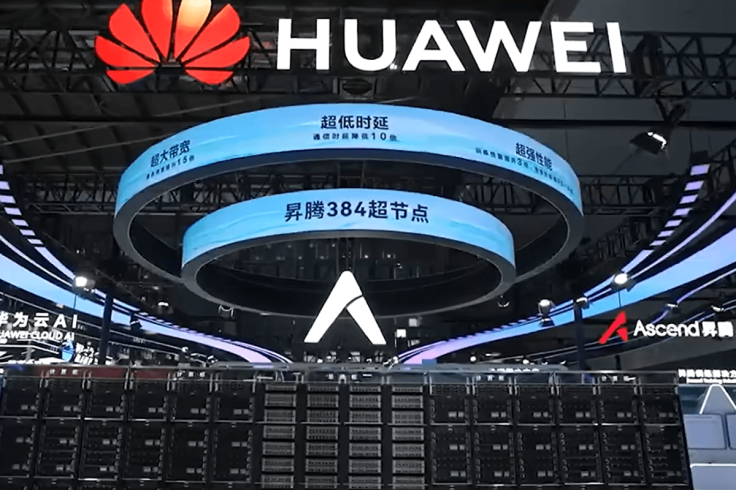
Huawei's US criminal trial has been jolted by a $1.3 billion banking revelation, putting an extraordinary financial episode back in the spotlight as prosecutors accuse the Chinese technology giant of a two-decade campaign involving alleged trade-secret theft, Iran sanctions violations and deception of financial institutions.
The money was moved from London to China just days after the US government unveiled its indictment, according to an investigation by the International Consortium of Investigative Journalists.
Huawei is now on trial in New York, where U.S. prosecutors call it a “criminal enterprise.”
— распад и неуважение (@VictorKvert2008) September 18, 2026
If convicted, this is not just a legal problem. It could become an existential one: banks, suppliers and partners may decide that doing business with Huawei is simply too toxic. pic.twitter.com/csjjiDuYas
The $1.3 Billion Transfer
On 2 February 2019, nine ICBC bankers were called into the bank's London branch on a Saturday to handle an urgent request from Huawei.
By the following morning, $1.3 billion had been transferred from Huawei's London account to Shenzhen. ICIJ reported that Huawei described the funds as 'emergency cash'. The transfer came five days after the US Justice Department unsealed its indictment against the company.
The transaction later triggered an internal review at Industrial and Commercial Bank of China, after compliance staff discovered that the enormous payment had been arranged outside normal procedures. ICBC's money-laundering reporting officer, Eric Guegan, raised concerns about the way the transfer had been handled.
The episode is striking not because the transfer itself has been established as unlawful, but because of what happened inside the bank as Huawei's legal crisis escalated.
The Alleged Trade-Secret Operation
The financial drama sits inside a much larger prosecution.
US prosecutors allege Huawei pursued a decades-long effort to obtain intellectual property from American technology companies as it expanded its telecommunications business. The broader indictment identifies six US technology companies, including Cisco Systems, T-Mobile, Motorola Solutions, Fujitsu, Quintel Technology and CNEX Labs.
Prosecutors say Huawei employees were encouraged to obtain competitors' confidential information. One allegation involves a Huawei employee who allegedly entered a Fujitsu trade-show booth to photograph networking equipment before being spotted by security.
The prosecution has also pointed to a T-Mobile phone-testing robotic arm, with Taylor Stout telling jurors that video exists of an employee allegedly taking the equipment.
Huawei's defence says prosecutors are stitching together isolated incidents and routine commercial activity to create a criminal conspiracy.
The Skycom and Iran Connection
The sanctions allegations centre on Skycom, a Hong Kong company that primarily operated in Iran and which US prosecutors say was controlled by Huawei.
According to the Justice Department, Huawei controlled Skycom's Iranian operations between 2010 and 2014, while Skycom was owned by another Huawei-controlled entity. During that period, Skycom conducted roughly $100 million in US-dollar transactions through a financial institution whose payments cleared through the United States.
The government alleges Huawei concealed that relationship from financial institutions, allowing banking services to continue despite US sanctions.
That issue became inseparable from the case against Huawei CFO Meng Wanzhou.
Meng Wanzhou's Admissions
Meng was arrested in Vancouver in December 2018 on a US warrant. In 2021, she entered a deferred prosecution agreement and admitted making false statements to a global financial institution about Huawei's relationship with Skycom and its Iranian operations.
Those admissions are expected to feature in the current trial, giving prosecutors a direct link between the original Iran allegations and the broader case now before the Brooklyn jury.
The prosecution has also presented testimony from Parham Baheshti, a former engineer at Iranian telecom company Mobinet, who alleged Huawei helped develop technology capable of monitoring users. Huawei's lawyers dispute that portrayal, arguing the system was lawful-interception technology of a type used in other countries.
Huawei Fights Back
Prosecutor Taylor Stout has described Huawei as a 'criminal enterprise', alleging that 'theft, lies, cover-up' formed part of its conduct over 20 years.
Huawei lawyer Brian Heberlig offered a sharply different account, telling jurors: 'It's about competition, not conspiracy. Innovation, not theft.' He argued the government was treating the actions of individual employees and ordinary corporate activity as evidence of a company-wide criminal plan.
Judge Ann Donnelly has told jurors that China and the Chinese Communist Party are not on trial. The question before the jury is whether prosecutors can prove the criminal charges against Huawei and its subsidiaries.
With months of testimony and evidence expected, the case now places Huawei's alleged technology acquisitions, Iran business and financial relationships under an unusually intense courtroom spotlight.
And at the centre of that wider story sits a remarkable $1.3 billion transfer, arranged in London as the company's legal battle with Washington was beginning to enter a new phase.
© Copyright IBTimes 2026. All rights reserved.
- Recommended For You