

Chinese State Firm Shipped 46 Tonnes of Material Into Russia's Kamikaze Drone Supply Chain, Records Show
Shipment of 46 tonnes of material to Russian drone facility raises concerns
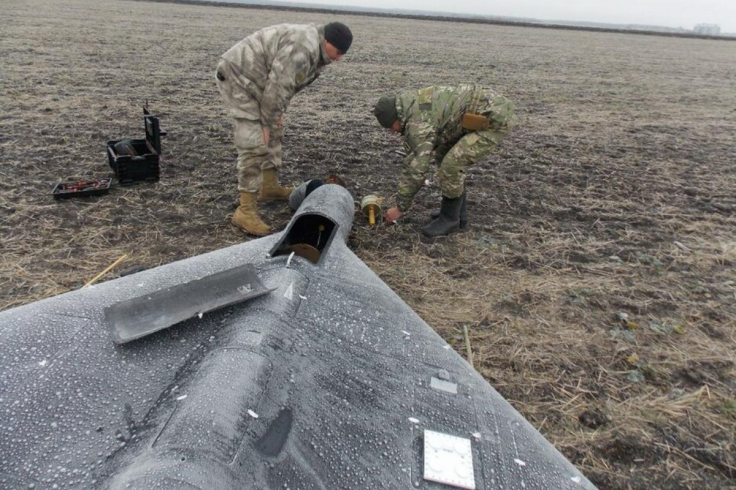
A Chinese state-owned company shipped up to 46 tonnes of material to a Russian facility involved in the production of long-range attack drones earlier this year, according to internal shipping records reviewed by Western governments.
The documents, obtained by POLITICO and also reviewed by The Telegraph, allege that the material was listed under a customs code used for civilian synthetic fibres.
The shipment reportedly reached Alabuga-Volokno, a subsidiary of Russian state nuclear corporation Rosatom. The facility produces carbon fibre used in the construction of Russian Geran attack drones, which are based on Iran's Shahed design.
Shipment Classified Under Civilian Code
The records cover two 40-foot containers containing polyacrylonitrile, or PAN precursor, a material used to manufacture carbon fibre. The shipping documents classified the cargo under a customs code used for civilian synthetic fibres such as nylon and polyester.
A former US Treasury sanctions official, Kerri Bitsoff, said the apparent classification could reflect a recognised tactic in which controlled items are shipped under a different customs code that appears more consistent with civilian goods.
Weapons expert David Albright said the correct classification would have identified the material as a dual-use item, meaning it has both civilian and military applications.
His assessment indicates that the material can have applications beyond civilian manufacturing, but does not by itself establish why the shipment was classified under the code used.
The records therefore do not, on their own, establish that Jilin Chemical Fiber Group deliberately misclassified the shipment or explain who was responsible for the customs declaration.
Enough Material for 1,300 Drones
Albright estimated that the quantity shipped could yield enough carbon fibre for as many as 1,300 attack drones. Carbon fibre reinforces a drone's wings and internal components, including the engine and fuel tank, making it an important structural material.
The Ukrainian Security and Cooperation Centre, or USCC, estimates that as much as 89 per cent of Alabuga-Volokno's output could be directed towards defence industry buyers by 2030.
The USCC has also identified at least eight tenders involving shipments of PAN precursor material from Jilin Chemical Fiber Group to Alabuga-Volokno between 2022 and 2026. The tenders suggest that commercial links between the companies predate the latest reported consignment.
🇨🇳🇷🇺 China’s Hidden Link To Russia’s Drone Production
— Defense Intelligence (@DI313_) September 7, 2026
A Chinese state firm reportedly shipped up to 46 tons of military grade carbon fiber to a sanctioned Russian Rosatom subsidiary, enough material for up to 1,300 kamikaze drone airframes.
The shipments were declared as… pic.twitter.com/0cVJoOWNCm
Governments Reviewing the Evidence
The Ukrainian Security and Cooperation Centre shared the documents with US and UK governments. A US official said the House Select Committee on China had reviewed the documents and considered them legitimate, while a Ukrainian official separately confirmed their authenticity.
The UK government has also reviewed the records but declined to speculate on possible future sanctions. The US Treasury Department did not comment specifically on the alleged shipments but said it takes allegations of sanctionable conduct extremely seriously.
Alabuga-Volokno and its parent business, UMATEX, are already subject to sanctions imposed by the US, UK, EU, Ukraine, New Zealand and Switzerland. Jilin Chemical Fiber Group is not currently under Western sanctions.
China Rejects the Allegations
China's embassy in Washington dismissed the claims as an attempt to smear and scapegoat China.
Jilin Chemical Fiber Group did not respond to requests for comment cited in the original reporting, while a Rosatom spokesperson said the company operates in compliance with applicable laws and regulations.
The allegations surface weeks before US President Donald Trump is expected to meet Chinese President Xi Jinping in Washington on 24 September, according to current plans.
The timing could increase pressure on Washington to raise concerns with Beijing over dual-use exports during the summit, particularly as US officials are already discussing trade and security issues with their Chinese counterparts.
The case also raises questions about how sanctioned Russian companies can continue obtaining sensitive materials from suppliers that are not themselves under Western sanctions.
If Jilin Chemical Fiber Group is later added to sanctions lists, that would mark a further enforcement response to allegations of Chinese state-linked support for Russia's drone production.
© Copyright IBTimes 2026. All rights reserved.