Hugo Holland Faces Judge Race Scrutiny Over False Filings And Comparing A Black Teen To A Dog
Hugo Holland's controversial career as a prosecutor is under scrutiny as he leads the race for a judicial position in Caddo Parish.
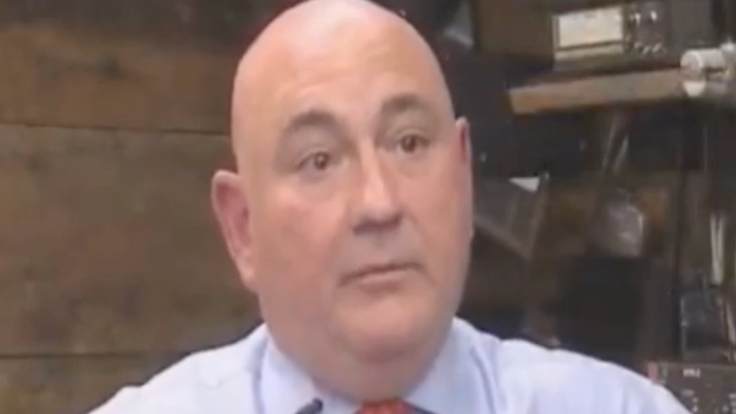
Hugo Holland, a Louisiana prosecutor who submitted false paperwork to obtain military weapons and once compared a Black teenager with a severe intellectual disability to a dog in a death penalty case, is now the frontrunner in a judicial race for the First Judicial District Court in Caddo Parish.
Holland's nearly 40-year career as a death penalty prosecutor, documented in a joint investigation by ProPublica and Verite News is marked by judicial findings of withheld evidence, a forced resignation over falsified government documents, and a pattern of conduct that defence attorneys describe as racially biased.
Despite those controversies, he has raised more than £48,000 ($61,000) in campaign contributions in under two months, according to Louisiana Ethics Administration records, roughly double what most candidates spend on an entire judicial campaign. Holland declined multiple requests for comment from ProPublica and Verite News on his candidacy and prosecutorial record.
The 2012 False Paperwork That Ended His DA Career
Holland's resignation from the Caddo Parish district attorney's office in 2012 stemmed from a finding by the Louisiana Office of the Inspector General that he and a colleague had submitted false information to obtain eight fully automatic M-16 rifles through a federal military surplus programme. Holland claimed the weapons were needed because his team 'routinely participate in high-risk surveillance and arrests,' a justification that local law enforcement agencies directly refuted, according to the inspector general's findings.
Then-District Attorney Charles Scott asked Holland and his colleague to resign after the inspector general confirmed the weapons had been obtained under false pretences. Holland and his colleague later told investigators that, given the opportunity, they would have 'worded the justification differently.'
The inspector general's office did not refer the matter for criminal prosecution. A formal complaint filed in 2017 by capital defence attorney Nick Trenticosta with the Louisiana Legislative Auditor, reviewed by the Promise of Justice Initiative, raised additional concerns about dual officeholding and payroll irregularities connected to Holland's subsequent career as a prosecutor-for-hire across multiple parishes.
The resignation did little to slow Holland's career. After leaving the Caddo Parish office, he built a lucrative practice working for more than a dozen district attorneys as a freelance capital prosecutor, earning more than £151,000 ($200,000) per year from at least nine Louisiana parishes, according to public records compiled by the Promise of Justice Initiative. That figure exceeded the annual salaries of Louisiana's governor and chief justice of the state supreme court at the time.
Corey Williams, the Dog Comparison, and Withheld Evidence
Among the most serious allegations against Holland is his prosecution of Corey Williams, a Black 16-year-old convicted in 2000 of the fatal shooting of a pizza delivery man in Shreveport. Williams's death sentence was later reduced to life without parole after courts determined he had a severe intellectual disability. According to court documents filed by Williams's attorneys, Williams had been hospitalised as a child for extreme lead poisoning and was institutionalised multiple times for mental health reasons.
This Louisiana prosecutor …
— ProPublica (@propublica) March 29, 2026
• Was forced to resign from the DA’s office for submitting false paperwork.
• Withheld evidence in at least 3 death row cases.
• Compared a Black teen to a dog & told the jury to “get rid of it.”
Now he’s running for judge.https://t.co/2tCc8kpuA2
During the trial, Holland compared Williams to a dog and told the jury to 'get rid of it,' according to the ProPublica and Verite News report. Fifteen years after the conviction, Williams's defence team alerted the court that Holland had concealed a substantial body of evidence. That evidence, per court filings, included witness accounts stating Williams was innocent on the night of the murder and notes from detectives who believed several older men were responsible and had attempted to place blame on Williams.
A former Caddo Parish district attorney, writing in 2015 court filings, acknowledged that Holland's team had withheld evidence but argued it would not have changed the verdict. Before the U.S. Supreme Court could take up the case, Williams's legal team agreed to a deal allowing him to plead guilty to manslaughter and obstruction of justice in exchange for his release from prison in 2018. Dozens of former U.S. Department of Justice officials and federal prosecutors filed a brief to the Supreme Court in support of overturning the conviction. Holland has maintained Williams is guilty and denied withholding evidence.
Williams's case was not an isolated finding. In at least two additional death penalty cases, Louisiana judges found that Holland had withheld evidence. In the 1997 case of Bobby Hampton, the Louisiana Supreme Court found Holland had not disclosed grand jury testimony identifying another person as the shooter, though it ruled the omission did not change the verdict. A dissenting court opinion noted the suppressed testimony, unlike a police statement that was handed over, had been given under oath.
A Record of Alleged Racial Bias Spanning Decades
Defence attorneys have documented a pattern of alleged racial bias throughout Holland's career. In one instance, Holland emailed a fellow lawyer stating he planned to spend Veterans Day driving his pickup truck looking for 'a Black guy or a Mex-can.' Holland characterised the message as a joke. He also kept a portrait of Confederate general and early Ku Klux Klan leader Nathan Bedford Forrest displayed in his office during his time as a prosecutor.
In a separate incident, defence attorney Matilde Carbia told ProPublica and Verite News that Holland placed an AR-15 rifle on his desk when she arrived at his office to review case files. 'He was doing everything he could to attempt to intimidate me,' Carbia said. A second attorney who witnessed the incident confirmed her account to the reporters. Holland did not respond to questions about either incident.
In 2024, arguing before the Louisiana Supreme Court on behalf of the Rapides Parish district attorney in a case involving alleged evidence suppression, Holland expressed open disdain for a 1995 U.S. Supreme Court ruling that requires prosecutors to disclose evidence favourable to defendants.
'It's a very poorly written opinion because it leaves far too much to conjecture by people on the bench,' Holland said. 'It's got judges second-guessing juries.' The state Supreme Court upheld the death sentence in that case.
Letty DiGiulio, a veteran capital-case defence attorney who filed a bar complaint against Holland and faced him in numerous cases, offered a blunt assessment to The Baton Rouge Advocate: 'I don't know how he manages to avoid discipline.'
© Copyright IBTimes 2026. All rights reserved.
- Recommended For You