

Archaeologists Unearth 20FT Marble Monument Beneath Jerusalem Church at Centre of Jesus Tomb Mystery
The discovery sheds light on how the ancient shrine was built and modified, but does not establish who was originally buried there
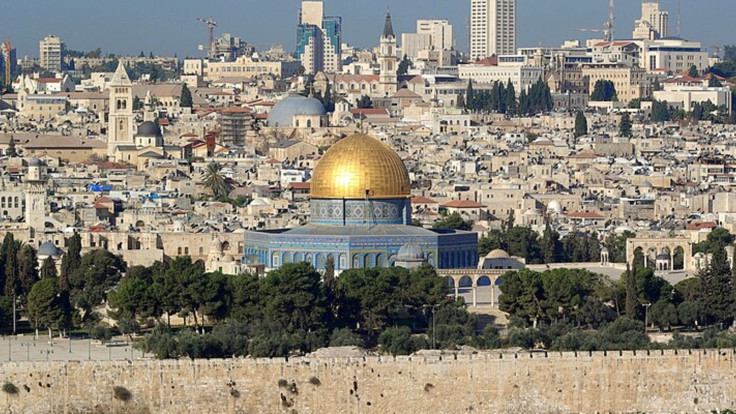
Archaeologists have uncovered the remains of a 20ft-wide circular marble monument beneath Jerusalem's Church of the Holy Sepulchre, directly surrounding the burial chamber Christians venerate as the tomb of Jesus Christ. The find offers fresh evidence of how one of Christianity's holiest sites was marked out, altered and rebuilt over more than 1,600 years of worship, conflict and restoration.
The newly identified structure does not resolve who was originally buried in the rock-cut chamber at its centre. The church has, however, been revered by Christians as the site of Jesus' crucifixion, burial and resurrection for nearly 1,700 years, anchoring centuries of pilgrimage and tradition in this part of Jerusalem's Old City.
The archaeological investigation is examining the church's complex history, including its earlier structures, building materials and successive phases of construction. Researchers are working to understand how the burial chamber was absorbed into, and reshaped by, the monumental religious complex that grew around it.
Francesca Romana Stasolla, an archaeologist at Sapienza University of Rome, has led the project. The investigations form part of a wider programme linked to the restoration of the church's floor, creating rare opportunities to study areas beneath the existing building that are normally hidden from view.
Academic publications document successive excavation campaigns at the site. Preliminary reports covering 2022, 2023, 2024 and 2025 describe the team's work and their evolving understanding of the complex. The reports are published through Liber Annuus and the University of Rome's research repository, while the Israel Antiquities Authority has also released an account of the 2022 excavations.
How Constantine's Builders Marked a Holy Site
The history of the Church of the Holy Sepulchre stretches back to the fourth century, when Roman emperor Constantine supported the construction of a major Christian complex at the location traditionally associated with Jesus' death and burial.
According to historical tradition surrounding the church, a rock-cut burial chamber was identified during development of the site. The surrounding rock was subsequently cut away, separating the chamber from nearby burial features and setting it apart within the landscape.
This intervention helped create a distinct structure around the venerated tomb. However, the precise details of the earliest monument must be reconstructed from archaeological evidence and historical accounts rather than inferred from the building visible today.
The church has undergone extensive changes since antiquity. It suffered damage during the Persian conquest of Jerusalem in 614 and experienced further destruction, rebuilding and restoration during later centuries.
As a result, the surviving remains may represent several stages in the monument's history. Identifying which elements belong to the original construction and which were added later remains a central task for researchers.
Marble Ring Beneath the Shrine
The surviving marble slabs offer clues about how the structure was assembled and modified. Reports on the discovery describe reused marble pieces joined with mortar to form a circular arrangement around the burial chamber.
Some slabs reportedly retain faint decorative traces. These details may help researchers establish when particular pieces were introduced, although decoration on its own cannot provide a firm construction date.
Stasolla has suggested that some of the surviving marble could be associated with repairs following the Persian attack of 614. This remains a proposed interpretation rather than a settled conclusion and is still being evaluated.
Ongoing analysis of the materials is therefore important. Examining the mortar and the physical relationships between individual slabs may help establish whether the surviving structure belongs to a single construction phase or several.
Linking Stone to Ancient Depictions
The monument's circular form is also significant. Researchers believe it may correspond to historical representations of the ancient shrine, offering a possible connection between the surviving remains and earlier artistic or architectural depictions of the tomb.
Even so, a resemblance between archaeological remains and historical representations does not show that every feature of the original monument has been recovered. Much of the structure's original appearance, layout and decoration remains uncertain.
The chamber's association with Jesus presents a separate historical question. Stasolla has discussed the possibility that early Christian communities preserved the memory of the burial place across generations. Such continuity could help explain why this particular chamber, among many ancient tombs in Jerusalem, became the focus of veneration.
That interpretation concerns the transmission of religious tradition over time. It does not independently prove the identity of the person buried there and is assessed separately from the physical remains.
A Continuing Investigation Beneath a Living Shrine
The Church of the Holy Sepulchre remains one of Christianity's most important pilgrimage destinations. Its identification as the site of Jesus' burial is rooted in longstanding Christian tradition, while archaeologists continue to investigate the physical evidence beneath and around the current building.
The newly examined marble monument adds another piece to that historical picture. Its dimensions, surviving materials and relationship to the burial chamber may help researchers reconstruct how the site developed, how the tomb was marked and how the surrounding space evolved.
For now, the findings provide detailed evidence about the architecture and history of the ancient shrine. Further analysis will be needed to clarify the monument's chronology and original appearance, while the question of the tomb's historical identity remains distinct from what the surviving marble can establish.
© Copyright IBTimes 2026. All rights reserved.