Is Donald Trump Okay? Mysterious Face Bruise Appears Amid Dropping Public Schedule
A new bruise on Donald Trump's face has intensified questions about his health and increasingly limited public schedule.
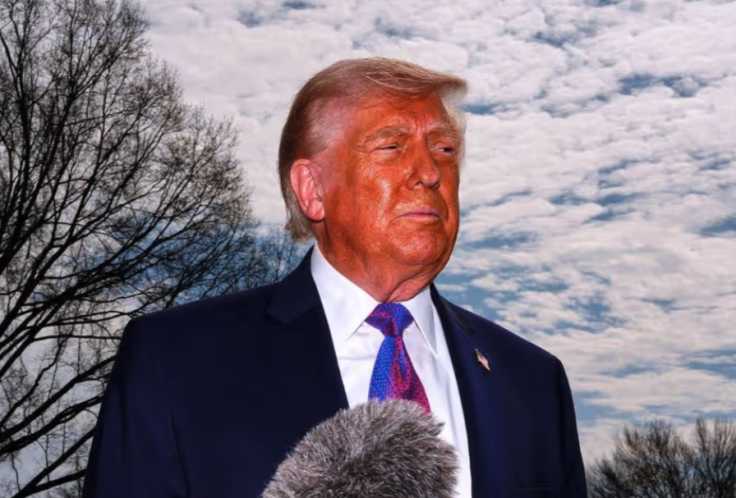
Donald Trump has triggered a fresh round of health questions in Washington after a new bruise appeared near his eyebrow this week, reviving scrutiny of the 79 year old president at a moment when his public schedule is already under close watch.
This did not emerge in isolation. Trump has repeatedly been seen with bruising on his hands since returning to the White House, with his press team insisting those marks are tied to constant handshaking and his work rate rather than any deeper problem. That official answer has been offered more than once, but it has never quite stilled the wider curiosity around a president who has made physical stamina part of his political brand.
A new photo from Trump's most recent public event reveals a large rash on his neck.
— Headquarters (@HQNewsNow) March 2, 2026
This rash is an addition to the continued large bruises on his hands. pic.twitter.com/Jj44QMRC2h
Donald Trump And The Latest Bruise
The eyebrow bruise matters less because of its size than because of where it appeared. A mark on the face is harder to wave away than one on the hand, particularly for a president whose image has long been built around force, vitality and the studied performance of being seen as tougher than the room around him. Even minor physical changes now draw outsized attention, partly because Trump himself has spent years treating health as a political argument rather than a private footnote.
The White House line on the hand bruising has been straightforward. Leavitt said Trump is 'a man of the people, and he meets more Americans and shakes their hands daily than any other President in history.' On another occasion, the administration also said a bruise came from him clipping his hand on a table, while officials have linked the recurring discolouration to aspirin taken as part of cardiovascular prevention.
🚨BREAKING: Karoline Leavitt just announced President Trump has been diagnosed with chronic venous insufficiency after swelling in his legs.
— Bo Loudon (@BoLoudon) July 17, 2025
Although nothing serious,
Pray for President Trump!🙏
pic.twitter.com/WGO5xhP12D
That explanation may be plausible, but it is not the only one doctors have floated in public. Medical experts cited in reporting on the bruises have said aspirin can make a person more prone to bleeding, and one physician quoted by CNN said the larger issue was not necessarily the mark itself but the lack of clarity around it. As he put it, 'The current concern is less about medical issues and more about transparency.'
Donald Trump Health Questions Keep Returning
The administration has also had to address a separate diagnosis. Last year, the White House said Trump had chronic venous insufficiency, which it described as a common and benign condition in older adults that can lead to blood pooling in the veins and increased pressure on vein walls. That disclosure followed visible swelling and renewed questions about his condition, although officials said at the time that he remained in excellent health.
JUST IN - Trump's physician releases official statement on Trump's "chronic venous insufficiency" diagnosis. pic.twitter.com/leESDD2skI
— Disclose.tv (@disclosetv) July 17, 2025
Trump has hardly helped to damp down the intrigue. He has said he undergoes regular health checks and has boasted that he has 'aced' them, while also acknowledging a high aspirin intake that he said keeps 'nice, thin blood pouring through my heart.' It was a very Trump answer, half reassurance and half performance, but it also gave critics and doctors another loose thread to pull at.
The broader pattern is what keeps this story alive. A New York Times analysis cited in later reports found that Trump's public appearances had dropped by 39 per cent compared with the same period in his first term, falling from 1,688 events to 1,029. The same analysis said his official day now starts later on average, around 12.08 pm rather than 10.31 am, with most public engagements packed into the hours between midday and 5 pm.
None of that proves a medical problem. It does, however, explain why a small facial bruise can become a national talking point almost on sight. When a president projects unflagging energy, every visible sign of wear carries more weight than it otherwise might, and the White House has so far offered no public account of the latest mark to close down the obvious question hanging over the photographs.
© Copyright IBTimes 2026. All rights reserved.
- MOST POPULAR IN Trending