

Trump Thought This $50M Investment Was a 'No-Win Situation', by 2025 It Was Worth $13B
From Bum Bright to Jerry Jones, the Cowboys' value soared through major ownership changes, far beyond 1980s team worths

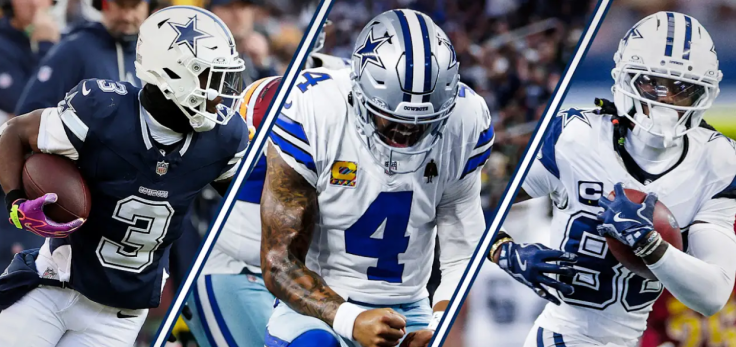
The comparison is striking. In 1984, Trump could have bought one of America's best-known sports franchises for $50 million. Instead, he chose a rival football league that lasted only three seasons. The Cowboys went on to become the NFL's most valuable team. Trump's decision remains one of the most remarkable missed opportunities in American sports business.
The Team Trump Did Not Want
In January 1984, Trump told The New York Times that he felt sorry for whoever bought the Cowboys. He argued that the team faced a difficult situation. If it won, he said, the victory would attract little attention because the Cowboys had already won so much. If it lost, the owner would be known as a loser.
Trump chose not to buy the team. He had already purchased the New Jersey Generals for $9 million in 1983. Bum Bright and 11 partners bought the Cowboys for $85 million in 1984. Bright sold the team and stadium for $140 million in 1989. Jerry Jones then bought the Cowboys in 1989 and remains their owner.
From Struggling Franchise to America's Team
The Cowboys had already won Super Bowls before Jones arrived. They won the 1971 and 1977 seasons and appeared in the championship game several times. The team also had a powerful public image. It coined the phrase America's Team in 1978, after a highlight reel highlighted its national television presence.
Jones made a controversial decision early in his ownership by replacing legendary coach Tom Landry. The move helped set the stage for a new era. The Cowboys won Super Bowls for the 1992, 1993, and 1995 seasons. They became one of the dominant teams of the 1990s. Their value has continued to rise. Forbes and Sportico estimate that the average NFL franchise is worth $7.1 billion, with every team valued at least $5 billion.
The Cowboys also lead the league in revenue and operating income. The team generated $1.2 billion in revenue and $629 million in operating income, according to figures cited by Benzinga.
The USFL Bet
Trump believed the USFL offered a better investment opportunity than the NFL. He bought the Generals for $9 million and pushed the league to move its games from spring to autumn. That would have placed the USFL in direct competition with the NFL.
Trump also backed an antitrust lawsuit against the NFL. The USFL folded after the 1985 season. The story later became the subject of ESPN's 30 for 30 documentary 'Small Potatoes: Who Killed the USFL.'
Trump's sporting ambitions did not end with the Generals. He also explored bids for the Baltimore Colts, Buffalo Bills, and New England Patriots. In 1983, he tried to buy Major League Baseball's Cleveland Indians, now known as the Cleveland Guardians. He would not commit to keeping the team in Cleveland.
A Different Path to the White House
Trump's failed attempts to buy an NFL team continued. In 2014, he tried to purchase the Buffalo Bills after owner Ralph Wilson died. The bid was rejected, and Terry Pegula bought the team instead. After the USFL ended, Buffalo signed several players from the league and coach Marv Levy. The Bills went on to become one of the NFL's strongest teams in the 1990s, reaching four Super Bowls.
The Cowboys' value has now far outpaced the $50 million Trump once considered spending. Forbes estimates Trump's wealth at $6 billion. The comparison is not a precise measure of what his fortune would have been. Ownership costs, debt, taxes, and other investments would have changed the outcome.
But the missed opportunity remains remarkable. A purchase that Trump once viewed as a no-win situation became one of the most valuable assets in American sport. The Cowboys still carry the America's Team label. In 2025, they also carry a price tag that makes the old decision look very different.
© Copyright IBTimes 2026. All rights reserved.