

Epstein's Private Messages Speculated Trump Might 'Bomb Iran' If 'Cornered Like a Rat' — Seven Years Before He Did
Epstein's private messages suggest Trump's Syria withdrawal was a precursor to larger military actions.
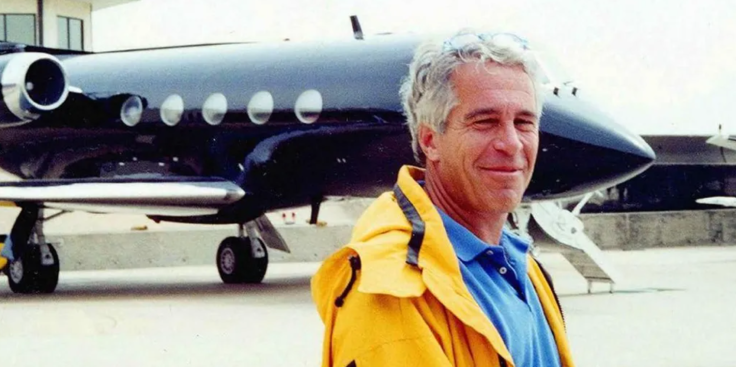
A set of iMessages buried in Jeffrey Epstein's released DOJ files shows the convicted sex offender privately speculating, in December 2018, that a politically pressured Donald Trump might resort to bombing Iran as a 'large diversion,' a theory that reads differently now that Trump has done precisely that.
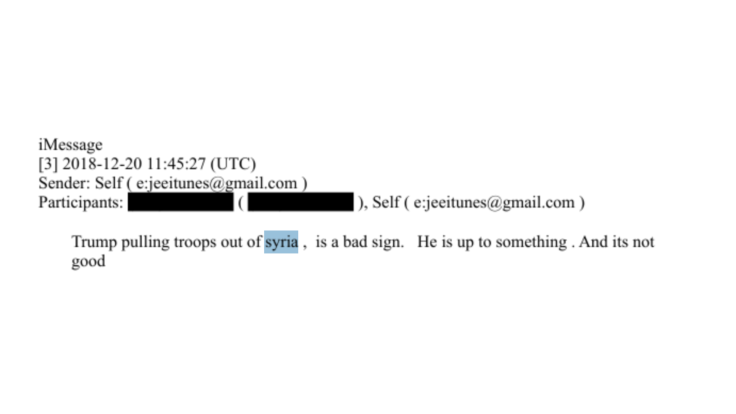
The messages, extracted from Epstein's MacBook and published as part of Dataset 9 of the Epstein Files Transparency Act release (evidence file EFTA01211330–EFTA01211347, device ID NYC024365.aff4), were sent on Dec. 20, 2018, the same day Trump shocked the Pentagon and Congress by announcing an unexpected withdrawal of US forces from Syria.
In them, Epstein is seen speculating to an unidentified contact that Trump's Syria decision was preparatory groundwork for a future, larger military operation, and that a man he called 'psychotic' would 'bomb Iran' if he felt his back was against the wall.
What the Document Shows
The exchange begins in the context of Trump's unannounced Syria withdrawal, which, as CNN reported at the time, caught even senior national security officials off guard and was described by former Secretary of Defence James Mattis as so contrary to his own views that he resigned the following day.
Epstein's opening theory, sent at 11:45 UTC on Dec. 20, 2018, reads: 'Trump pulling troops out of syria, is a bad sign. He is up to something. And it's not good.' Minutes later, he adds: 'btw. I believe that his pulling troops out of syria is step one' and 'He needs a large diversion.'
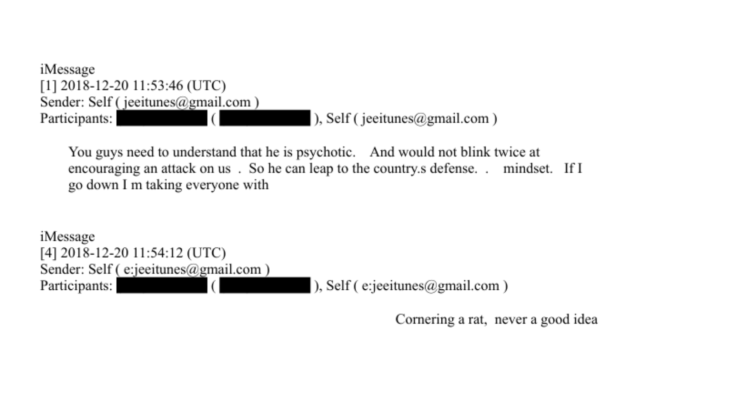
His reasoning builds across several messages. At 11:53 UTC, Epstein writes, 'You guys need to understand that he is psychotic. And would not blink twice at encouraging an attack on us. So he can leap to the country's defense... mindset. If I go down I'm taking everyone with.' Forty seconds later, he adds, 'Cornering a rat, never a good idea.'
At 11:56 UTC, he made his central claim, saying, 'Could be he doesn't want them there if a much bigger operation might put them in jeopardy. Reminder, he will take everyone down with him, if he feels the end is near. I always urge people not to corner a rat, they become extremely dangerous and unpredictable.' At 12:21 UTC, Epstein was explicit, stating, 'We only had 2k troops there, if he were to bomb Iran, they would be slaughtered.' The unidentified contact replied, 'Oh! That would be crazy!!' Epstein answered, 'Not from his perspective.'
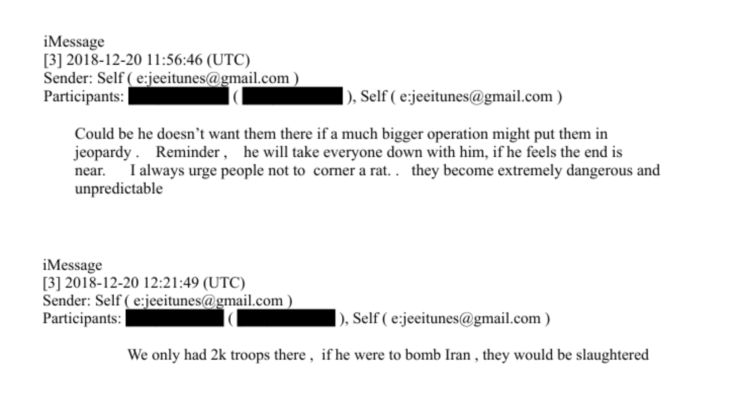
The identity of the second party in the conversation remains unknown. Their contact details have been fully redacted in the publicly released version of the document, consistent with the Department of Justice's stated policy of protecting personal information in the Epstein disclosures.
The Legal and Political Context of the December 2018 Messages
Epstein's messages were sent during one of the most legally precarious periods of Trump's first term. By December 2018, Special Counsel Robert Mueller's investigation had produced guilty pleas from former National Security Adviser Michael Flynn and former Trump campaign chairman Paul Manafort, and the investigation was pressing into Trump's immediate circle.
CNN's contemporaneous analysis noted that the Syria withdrawal 'echoes, and may be designed to distract from, major upheaval on the domestic front, as Trump contends with criminal investigations into his campaign, transition, inaugural committee and presidency.' That observation, published on the same day as Epstein's messages, maps almost exactly onto Epstein's stated theory of Trump's motivation.

Epstein's speculation about Iran was not unique to him, it reflected a broader debate already circulating in Washington. Bolton's earlier public statement, in September 2018, that the US would not leave Syria as long as Iranian forces operated there had framed any Syria withdrawal as directly related to Iran policy.
CNN reported expert David Adesnik's view at the time, stating, 'You can't have a counter-Iran strategy if you just hand Syria back to them.' Epstein appears to have absorbed that logic and extended it, reasoning that if Trump was handing Syria back, the counter-Iran strategy must be operating elsewhere. What distinguishes Epstein's private analysis is his psychological framing, the 'cornered rat' theory, which moves beyond foreign policy discussion into a speculative claim about Trump's personal motivations when under legal and political pressure.
Epstein was, at this point, living under the terms of his deeply contested 2008 non-prosecution agreement with the US Attorney's Office in Florida, a deal that was already attracting renewed scrutiny. He was not a government adviser, had no official intelligence access, and is not known to have had any direct communications with Trump after their publicly reported falling out in the early 2000s, details of which appear elsewhere in the same Dataset 9 release.
The Files, the Release and What's Still Missing
The document sits within Dataset 9 of the Epstein Files Transparency Act disclosures, the dataset that, according to Al Jazeera's visual guide to the files, contains 'email evidence, including private correspondence between Epstein and high-profile individuals.'
The dataset runs to millions of documents. The Jan. 30 release, the largest single drop, adding over three million pages, 180,000 images, and 2,000 videos to what the DOJ had published in its initial December 2025 batch, was described by the DOJ's own press release as erring 'on the side of over-collecting materials' to ensure maximum transparency.
The release has not been free of controversy. The Wikipedia overview of the Epstein Files Transparency Act documents that the DOJ was forced to pull approximately 9,500 files after faulty redaction techniques allowed members of the public to recover blacked-out content, including victim identities.
The second participant in the Dec. 20, 2018 exchange has not been identified. Whoever they were, they were present on Red Square in Moscow that day, writing, 'On Red Square! Beautiful in an air of drifting snowflakes. Dinner with minister for economy tonight. London tomorrow,' and appeared to have had recent access to White House officials, noting, 'Completely opposite to what I was told in the White House. What is he up to?'
What Epstein wrote in a private iMessage in December 2018 does not explain what Donald Trump decided in February 2026, but history on this occasion did not contradict him.
© Copyright IBTimes 2026. All rights reserved.