Mojtaba Khamenei Is Gay Rumours Explained: Donald Trump 'Could Not Contain Laughter' Over Secret Intelligence on Iran Leader
Trump cites unsubstantiated intelligence briefing on Mojtaba Khamenei's private life amid no evidence.
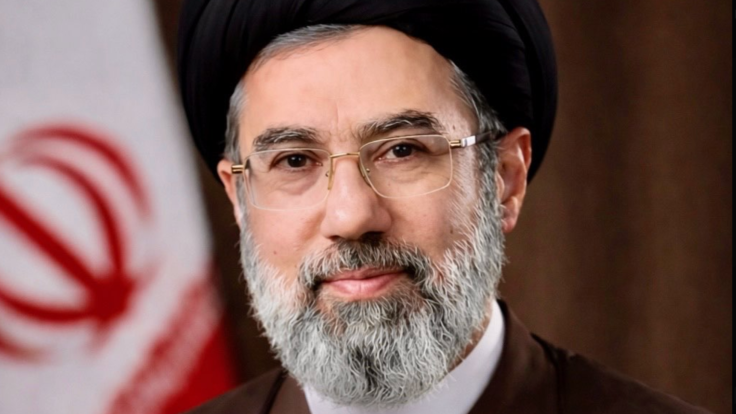
US President Donald Trump has claimed he was briefed by intelligence agencies about rumours concerning Iran's new Supreme Leader Mojtaba Khamenei, according to an article reporting his remarks during an exchange with Fox News anchor Jesse Watters following Khamenei's appointment on 8 March. The claim involves deeply personal allegations and relies on reported comments and tabloid reporting rather than independently verified evidence, and that distinction is central to the story.
Mojtaba Khamenei became supreme leader following the death of his father, Ayatollah Ali Khamenei, even though the late leader had reportedly opposed his son succeeding him. It was against that backdrop that Trump was said to have discussed intelligence briefings on Khamenei's private life, turning what might otherwise have remained a murky diplomatic rumour into a global headline.
Watters asked Trump directly whether the CIA had told him that 'Ayatollah Jr is gay.' Trump reportedly replied that 'they did say that,' before adding that he did not know if it was only them and that 'a lot of people are saying that.'
Even by the lax standards of political television, it is a remarkable formulation. It attributes nothing firmly, confirms nothing clearly and still manages to put a highly personal allegation into circulation at the highest level.
The article becomes awkward in a way gossip often does not acknowledge. It presents Trump's reported answer as news while relying on additional claims attributed to the New York Post, unnamed insiders and diplomatic cables disclosed by WikiLeaks.
Yet nowhere in the material provided is there independent evidence produced to substantiate the core allegation. There is no public intelligence document, no on-the-record confirmation from a US agency and no response included from Mojtaba Khamenei or Iranian officials.
The Problem With Hearsay
The text also mentions claims that Trump allegedly laughed during the briefing and that officials reportedly had enough confidence in the intelligence to elevate it to senior levels. Those details are colourful and clearly intended to give the story momentum, yet they do not answer the fundamental question of truth. If anything, they illustrate how political gossip adopts the guise of officialdom long before it earns the status of fact.
The same is true of the article's references to Khamenei's marriage, medical treatment and supposed private history. These are intensely personal matters, and in the material provided they are presented through second hand reporting and leaked diplomatic descriptions rather than through verifiable public records. For a responsible newsroom, that is usually the point at which caution should harden, not melt away.
Trump briefed that Iran's new supreme leader Mojtaba Khamenei is probably gay - and president has priceless reaction https://t.co/FoqZWam61y pic.twitter.com/iJNEfe9zuP
— New York Post (@nypost) March 16, 2026
Trump's role is central because he moves the story from rumour into presidential rhetoric. The article suggests he treated the matter lightly, but the consequences are not light at all.
Allegations about sexuality can carry obvious danger in a country like Iran, where personal identity and state power collide in brutal ways. That is precisely why any responsible publication has to be stricter than the source material, not looser.
Why Khamenei, Trump Story Still Falls Short
There is also a more practical journalistic problem. The article offers no documentary trail a reader could test. The cited intelligence assessments are not shown. The diplomatic cables are paraphrased rather than laid out in full.
The sourcing is mostly anonymous. A reader is therefore left with fragments, insinuations and political theatre, which may be enough for a splashy tabloid item but is not enough to transform allegation into established fact.
President Trump says CIA told him Iran’s new supreme leader, Mojtaba Khamenei, is gay.
— Kristen Holmes (@KristenhCNN) March 26, 2026
Asked by Fox News host Jesse Watters, “Did the CIA tell you that Ayatollah Jr. is gay?”
Trump said: “Well, they did say that, but I don’t know if it was only them. I think a lot of people are…
What remains, stripped of the noise, is relatively narrow. Trump reportedly said intelligence agencies briefed him on rumours about Mojtaba Khamenei. Other outlets were said to have carried similar allegations.
The article includes no independently verified evidence proving those claims. If the story develops, the most important missing element will not be another anonymous quote or another knowing aside from television. It will be evidence, on the record and open to scrutiny, because without that this is still a story about what was said, not what has been shown.
© Copyright IBTimes 2026. All rights reserved.
- MOST POPULAR IN Trending