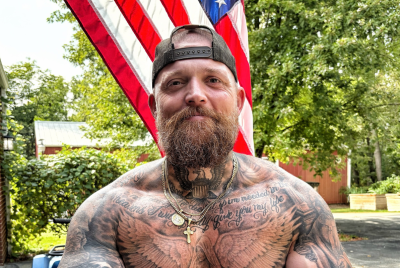
Face-Tattooed Colombian Woman Sparks Outrage After Pledging Allegiance to Colombia Despite U.S. Citizenship
Her viral clip led to fierce online debate, accusations of dishonesty during naturalisation, and a tense clarification that only added more fuel to the fire.

A face-tattooed Colombian woman known online as Ana has ignited a wave of anger across social media after a podcast clip resurfaced showing her pledging full loyalty to Colombia despite being a naturalised United States citizen. The short video triggered accusations of betrayal, calls for her citizenship to be revoked, and a heated debate about what allegiance truly means for dual citizens living in America.
The Viral Clip
The controversy began when a brief excerpt from a podcast started circulating online. In the clip, the host asked Ana a simple hypothetical question: if the United States went to war with Colombia, which country would she support. Her response was immediate and blunt. She chose Colombia.
The reaction online was intense. One user wrote that her citizenship should be revoked, adding that the oath she swore now seemed meaningless. Critics described her as ungrateful for the opportunities she received, pointing out that she had been living in the United States for ten years, graduated from school there, and now works as a tattoo artist in Huntington Beach.
This anger was fuelled further by political commentators who framed the issue as a question of national security. Some accused her of openly lying under oath during naturalisation, pointing to the ceremony's requirement to renounce loyalty to other nations. By the time the video reached several large accounts, the tone of the discussion had taken on a life of its own.
@whateverpod Should she LOSE her US citizenship and be DEPORTED?!
♬ original sound - whatever.com
UPDATE: The face-tattooed Colombian, who admitted her FULL allegiance to Colombia, despite being a naturalized U.S. citizen, has been living in the U.S. for 10 years and even went to school here.
— Savanah Hernandez (@Savsays) November 30, 2025
She ironically enough stated that she came to the U.S because she “wanted to have… https://t.co/WGCxiRnBDe pic.twitter.com/LFoJKYadcV
Her Clarification And What She Really Meant
As threats and accusations continued to escalate, Ana posted a video on Instagram to clarify her side of the story. She opened the video by saying, 'I do not want to respond to this clip because, yes, that was me on the podcast.' She went on to explain that the show's format was designed to push guests into reactive answers. She said, 'The point of the show is to get reactive responses from its guests, and I did give a reactive response.'
Ana also pushed back against accusations that she was disloyal to the United States. She said, 'Believe it or not, I lean much further than 100 million plus Americans who would love to see this country burn. I am more loyal than probably half of the citizens that were born here.' She added that she contributes economically and is grateful to be in the country. She reminded viewers that she came to America for a better future, like many immigrants before her. Her final point in the video was a plea for calm. 'I have been receiving a lot of threats on this topic, so I just wanted to clear this up,' she said.
Public Reaction And Allegations
Her attempt at clarification did little to quiet the storm. Many believed that her original statement revealed her true perspective. Critics said that her choice to support Colombia first showed a deeper divide between naturalised citizens and the expectations placed upon them. Others saw the incident as evidence of a growing cultural tension around identity, patriotism and immigration.
Political accounts amplified these arguments by pointing out her background. They noted that she spent only ten years of her life in Colombia yet professed full allegiance to it. They highlighted that she swore an oath renouncing foreign loyalty, claiming that her comments undermined the naturalisation process. The outrage expanded into a broader debate about whether dual citizenship creates divided loyalties, and whether naturalised citizens should be held to a higher standard of allegiance.
A Debate That Goes Beyond One Viral Clip
What began as a short podcast moment has now become part of a much larger discussion about belonging, national identity and what it means to be American. Her video raised questions about fairness, the meaning of citizenship, and how one reactive answer can reshape a stranger's entire public image.
In the end, the story became less about Ana as a person and more about the tensions surrounding migration and patriotism in America today. The arguments continue, with no sign of settling soon.
© Copyright IBTimes 2026. All rights reserved.
- MOST POPULAR IN World