Four Asteroids Race Past Earth in 24 Hours — Here's How Close They'll Really Get
NASA-tracked space rocks will make near-Earth fly-bys within a single day, but scientists say there is no danger to the planet

Space agencies are tracking four near-Earth asteroids set to make close approaches to our planet within a single 24-hour window, according to new data from NASA's Jet Propulsion Laboratory (JPL) report.
While the cluster of fly-bys has sparked public interest and occasional alarm, scientists emphasise that each asteroid will pass at distances far outside any impact range.
The objects, all categorised as near-Earth objects (NEOs), are part of NASA's continuous monitoring programme, which routinely traces small bodies that pass within several million miles of Earth.
What the Data Shows — The Upcoming Four Fly‑bys
NASA's 'Next Five Asteroid Approaches' report traces near-Earth objects (NEOs) that will approach Earth within a range up to 4.6 million miles (7.5 million kilometres).
Although NASA does not always feature headlines about four-asteroid events, the database indicates that several objects have close-approach dates in the future, which can serve as a reminder that several NEOs can pass our planet without posing any significant danger.
What's more, scientific watch-lists can sometimes be shuffled due to the variability in the identities, sizes, and trajectories of minor asteroids, meaning four, five, or more asteroids could be listed within a short period. What they have in common—their miss distances, specified as 'close'—are still above collision-threat levels.
Close But Not Dangerously So: The Distances Explained
In context, the mean distance between the Earth and the Moon is approximately 239,000 miles (385,000 kilometres).
According to NASA, NEOs typically travel up to 4.6 million miles, roughly 19 times the Earth-Moon distance. Even minor rock-sized asteroids would put them well out of Earth's atmosphere or into any area of gravitational threat to Earth. Therefore, these cosmic bodies are perfectly safe and commonplace phenomena.
Why NASA Tracks These Fly‑bys — Even the Safe Ones
Close-earth monitoring is not merely about identifying dangers. According to the Asteroid Watch of the Jet Propulsion Laboratory (JPL), any close approach, regardless of proximity, offers scientists an opportunity to improve trajectory computations, analyse asteroid compositions and create long-term data banks.
Due to the presence of many asteroids with small sizes that are only discovered just before colliding with the object, their orbits are uncertain. Continuous monitoring helps seal such gaps and enhance risk-assessment models going forward.
In most cases, what is of interest is not danger, but rather the opportunity it provides astronomers to make measurements, record images, or experiment with detection techniques.
What This Means For You: No Panic, Just Awareness
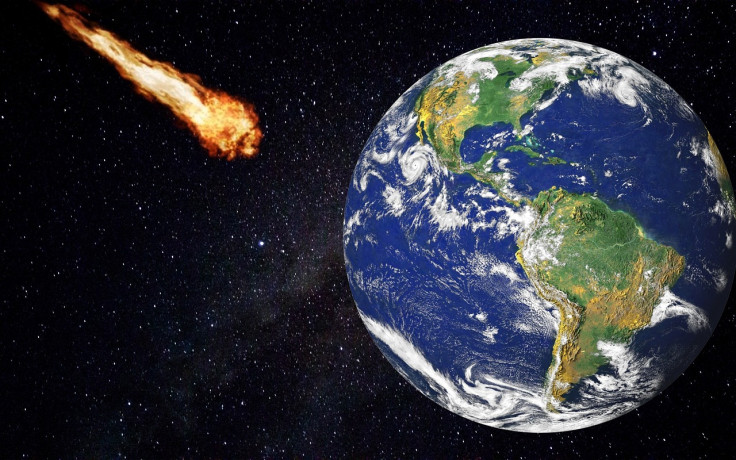
For the general public:
- No danger: No number of the approaching asteroids will collide.
- No celestial display will be visible: These asteroids will not appear in the sky like shooting stars or in a meteor shower, due to their distance and small size.
- Scientific interest alone: Observatories can research them, but there's no threat to Earth.
These cosmic objects travelling in close range are only part of the regular motion of the solar system—the Earth spins around the Sun in a changing field of debris, comets, and minor bodies. The vast majority of passages go by—and go unnoticed.
Why Context Matters: Debunking the 'Close‑Call' Hype
Asteroid passages are occasionally mentioned in the media, which can cause panic. However, without proper context, 'close' can be misleading: a few million miles away is relatively close in terms of the spatial scale of cosmic bodies, but not so close as to mean actual impact on Earth.
At NASA, objects are considered 'close approaches' when they are within a range that enables palpable tracking and data collection, rather than signifying danger for the planet. In reality, nearly all asteroids near the Earth passing through these limits prove to be relatively harmless.
© Copyright IBTimes 2026. All rights reserved.
- MOST POPULAR IN World