China's Shenzhou-20 Spacecraft Damaged Mid-Mission, Will Return Uncrewed for Critical Analysis
A damaged return capsule forces China to send Shenzhou-20 back without astronauts for urgent analysis
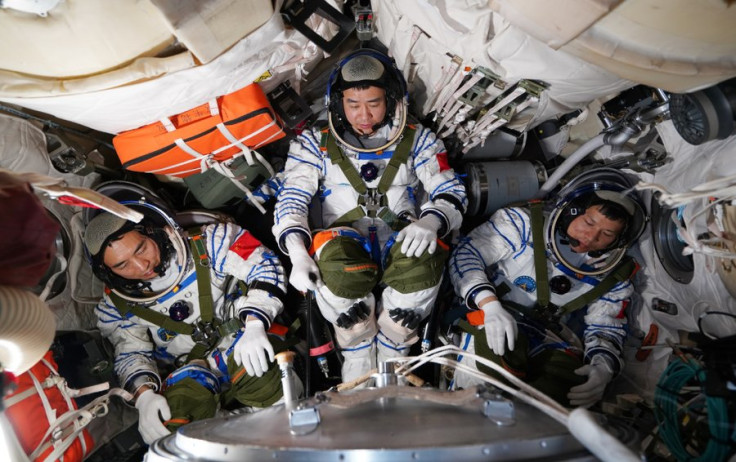
China's space programme is confronting one of its most serious in-orbit safety scares to date, after engineers discovered that the Shenzhou-20 return capsule, docked at the Tiangong space station, had suffered a crack in its viewport likely caused by micrometre-scale orbital debris.
The damage, confirmed in a detailed assessment by the China Manned Space Agency (CMSA), forced officials to take the unusual step of ordering the capsule home without its astronauts.
With re-entry risks deemed unacceptable, the mission crew instead returned aboard Shenzhou-21, landing safely on 14 November 2025.
The episode highlights the growing danger of tiny, untrackable space debris and showcases China's contingency planning as it launched an immediate replacement spacecraft to restore evacuation capability.
Debris Strike Forces Emergency Re-Entry Plan
CMSA spokesperson Ji Qiming told state media that the window crack made Shenzhou-20 unsafe for a human re-entry.
The damage was traced to a sub-millimetre fragment, the kind of orbital debris that travels at several kilometres per second and can puncture spacecraft despite its size — an increasingly common threat documented by NASA's Orbital Debris Programme.
The three astronauts on board — Chen Dong, Chen Zhongrui and Wang Jie — were promptly reassigned to return aboard Shenzhou-21, which completed a nominal landing at the Dongfeng site.
Why the Window Crack Is a Serious Structural Risk
Chief spacecraft designer Jia Shijin explained that the crack extended through the full thickness of the viewport — from the inner glass to the outer pane.
A through-thickness crack poses multiple hazards:
- A weakened pressure seal
- Risk of pane separation during re-entry heating
- Potential depressurisation
- Instability in life-support performance
Such failures can become catastrophic during re-entry, where thermal stresses and aerodynamic loads peak.
CMSA concluded that the spacecraft 'does not meet the safety requirements for a crewed return.'
What Happens Now: Uncrewed Return and Investigation
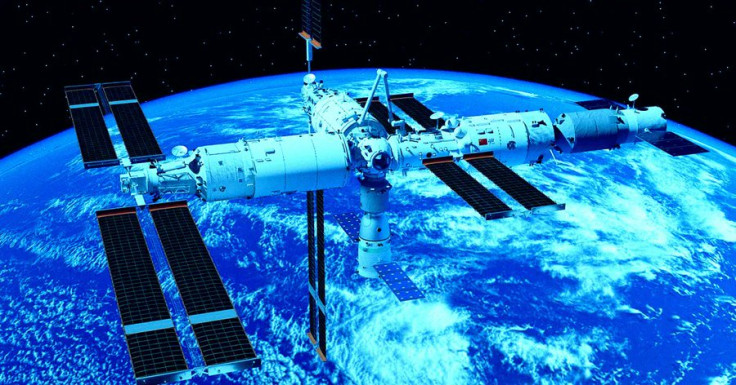
Shenzhou-20 will undock from Tiangong and re-enter Earth's atmosphere without any crew on board. The purpose is to recover the capsule for close-up inspection and testing under ground conditions.
China's human-spaceflight agency, China Manned Space Agency (CMSA), says the data gathered will be 'authentic experimental data' to help ensure safety on future missions.
Meanwhile, the Shenzhou-22 spacecraft, launched on 25 November, is now docked at Tiangong, delivering supplies and establishing a new return vehicle for the current crew aboard Shenzhou-21.
During upcoming spacewalks, the Shenzhou-21 crew may also inspect or attempt protective work around damaged areas of Shenzhou-20's viewport, using specialised equipment carried by Shenzhou-22.
What This Incident Reveals and What's at Stake
The damage to Shenzhou-20 underscores the real, growing threat posed by micrometre-sized orbital debris, too small to track easily yet travelling at high speed and capable of disabling spacecraft. Experts say this kind of tiny-debris strike may be an increasing hazard for all low-Earth-orbit stations.
For China's space programme, the swift launch of Shenzhou-22, less than three weeks after the problem was identified, demonstrates readiness and contingency planning.
Still, safety remains the priority. The decision to return Shenzhou-20 uncrewed and avoid risking astronauts on a compromised craft reflects a cautious, risk-averse stance, at least in this instance.
What Lies Ahead
Once on the ground, engineers will scrutinise the damaged capsule, studying the crack's formation, propagation, and structural consequences. Their findings will likely influence design, shielding standards, and operational protocols for future missions.
In parallel, space-debris tracking and mitigation efforts may receive renewed attention, both within China's programme and globally, to safeguard human spaceflight against these stealthy hazards.
For now, Shenzhou-20's uncrewed return may turn into a valuable learning opportunity. As CMSA puts it, the incident will yield 'the most authentic experimental data,' potentially helping to make future crewed missions safer.
© Copyright IBTimes 2026. All rights reserved.
- MOST POPULAR IN World