Scientists Dropped Cameras 80 Feet Underwater—What Appeared Was a Wake-Up Call for the World
Underwater cameras reveal startling marine life, showing why ocean protection has never been more critical

When a team of marine scientists lowered underwater cameras 20–25 metres beneath the surface near remote Pacific islands, they expected glimpses of sharks. What they captured instead was a staggering contrast that now challenges the world's assumptions about marine protection.
In a sweeping new study led by the Charles Darwin Foundation, scientists recorded footage across seven major marine-protected areas (MPAs) in the Eastern Tropical Pacific.
Remote sanctuaries such as the Galápagos and Revillagigedo were teeming with sharks and large predators, resembling oceans of the past. But coastal MPAs — despite their official 'protected' status — were effectively empty.
The findings reveal a sobering truth: protection only works when enforcement is real, pressure is low, and ecosystems are given space to recover.
A Window Into a Healthy Ocean
The survey covered seven MPAs across the Eastern Tropical Pacific—from the remote strongholds around Galápagos Islands, Malpelo Island, Clipperton Island and Revillagigedo Islands, to coastal reserves such as Machalilla National Park, Galera‑San Francisco Marine Reserve, and Caño Island Biological Reserve.
To collect data, scientists deployed baited remote underwater video systems (BRUVs) and recorded each site for at least 100 minutes at depths of 65–80 ft. The results were dramatic: remote island MPAs teemed with sharks and other large predatory fish, while coastal MPAs were depressingly empty.
As lead scientist, Simon McKinley described when diving near the Galápagos' Darwin and Wolf Islands, 'You couldn't turn anywhere without seeing a shark.'
Remote MPAs vs Coastal Reserves: The Stark Contrast
In remote, strictly protected zones, shark and predator populations appear close to what marine biologists believe oceans looked like decades ago. The island sanctuaries seem to offer a 'window into the past,' where top predators remain the norm rather than the exception.
By contrast, although many coastal zones held MPA status on paper, the reality was bleak. Across more than 30 camera deployments in coastal reserves, researchers recorded only four large predators.
The difference? Remoteness and enforcement. Remote areas are harder to reach, making illegal fishing risky. But near the coast, human pressure remains constant: fishing, pollution, habitat destruction. As one researcher put it, 'Marine protected areas that allow fishing do not work.'
Why Sharks Matter — The Ocean's 'Managers of the Reef'
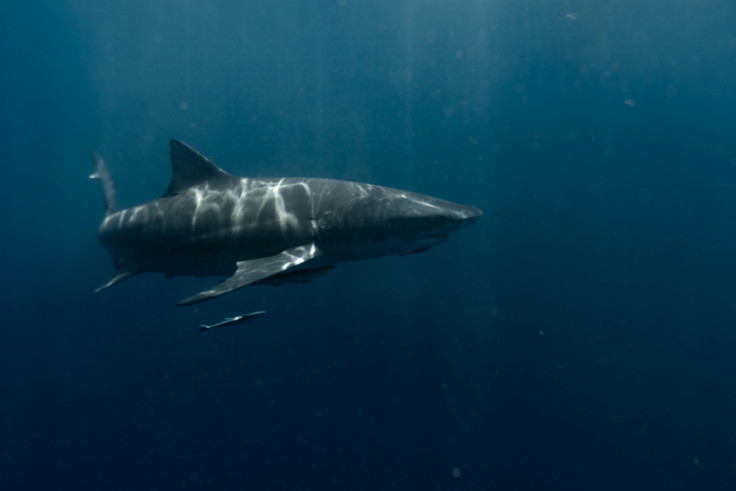
Sharks are more than fearsome predators; they are vital to ocean health. As top predators, they help regulate marine ecosystems by removing sick or weak fish and preventing any single species from dominating. This balance preserves biodiversity and helps maintain a healthy, resilient ocean.
In an ecosystem where sharks still thrive, the entire food web tends to be more robust—from reef fish populations to corals, to the countless species that rely on a stable marine environment.
Furthermore, certain MPAs serve different ecological roles. Some, like parts of the Galápagos and Clipperton, act as nursery grounds for juvenile sharks, while others, such as Revillagigedo, serve as foraging or aggregation zones for adults.
What This Means for Ocean Conservation
- Not all MPAs are equal. The study shows that size, remoteness, and strict enforcement matter far more than the mere existence of a protected status. Coastal reserves often fail because protections are too lax or unenforced.
- Creating high‑protection zones works. The remote island reserves, protected by strong legal measures and minimal human interference, harbour some of the highest concentrations of sharks recorded globally.
- Healthy oceans benefit economies, too. Areas like Galápagos have long been under threat from overfishing and shark finning. Yet, once restored, their shark populations contribute heavily to ecotourism, diving, and coastal livelihoods.
- Policy must match ambition. As governments work towards global targets, such as protecting 30% of the world's oceans by 2030, this new data suggests quality matters as much as quantity. Concerted effort, vigorous enforcement, and real 'no‑take' zones are essential.
A Blueprint for the Future — If the World Acts
The study's message is clear: not all MPAs are equal.
- Size, remoteness and enforcement determine ecological success.
- No-take zones consistently outperform mixed-use reserves.
- Healthy oceans boost local economies through diving, ecotourism and sustainable livelihoods.
As nations push toward global targets like protecting 30% of the world's oceans by 2030, this research underscores that quality matters as much as quantity. Creating paper parks is not enough; meaningful enforcement is the key.
These shark-rich Pacific sanctuaries offer a rare glimpse of what the ocean once was — and what it could be again.
A Wake‑Up Call but also a Glimmer of Hope
The underwater cameras captured a blueprint for sustainable marine conservation. In a world where shark species have dramatically declined, with over 70% population drops for some key species in many regions, these shark‑rich islands remind us what's possible when humanity steps back and lets nature recover its balance.
As one conservation leader quoted in the study said, these remote oceanic islands provide a glimpse of what a healthy ocean looks like.
If world leaders and conservationists pay attention, the footage from 80 ft down may become a turning point, not just for sharks, but for the future of our oceans.
© Copyright IBTimes 2026. All rights reserved.
- MOST POPULAR IN World