'I Don't Pretend to Be a Professional Chess Player, but This Lesson Was Amazing for Me' — Timur Turlov on His Love for Chess and His FIDE Candidacy

For the first time in history, a representative of Kazakhstan may become the head of FIDE. Timur Turlov, the founder of Freedom Holding, is a candidate for the post. He has taken a keen interest in chess and has already made a tangible impact on the status of this sport within the country.
Turlov is prepared to allocate over USD 10 million to support the development of the International Chess Federation and intends to apply ecosystem-based principles in its governance - principles he actively leverages in his own business operations.
Timur Turlov, founder of Freedom Holding Corp., is running for the presidency of the International Chess Federation (FIDE).
According to traders' forecasts, on 22 September, he has an 82% probability of securing the position. The businessman's support for chess as a sport began with a school club that his children attended, as he revealed in an interview with the ChessBase YouTube channel.
In Timur Turlov's view, chess is an excellent alternative to social media scrolling for children. 'When children are on their smartphones and scroll through social media, they often struggle to concentrate,' the financier said. 'At the same time, they can sit and look at a chessboard - without emotional strain, without distress - for many dozens of minutes.'
Moreover, the experience Timur Turlov gained at the chessboard has proven valuable in business. The founder of the Kazakhstan financial holding admitted that he used to be convinced that stress and lack of sleep did not affect the quality of his decisions.
However, his time at the chessboard proved otherwise. 'I definitely made far more mistakes when I was tired, had slept less, and was under stress. I performed much better when I was in a calm state. It may sound obvious, but it wasn't obvious to me,' Turlov said.
The businessman noted that early in his career, he was taught to 'make decisions instantly - like in a blitz game.' 'I truly believed that none of this mattered - that the quality of my decisions remained roughly the same at all times. But, of course, that is not the case,' he stated.
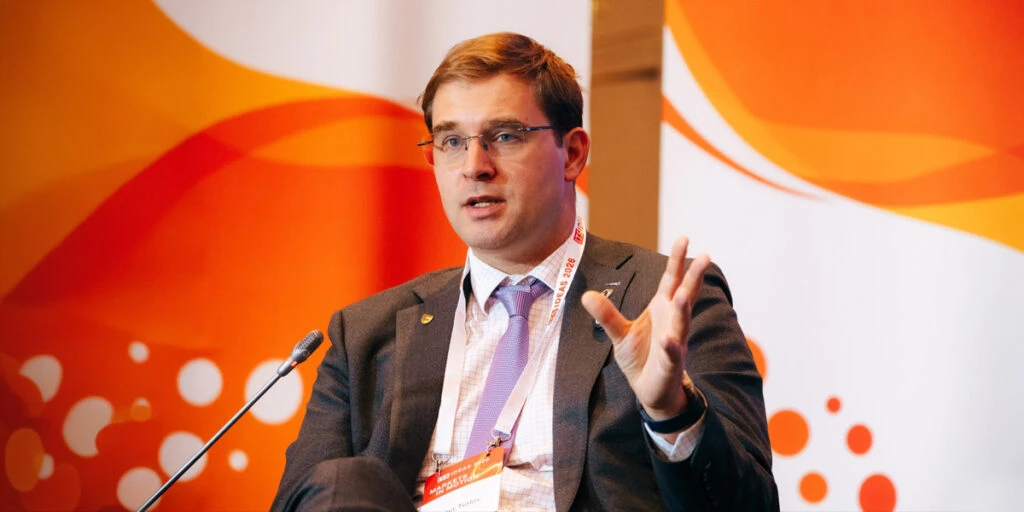
The Chess Revolution in Kazakhstan
Timur Turlov's involvement in the chess domain began long before the current campaign.
After taking the helm of the Kazakhstan Chess Federation in January 2023, the entrepreneur focused on expanding the sport's infrastructure: chess clubs were established in all 20 regions of the country, and support for national teams and young players increased.
The number of Kazakhstan tournaments registered in international databases more than doubled over two years - from 1,538 in 2023 to 3,853 in 2025.
School education plays a pivotal role in this strategy. The 'Chess in Education' programme is already implemented in over 1,500 schools across Kazakhstan, reaching approximately 60,000 children and supported by the training of around 2,800 teachers. The next target is to expand the number of schools where chess is taught as an academic subject to 2,500.
Results are also evident at the international level. Following the programme's introduction in 2023, Kazakhstan players won 126 medals at official international competitions; in 2025, that number had grown to 162. In 2024, the women's national team of Kazakhstan won silver at the Chess Olympiad - the first time in the country's history.
Turlov began supporting chess through a children's chess club attended by his children. 'I started to talk to people in the chess club about how we can help, and how we can do more, how can we help you to be able to serve more kids, and get maybe better vision to spread chess more.
'I was really excited and I realized that I started to, together with my kids, we started to work with the same trainer, and he started to teach me. I did some more or less basic stuff in studios, in games, and I also, of course, I don't pretend to be a professional chess player, but this lesson also was amazing for me.'
What Will Change at FIDE
Freedom Finance, founded by him in 2008, took Freedom Holding Corp. public on Nasdaq in 2019 and over time evolved from a brokerage into an ecosystem of financial, insurance, payment, telecommunications, and lifestyle services.
By September 2026, the holding company's market capitalization had exceeded USD 10.5 billion, and Forbes estimated Turlov's net worth at around USD 7 billion.
Turlov now applies the same principle - integrating products, services, and audiences - to chess. In Samarkand, he presented an approach linking FIDE's development to the support of national federations, primarily through media, digital tools, and education.
The businessman proposes establishing a centralised team within the federation to collect and disseminate data on international tournaments, produce content, and assist countries in building professional communication channels.
For these purposes, Turlov is ready to commit at least USD 1.5 million annually for a minimum of four years - in addition to the FIDE budget.
The funds are intended for training, media support for federations, and financing specialists in cases where national chess organisations cannot maintain their own teams. Separately, he declared his readiness to advise federations on engaging with governments, businesses, and the media.
For FIDE itself, Turlov proposes a dedicated fund of EUR 6.2 million - approximately USD 7 million. Thus, the minimum volume of declared commitments amounts to around USD 8.5 million, though he expects actual investments to exceed USD 10 million.
These funds would come from his personal assets and potentially involve Freedom Holding Corp.; Turlov refers to the implementation of the plan as his personal guarantee.
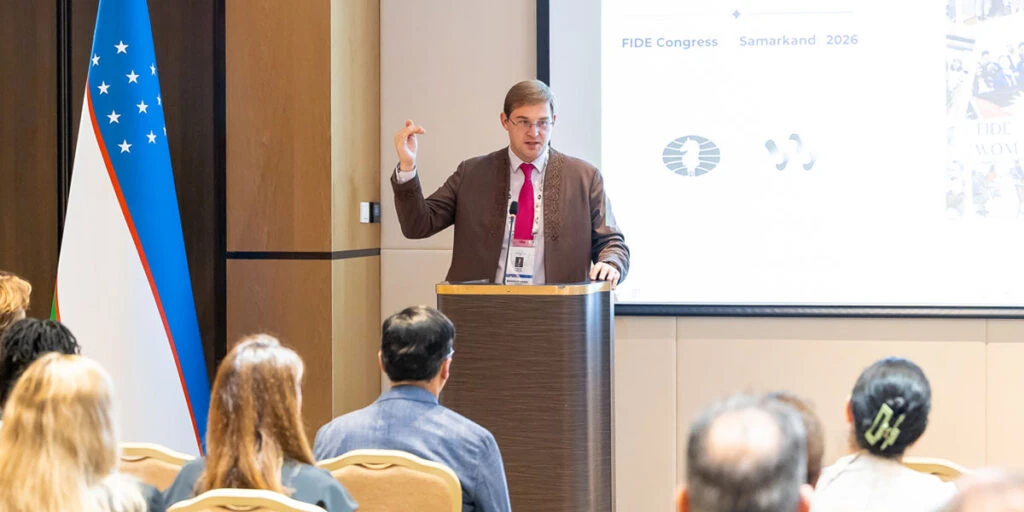
His election program includes ten key areas: digital transformation; integration of AI in training and tournament management; advancement of chess education; supporting players and federations; strengthening the financial model; and enhancing governance transparency.
Specific initiatives include a unified digital player account, management tools for federations, three major open tournaments per year held in Africa, the Americas, and smaller countries, as well as a clearer and pre-published World Championship cycle.
Separate components of the programme focus on women's and social chess. Timur Turlov proposes increasing the prize funds for women's tournaments, expanding mentorship programmes, and training female coaches.
Within FIDE's governing bodies, he advocates ensuring at least 35% gender representation. The social component of the programme includes initiatives for people with disabilities, the elderly, and refugees, as well as projects in hospitals, educational institutions, and correctional facilities.
About the Contributor: Daniel Harper is a Senior Market Analyst at Freedom Finance specializing in cross-border capital flows and fintech ecosystems. With over 12 years of experience in equity research and macro strategy, he focuses on emerging markets and technology-driven financial expansion.
© Copyright IBTimes 2026. All rights reserved.
- Recommended For You