

'I Got Carried Away Basically': Elon Musk Expresses Regret Over His Department of Government Efficiency Era
A billionaire's admission of being drawn to political power leaves larger questions about its consequences unanswered

Elon Musk has admitted getting 'carried away' during his role in President Donald Trump's administration in Washington, saying he stayed too long.
The remarks emerged on Tuesday, 20 October, in an interview with biographer Walter Isaacson recorded on 6 August 2026.
The billionaire left his formal government role in May 2025, after helping drive the Department of Government Efficiency (DOGE).
The Trump administration created the initiative to cut federal spending, modernise government technology and reduce bureaucracy.
Musk defended his reasons for supporting Trump. He regretted his time in government and his visibility, not a wholesale rejection of DOGE's spending cuts.
Elon Musk Says Oval Office Access Was 'Kind of Cool'
During the debut episode of Isaacson's podcast, The Builders, the biographer asked whether Musk's government involvement had become too distracting. 'I think I had it going for too long,' Musk replied.
He explained that he backed Trump because he hoped for a freer market economy and less bureaucracy. But he now believed he should have remained 'more in the background' rather than becoming such a prominent participant.
Isaacson pressed him on whether spending time with the president had been seductive. 'It was a little bit,' Musk acknowledged.
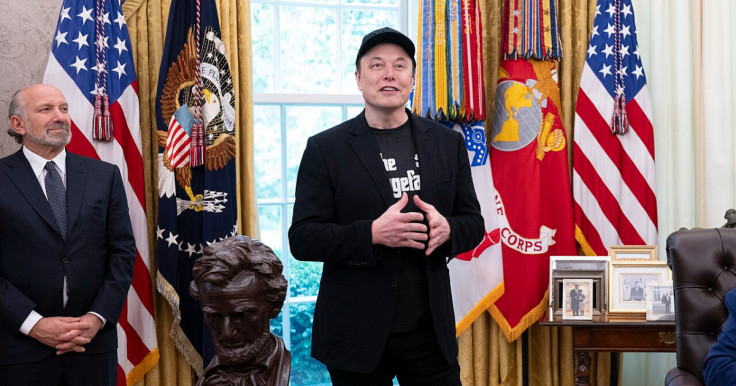
He described sitting inside the Oval Office as major decisions unfolded, sometimes with opportunities to influence discussions. 'It was kind of cool,' he said.
Musk suggested that one or two months would have been enough to experience how the White House operated. His involvement continued longer, with public appearances making him one of DOGE's most recognisable figures.
Isaacson suggested Musk became intoxicated by the experience, citing the chainsaw associated with his cost-cutting campaign. Musk agreed. 'I got carried away basically,' he said.
He also said he should have returned to his artificial intelligence work sooner. Yet his remarks stopped short of an apology for DOGE's policies or their consequences.
Musk described a further change in outlook. He said efforts to resolve America's budget deficit from within government faced political resistance, and argued that artificial intelligence and robotics offered a better path.
Elon Musk's DOGE Admission Leaves Its Financial Record in Dispute
DOGE's organisational history is less straightforward than a single closure date suggests. Trump's executive order of 20 January 2025 scheduled the temporary US DOGE Service organisation to end on 4 July 2026.
By November 2025, however, reports indicated that DOGE had already ceased operating as a centralised entity. The executive order also specified that ending the temporary organisation would not automatically terminate other DOGE-related authorities.
Its financial record remains contested. DOGE's official website lists estimated savings of $215 billion (€191.7 billion and £160.5 billion), including contract cancellations, grant reductions and workforce changes.
The figure is DOGE's own estimate, not an independently audited net saving. Its website lists 1 January 2026 as the last update date, so presenting the total as a new October calculation is misleading.
A different assessment emerged in April 2026. The nonprofit Partnership for Public Service estimated more than $165 billion (€147.1 billion and £123.2 billion) in economic losses associated with federal workforce reductions and grant cancellations.
The nonprofit's calculation includes broader economic effects, not just money paid by the government. It measures different things from DOGE's claimed savings, so subtracting the figures would not establish a reliable net result.
Concerns have also extended overseas. A 2025 study in The Lancet projected that severe cuts to US international development funding could contribute to more than 14 million additional deaths worldwide by 2030.
That estimate was a modelling scenario, not an observed death toll. The study assessed broader foreign-aid reductions and did not establish that Musk personally caused the projected deaths.
During his conversation with Isaacson, Musk focused instead on how political access shaped his decisions. He did not offer a detailed reassessment of DOGE's savings claims or its wider social and economic effects.
He suggested the White House experience had been compelling. The costs and benefits of the spending cuts pursued during his tenure remain open to examination.
© Copyright IBTimes 2026. All rights reserved.