Jasmine Crockett's Chris Brown Congressional Record Tribute Raises Questions Over Rihanna Assault Conviction
The Texas congresswoman recognised Brown and Usher for their contributions to R&B during a concert appearance, prompting criticism over Brown's past assault conviction and other allegations
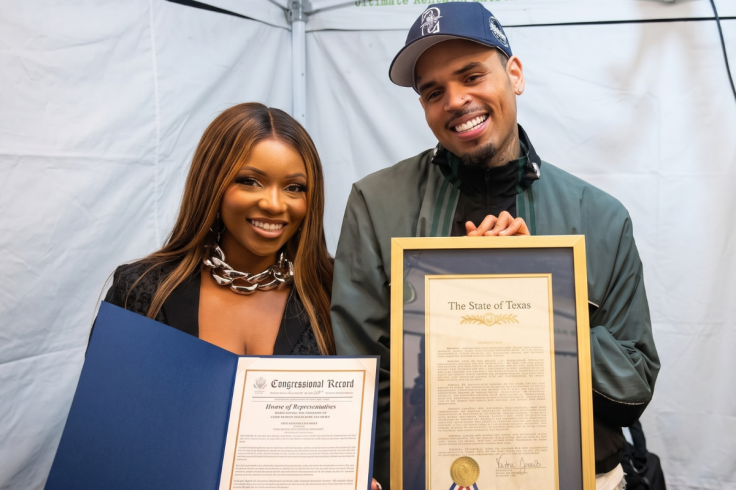
A sitting member of the US Congress stood on a stadium stage in Arlington, Texas, and helped recognise singer Chris Brown in the Congressional Record, and the internet has not let her forget it.
Representative Jasmine Crockett surprised the crowd at AT&T Stadium on Saturday night, recognising both Chris Brown and Usher in the Congressional Record for their contributions to R&B during a stop on the pair's joint tour.
The gesture was intended as a celebratory Texas moment. Instead, it reignited a 17-year-old controversy over Brown's 2009 guilty plea to felony assault against then-girlfriend Rihanna, a case in which the singer suffered serious injuries and Brown was sentenced to five years' probation.
The Honour That Ignited a Backlash
Crockett joined Texas state Representative Venton Jones and producer RoccStar for the surprise appearance, telling the crowd she could not miss the night.
She said she wanted the two singers' decades of musical impact formally recognised in the Congressional Record, an official record that includes statements and tributes inserted by members of Congress.
Brown pulled Crockett in for a hug afterwards, thanking the Dallas crowd for their support. Crockett also used the moment to jab at Washington, joking that there were a few scammers in D.C. before telling fans they had a real one standing on stage with them, remarks that drew further criticism online.
The tour itself, which began in June 2026 and pairs Brown with Usher, has already generated controversy independently of Saturday's recognition. It includes a widely circulated clip of Brown performing an explicit concert routine in Toronto in August.
Chris Brown pleaded guilty to felony assault after brutally attacking Rihanna. Another ex, Karrueche Tran, later obtained a five-year restraining order after testifying that he abused and threatened her. He has also faced multiple allegations of violence and sexual assault… https://t.co/q6IXKcLkFW
— Shannon Watts (@shannonrwatts) September 13, 2026
The Rihanna Case That Won't Fade
The backlash centres on events from February 2009, when Brown assaulted then-girlfriend Rihanna inside a rented Lamborghini in Los Angeles hours before the Grammy Awards.
On 22 June 2009, Brown pleaded guilty before Los Angeles Superior Court Judge Patricia Schnegg to one count of felony assault with intent to cause great bodily injury, with the criminal threats charge dropped as part of the deal.
Judge Schnegg sentenced Brown on 25 August 2009 to five years of formal probation and 1,400 hours of community labour, alongside a year-long domestic violence counselling programme. She also issued a stay-away order restricting contact between Brown and Rihanna, with an exception for shared industry events.
A probation report cited by CNN also said police had learned of two earlier, unreported incidents involving the couple, including an alleged confrontation in Europe where Brown was accused of shoving Rihanna into a wall. The incidents were not the basis of Brown's 2009 guilty plea.
Brown has faced further legal proceedings involving women since. In June 2017, a Los Angeles judge granted his former girlfriend Karrueche Tran a five-year restraining order after she testified that she feared for her safety and alleged that Brown had threatened and physically abused her.
Brown was also named as a defendant in a lawsuit brought by an anonymous woman over an alleged sexual assault at his home in 2017. The lawsuit alleged that another man, rapper Lowell Grissom Jr, sexually assaulted the woman and included claims against Brown. The case was dismissed in 2020.
Absolutely disgusting to see Jasmine Crockett platform and honor an abuser of women. Just completely vile. https://t.co/LAu2QsaGzW
— Eric Michael Garcia (@EricMGarcia) September 13, 2026
Crockett Faces Accusations of Hypocrisy
Gun-control advocate Shannon Watts was among those who criticised the recognition online, pointing to Brown's guilty plea to felony assault after attacking Rihanna and noting that Tran later obtained a five-year restraining order after testifying about threats and abuse.
Watts' post, alongside similar commentary from other users, framed the recognition as an uncomfortable pairing of congressional prestige with Brown's documented legal history.
Those critics drew a sharper political line, pointing to Crockett's past public criticism of fellow Texas Democrat James Talarico over his standing with Black voters.
They contrasted this with her decision to publicly celebrate an artist with a documented assault conviction, with some commentators suggesting Crockett would have been better served directing attention towards domestic violence support organisations rather than a ceremonial recognition.
As of Sunday, Crockett's congressional office had not issued a public response to the criticism, and it remains unclear whether any correction, clarification or defence of the recognition is forthcoming.
The Congressional Record recognition is ceremonial rather than a legislative action, and its inclusion does not require Congress to pass a bill or resolution.
The controversy has nevertheless raised questions about the political and reputational implications of congressional recognition for public figures with controversial histories.
© Copyright IBTimes 2026. All rights reserved.
- Recommended For You