

Mapquest's Downloads Soar 10X After Defying Trump's Order To Rename Lake Ontario to 'Lake America'
MapQuest refuses Trump's order to rename Lake Ontario 'Lake America', challenging rivals and raising questions over who controls digital maps
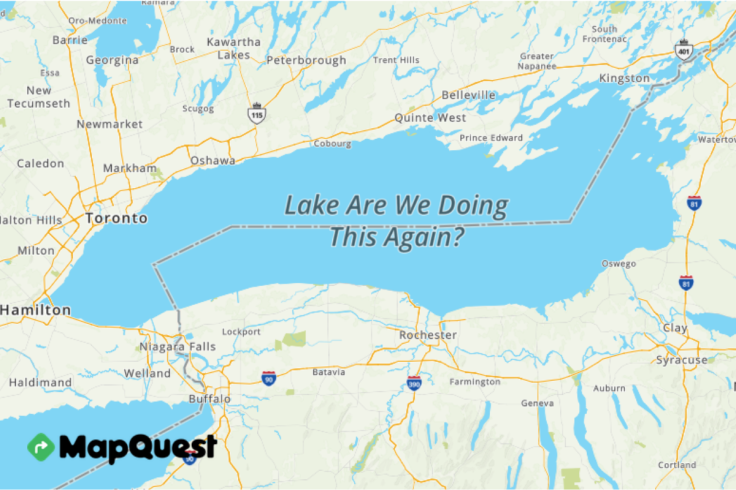
MapQuest's decision to defy a White House order to rename Lake Ontario 'Lake America' has triggered a tenfold surge in downloads of its app across the US and Canada, propelling the veteran mapping service back into the top tier of the App Store charts.
By Monday morning, its iOS app had climbed to number four in the US App Store's Top Charts for non-game apps, and number eight overall across apps and games, making it the country's top-ranked navigation app. In Canada, where the renaming order was always likely to prove unpopular, MapQuest reached number two overall in the App Store by Sunday evening.
The company said it had recorded 'hundreds of thousands' of new downloads in the days following its decision, with usage jumping to 50 times normal levels.
Independent data from Sensor Tower supports the figures: the firm recorded 184,000 global downloads and 162,000 US downloads in the week beginning 24 August, more than ten times the previous week's total, with daily US downloads climbing 128 per cent between 26 and 30 August.
Trade Row Sparks Lake Name Order
Trump's directive instructed the US Department of the Interior to change Lake Ontario's name in the federal Geographic Names Information System, after trade talks with Canada broke down and Washington imposed 50 per cent tariffs on £16 billion worth of Canadian goods.
It followed an earlier order renaming the Gulf of Mexico the 'Gulf of America', which Apple Maps and Google Maps both complied with at the time.
Google Maps said on Saturday it would again fall in line, updating Lake Ontario to Lake America for users in the US only, in keeping with its policy of reflecting official government naming systems.
Canadian users will continue to see Lake Ontario, while users elsewhere will see both names.
Apple Maps had not updated the lake's name as of Monday morning and had made no public statement on whether it intended to follow the federal government's line.
Doug Berger, MapQuest's general manager, described the decision as consistent with the company's earlier stance on the Gulf of Mexico rather than a deliberate act of defiance.
'We took the same approach we did with the Gulf of Mexico: be part of the conversation, and give people an app that keeps the names they're familiar with,' he said. 'Hundreds of thousands of people signalled to us this weekend that we got it right by downloading our app.'
Old Web Pioneer Finds a New Audience
MapQuest also relaunched an online tool that lets users invent their own joke names for Lake Ontario and share them on social media, a stunt it first ran during the Gulf of Mexico row, which helped fuel further online attention.
The company has changed hands several times since its dot-com era flotation, passing through AOL and Verizon before being sold to advertising firm System1 in 2019.
According to Sensor Tower, the app has been downloaded 687,000 times worldwide this year, up 29 per cent on 2025, and 24.4 million times since 2012, with 97 per cent of installs in the US.
For a brand long assumed to be fading in Google Maps' shadow, the row has delivered a boost. Whether the surge in downloads outlasts the political dispute that caused it remains to be seen.
© Copyright IBTimes 2026. All rights reserved.