

White House UAP Advisor Says Military Secrecy Exists Because Failing To Identify Craft 'Flags Incompetence'
The astrophysicist says available footage does not prove alien technology and calls for stronger evidence from independent scientific observations.
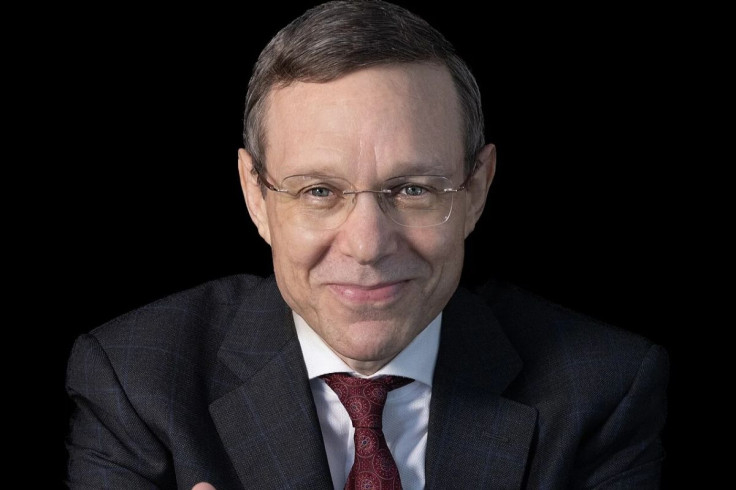
Astrophysicist Avi Loeb has argued that US military secrecy surrounding unidentified anomalous phenomena (UAP) protects surveillance capabilities, while the inability to identify objects 'flags incompetence'.
In an interview with Cybernews, he rejected the suggestion that authorities were withholding information to prevent public panic.
Avi Loeb, chair of the UAP Science Advisory Council, has cautioned against treating online footage of unidentified aerial phenomena as evidence of extraterrestrial technology. His remarks come amid renewed scrutiny of videos whose contents have yet to be independently verified.
White House UAP Advisor Questions the Secrecy Narrative
Loeb offered a practical explanation for withholding military information. Revealing what American surveillance systems can detect, he argued, could enable rival powers such as Russia or China to develop drones capable of evading them.
That concern differs from the familiar suggestion that authorities conceal discoveries to prevent a population-wide shock. Cybernews questioned him directly about whether fear of mass panic explained the secrecy.
'No... the inability to identify them flags incompetence.' The remark was Loeb's assessment, not a confirmed explanation of Pentagon policy.
He also stressed that the available observations fall short of establishing an alien origin for the objects under discussion.
'I have not seen any conclusive evidence for alien technologies, only insufficient data on UAP's in the form of orbs or triangular objects,' he told Cybernews.
UAP Footage Faces Demands for Stronger Evidence
Loeb's scepticism comes as purported UFO footage continues to attract attention, even when its authenticity is disputed.
Cybernews has examined disputed footage of a triangular object and cube imagery suspected of being AI-generated, underscoring the difficulty of distinguishing credible observations from altered or fabricated material.
Predictions that President Donald Trump might make a major disclosure have also circulated. Yet speculation about an announcement offers no substitute for data that researchers can examine independently.
Loeb urged restraint, stating, 'We should wait for conclusive evidence rather than listen to storytellers.'
He pointed to historical beliefs later overturned by evidence, including what he described as the Vatican's 1992 acknowledgement that its earlier teaching about the Earth's place in the universe was wrong. His wider argument was that extraordinary claims require observations robust enough to withstand scrutiny, regardless of who promotes them.
UAP Research Could Move Beyond Military Gatekeepers
Loeb is pursuing an alternative through the Galileo Project, which has secured a $1.5 million donation towards a new independent observatory concept. The proposal would allow researchers to collect detailed images rather than rely solely on military recordings or claims from military insiders.
Loeb described a metre-scale telescope capable, he claims, of distinguishing something as small as a green pea from several kilometres (a few miles) away, potentially providing more informative images.
Loeb also hopes to work with Pentagon officials to compare scientific observations and military tracking. Such cooperation remains an ambition rather than an announced agreement.
For all the attention paid to the prospect of a discovery, Loeb does not expect immediate upheaval if non-human technology is eventually established. He believes people would continue their daily routines, with society adjusting gradually rather than suddenly abandoning work and ordinary responsibilities.
He compared that possible reaction with humanity's slow response to advances in artificial superintelligence, suggesting that even a remarkable discovery might take time to alter everyday life.
© Copyright IBTimes 2026. All rights reserved.