

Mark Zuckerberg's 387ft Yacht Fuels Climate Backlash — Critics Call It 'Elite Excess'
Footage of the vessel circulated widely, prompting immediate and widespread discussion

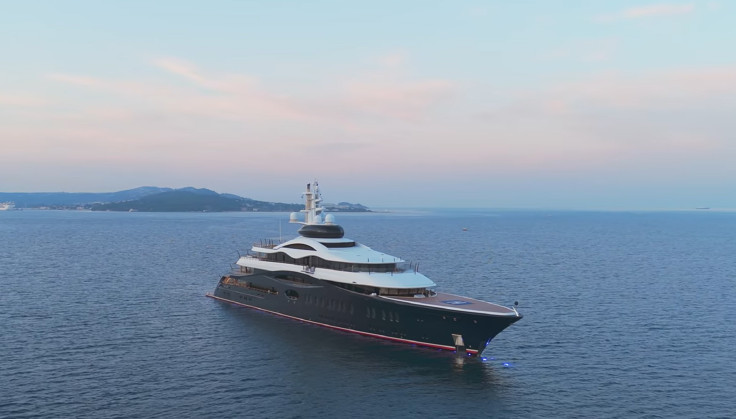
The luxury lifestyle of the world's tech elite has just collided with the growing urgency of the climate crisis. Mark Zuckerberg's newest acquisition—a vast 387-foot superyacht—has sparked immediate, intense criticism.
Far from being seen as a symbol of success, the enormous vessel has been labelled 'elite excess' by detractors, casting a harsh new light on the environmental cost of extreme wealth.
Mark Zuckerberg faced an immediate social media uproar this week after a brief video of his new superyacht circulated online. The ship, a 387-foot Feadship, is reportedly powered by four MTU diesel engines, enabling a speed of 21 knots and a range of 6,000 nautical miles.
The footage, which shows the yacht moving with its support vessel, Wingman, swiftly triggered numerous responses. The main point running through all these conversations is that Zuckerberg's statements on climate change clash with the massive pollution caused by his latest extravagant purchase.
Elite Hypocrisy Under Scrutiny
Multiple reactions labelled the massive vessel as a prime example of elite hypocrisy regarding environmental concerns. One highly shared post originated from the user @redpillb0t, who claimed that Zuckerberg 'shows off his new $300 million (£224.87 million), 287-foot mega yacht, powered by four gigantic diesel engines,' and added: 'Another reminder that Net Zero is only for the peasants.'
Mark Zuckerberg, an outspoken critic of "man-made climate change", shows off his new $300 million, 287-foot mega yacht, powered by four gigantic diesel engines.
— redpillbot (@redpillb0t) December 7, 2025
Another reminder that Net Zero is only for the peasants. pic.twitter.com/dwbt6dd2Vl
Jason Ai. Williams (@GoingParabolic) issued a comparable statement, echoing both the financial details and the harsh sentiment: 'Feast ya eyes on Mark Zuckerberg's $300 million, 287-foot mega yacht, powered by four gigantic diesel engines. Another reminder that Net Zero is only for the peasants. Climate change lol.'
Feast ya eyes on Mark Zuckerberg’s $300 million, 287-foot mega yacht, powered by four gigantic diesel engines.
— Jason Ai. Williams (@GoingParabolic) December 8, 2025
Another reminder that Net Zero is only for the peasants. Climate change lol 😂
pic.twitter.com/XF79d9p9PX
“Net zero for thee, but not for me.”
— Edward Suarez (@EdwardMSuarez) December 8, 2025
Additional comments concentrated the frustration into concise, sharp slogans. Edward Suarez, responding to @redpillb0t, stated: 'Net zero for thee, but not for me.' The identical wording was repeated throughout the discussion, swiftly becoming a convenient label for commentators who argued that highly visible environmental pledges demand self-control from everyone, including the wealthiest individuals.
Privacy, Profit, and a Public Platform
The reactions also incorporated broader criticisms targeting Zuckerberg's company operations and his public standing. A user, posting in Hebrew under the handle @Moorehaven2024, challenged the trade-off model inherent in complementary applications: 'Yet Facebook is a free app. Wonder what information he is selling?'
Yet Facebook is a free app
— טרמייקל מור (@Moorehaven2024) December 8, 2025
Wonder what information he is selling? https://t.co/5DpKHTjkxv
This particular type of objection connected two different sources of public discomfort: affluence and ecological impact in one area, and the corporate strategy involving data and publicity in the second. To some observers, the boat represented more than just extremely high-emission personal spending; it also represented a commercial structure they view as exploitative.
Key Themes and Reactions on Social Media
A consistent set of topics arose across the many shared posts and linked comments:
Contradiction: Numerous messages highlighted Zuckerberg's previous remarks on the environment, questioning whether his personal spending decisions aligned with those declarations.
Advantage: A portion of the feedback cast the vessel as a symbol of an unfair, dual set of regulations—rules for the wealthy and separate ones for the general population.
Information and Cost: A smaller, though significant, group of replies linked the superyacht back to concerns about the corporation's income generation and the value of a free platform given the trading of user data.
'It's going to have a big society-wide impact on a lot of things we care deeply about like climate change, because look... obviously there are going to keep on being cars and planes and all that,' Zuckerberg told The Information in 2021.
He went on to assert that augmented- and virtual-reality eyewear would help reduce climate change by allowing individuals to 'teleport' to locations virtually instead of journeying in person.
'But the more that we can "teleport" around, not only are we personally eliminating commutes and stuff like that that's kind of a drag for us individually, but I think it's better for society and the planet, too,' he said.
The Broader Significance of This Example
The response on social media highlights how a single conspicuous act of extravagant spending—like this superyacht—can quickly amplify broader communal concerns about equality and environmental efforts.
To many individuals who shared and reshared content on the platform, the vessel was far from just a costly possession; it served as concrete evidence of what they called a conflict between official declarations and personal conduct.
© Copyright IBTimes 2026. All rights reserved.
- MOST POPULAR IN Technology


