$13 for a 12-Pack? 'Astronomical' Soda Price Sends Americans Reeling as Grocery Costs Continue to Rise
The San Diego supermarket price tag has fuelled frustration
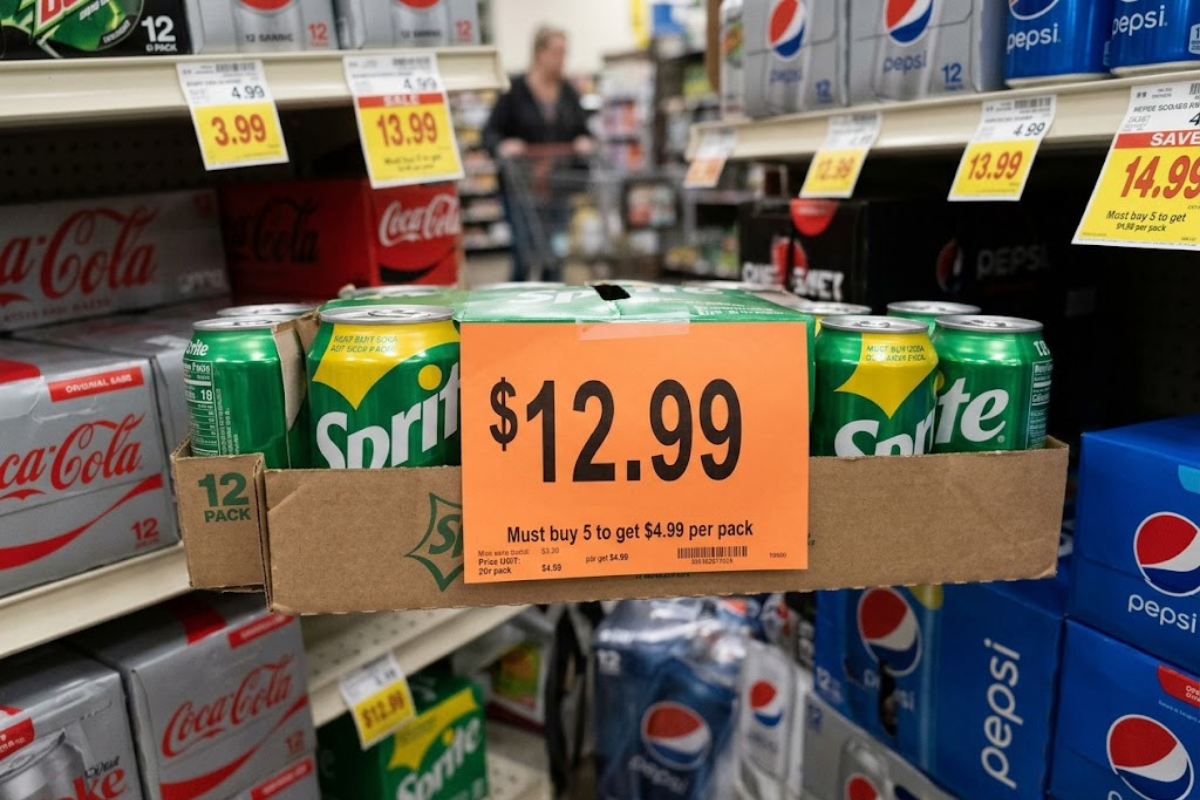
A 12-pack of Sprite carrying a $12.99 (£9.73) price tag has become the latest lightning rod for American grocery anger, after a photo of the sticker, described online as astronomically high, spread across social media and drew a wave of exasperated replies.
The tag, spotted at a San Diego store and posted online, laid out a jarring split. Shoppers could pay $12.99 (£9.73) for a single pack, or $4.99 (£3.74) each if they bought five or used the store's digital coupon. That single price is the one built to sting, a penalty rate that nudges customers towards the loyalty deal, and it is the figure that went viral.
'My local grocery store does this and it's more than mildly infuriating to me,' one commenter wrote. Others said name-brand fizzy drinks were no longer worth it and had moved their households to supermarket own-label cans; some had dropped the habit altogether.
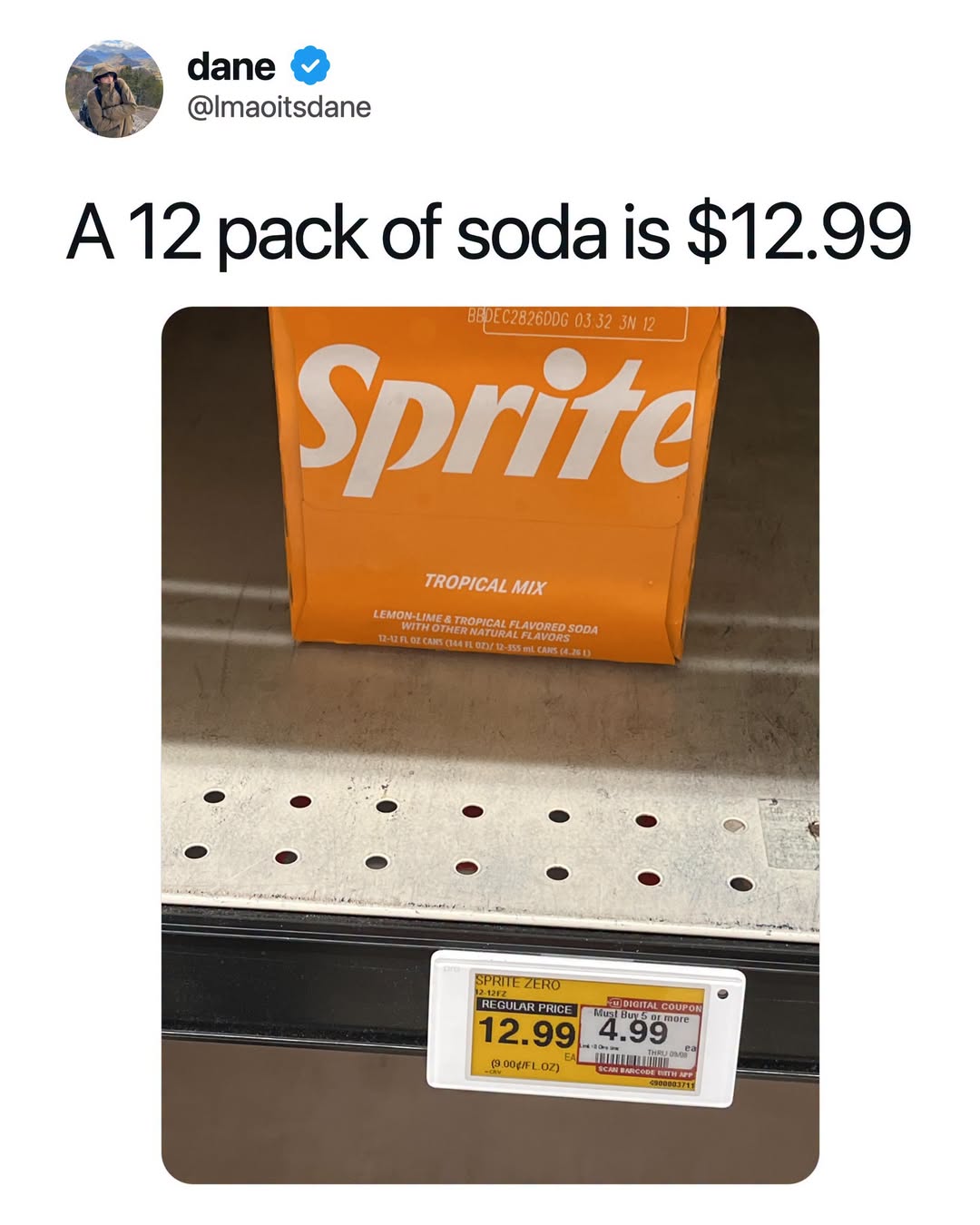
One shopper posted a rival Mountain Dew tag priced close to double the Sprite, pushing the thread on.
How Far Soda Prices Have Actually Climbed
The shock is real, and so is the trend beneath it. An analysis of federal price data by FinanceBuzz found the average name-brand 12-pack climbed about 89% between 2020 and 2025, from $5.18 (£3.88) to $9.79 (£7.33), while overall US prices rose roughly 25% across the same period.
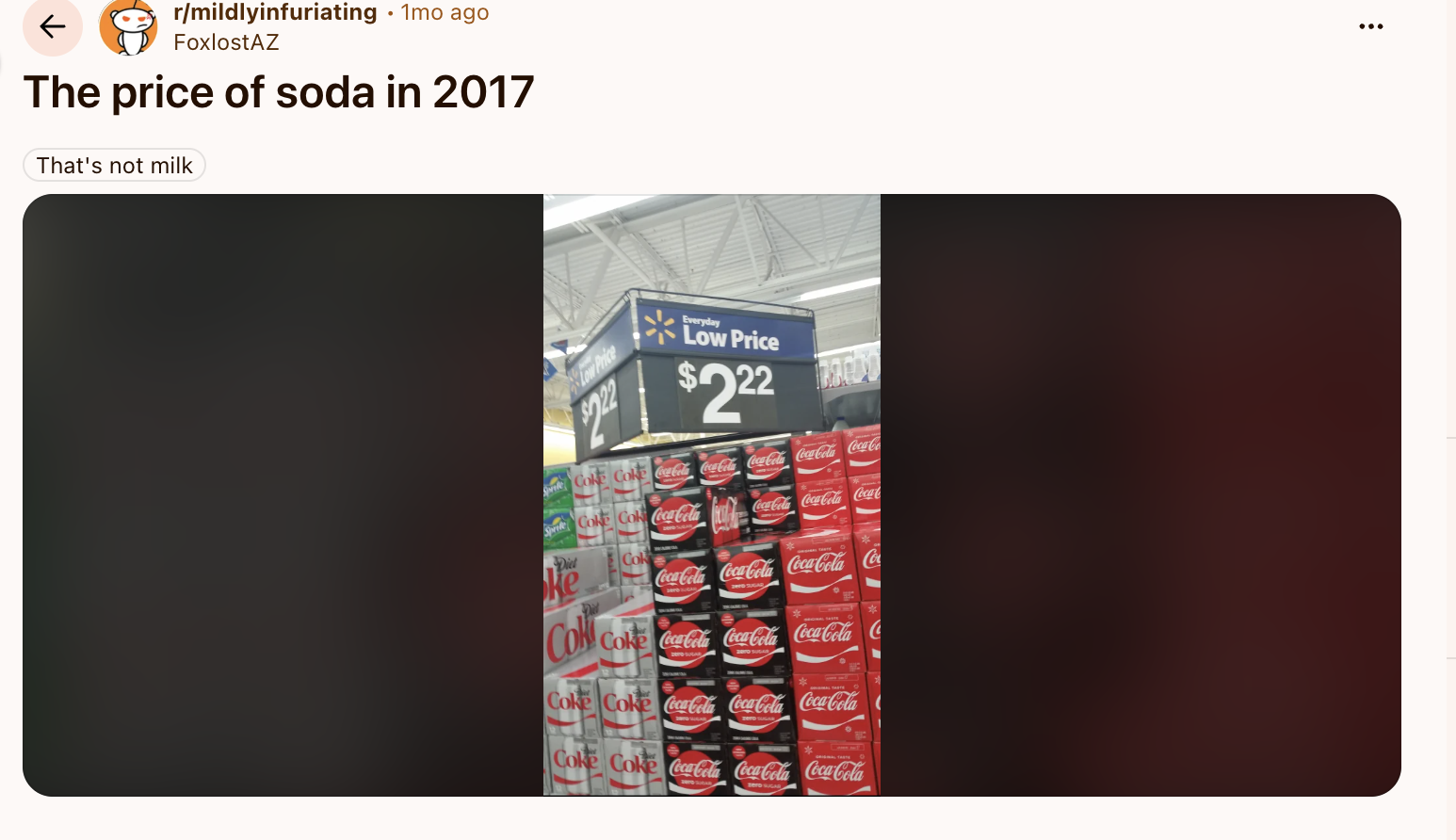
Soft drinks, in other words, have sprinted well ahead of general inflation.
Official figures point the same way. The Bureau of Labor Statistics nonalcoholic beverages category, which covers fizzy drinks alongside coffee, tea, and juice, rose 5.1% across 2025 and has kept climbing in 2026, outpacing groceries as a whole.
The cause is no mystery. Coca-Cola and PepsiCo pushed through increase after increase for several years, with Coca-Cola alone lifting North American prices about 4% in its most recent results. Store-brand cans rose by less, which is precisely why the thread filled with shoppers defecting to generics.
Set against that, headline food inflation is actually cooling. US food prices rose 2.7% in the 12 months to August, according to Bureau of Labor Statistics figures published on 11 September 2026, down from 3% in July, with the food-at-home category up 2.2% and the wider consumer price index at 3.4%. Slower growth is not the same as cheaper shelves, though, and the rises of recent years are now locked in.
Individual items diverge sharply. NBC News, which tracks average checkout prices using data from research firm NIQ, reports eggs down about 30% from their spring 2025 peak, but orange juice up 28% and ground beef up 15% since President Donald Trump took office in January 2025.
Mr Trump campaigned in 2024 on a pledge to bring food prices down, a promise several commenters on the thread pointedly revived.
How the Squeeze Looks From UK Shelves
British shoppers are living a milder version of the same story. Food and non-alcoholic drink prices rose 1.3% in the year to August, unchanged from July and the lowest rate since 2021, the Office for National Statistics said on 16 September 2026.
Even so, UK grocery prices remain roughly 30% higher than in April 2022, and Worldpanel by Numerator put grocery inflation at 2.3% in the four weeks to 6 September, with fierce competition between discounters such as Aldi and Lidl and the big supermarkets holding down headline rises.
The Food and Drink Federation expects the rate to rise again later in 2026, forecasting about 3.9% by December and a peak near 6.4% in July 2027 as energy, packaging, and ingredient costs feed through.
Soft drinks feel those pressures keenly, carrying the weight of sugar, aluminium, and packaging costs. A viral sticker in San Diego is a long way from a British checkout, yet the arithmetic behind it, small rises stacked on top of one another, reads the same on both sides of the Atlantic.
There are early signs the pushback is landing. After what it called extensive feedback on affordability, PepsiCo has begun trimming prices on some snack products by up to 15% in 2026.
For now, though, the loudest answer to a $12.99 (£9.73) 12-pack is the one already playing out online: trade down, buy in bulk, or leave the fizzy drinks on the shelf.
© Copyright IBTimes 2026. All rights reserved.
- Recommended For You