

Miami Airport Had No EMAS When Amazon-Operated Cargo Plane Overran Runway, Killing Five
Federal investigators probe lack of EMAS after fatal cargo plane overrun
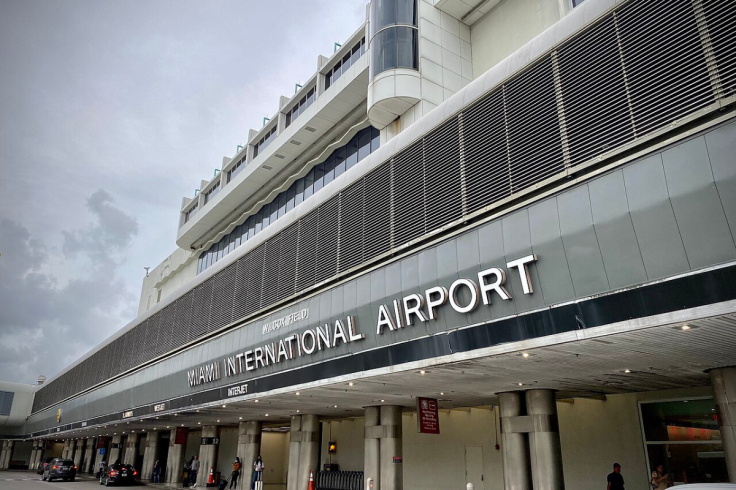
Federal investigators are focusing on why Miami International Airport had no Engineered Material Arresting System (EMAS) at the end of the runway where an Amazon-branded cargo plane overran the tarmac on Sunday, crossed a busy road and killed five people.
The aircraft, operated by Miami and Greensboro-based carrier 21 Air, skidded off Runway 30, tore through the airport perimeter, crossed Northwest 67th Avenue and struck several vehicles.
Five people died and five were injured, according to Miami-Dade Fire Rescue, in a crash that shut part of the airport and disrupted operations at one of the world's busiest cargo hubs.
Runway Safety System Was Absent but Airport Complied With FAA Rules
The Federal Aviation Administration confirmed on Monday that Miami International Airport lacks EMAS, a bed of crushable concrete blocks designed to stop aircraft that overshoot or veer off a runway. The system is installed at more than 120 US airports and is credited by the FAA with helping save at least 497 lives.
According to FAA guidance, a standard EMAS bed can stop most overrunning aircraft travelling at around 70 knots, roughly 80 mph. Miami did not breach any regulations by not having the system installed.
Mike O'Donnell, the FAA's former director of airport safety and accident investigations, said the airport appears compliant with current standards because it maintains a 1,000 ft safety buffer at the end of its runways.
The buffer requirement was introduced after American Airlines Flight 1420 overran a runway in Little Rock, Arkansas, in 1999, killing nine people.
EMAS itself remains optional rather than mandatory. Investigators have not yet determined whether EMAS would have prevented Sunday's crash or lessened its severity.
The NTSB and FAA have drawn no conclusions about the cause of the overrun, stressing that the investigation is in its early stages. Investigators from the National Transportation Safety Board and the FAA are on site in South Florida but have stressed that the cause of the overrun is still unclear.
Witnesses Recall Shock and Chaos
Grace Mercado said she was in a car near the airport when a thunderous noise prompted her partner to look up. 'We hear a noise,' she said. 'And he goes, "Oh my goodness. Is that a plane crash?"'
She described the moment the aircraft came to a halt as unreal. 'The plane was up in smoke,' she said. 'It was like something from a movie.'
Miami-Dade Fire Rescue said more than 60 units and around 200 personnel were dispatched, with the first crews reaching the wreckage within seconds. The department said in a statement that its 'hearts are with the victims and their families' following the crash.
Ageing Jet at a Rapidly Growing Cargo Hub
Aviation analytics firm Cirium said the aircraft was 32 years old and had logged approximately 109,800 flight hours. The aircraft was one of eight aircraft 21 Air operates for Amazon's Prime Air network, around 8 per cent of Amazon Air's roughly 104-strong fleet.
The crash has also drawn attention to Miami International Airport's rapid expansion of cargo operations. Airport data show cargo volumes rose 13.6 per cent in 2025, the sixth consecutive year of record growth.
Airports Council International ranks Miami as the fifth-busiest cargo airport in the world and the third-busiest in the Western Hemisphere. Disruption continued into Monday.
FAA National Airspace System data recorded average departure delays of about 30 minutes and inbound delays exceeding five hours by early afternoon. Flight-tracking service FlightAware reported 293 flights delayed and 79 cancelled.
21 Air chief executive Keith Winters said the airline was 'devastated by the accident', adding that its priorities were 'supporting those affected, assisting the authorities, and ensuring that accurate information is communicated as it becomes available'. Amazon said it was 'heartbroken' and extended its 'deepest sympathies' to those affected.
The identities of the five people killed have not been released. The NTSB held a preliminary briefing on Monday afternoon.
Full answers on EMAS and the cause of the overrun are expected to take considerably longer. The investigation is expected to take months, but the absence of EMAS at one of the world's busiest cargo airports will be central to what the NTSB ultimately finds.
© Copyright IBTimes 2026. All rights reserved.