

Trump's Closest Aide Natalie Harp Repeatedly Declined Security Clearance Despite Access to Sensitive Talks
Close Trump aide worked without security clearance, raising alarms
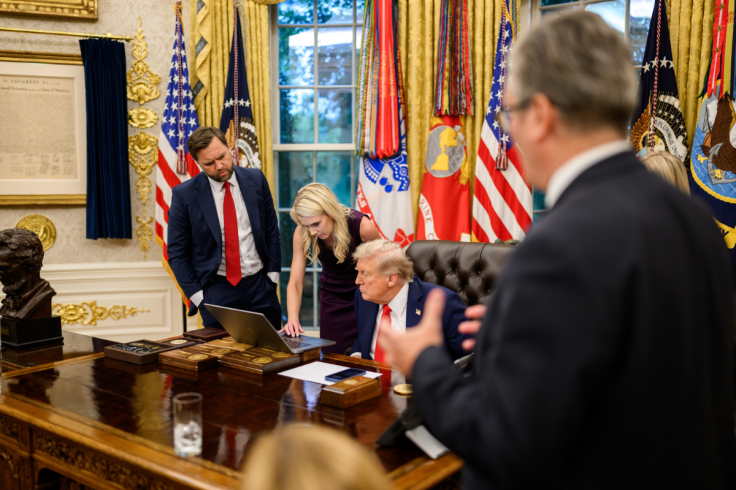
Donald Trump's ever-present aide Natalie Harp reportedly worked inside the White House for more than a year without the routine security clearance normally expected of West Wing staffers.
Harp, one of Trump's closest aides, declined multiple times to complete the paperwork for a security clearance after he returned to office in January 2025, according to media reports. Her reason for not completing the process remains unclear.
Concerns reportedly grew inside the White House counsel's office and among security officials before Trump personally intervened. Harp later filled out the necessary forms, launched a formal federal background investigation and received the clearance in recent months, one of the people told the outlet. White House Press Secretary Karoline Leavitt defended Harp in a statement.
'Natalie Harp has a security clearance like everyone else, and she is a loyal and hardworking member of President Trump's team,' Leavitt said.
Why Her Role Raised Alarms
The concern centred not only on the clearance itself, but also on Harp's unusual proximity to Trump. Harp holds the titles special assistant to the president and executive assistant to the president. She is often seen just feet from Trump, travelling with him and remaining close enough to hear sensitive conversations.
One national security official stated that her access gives her visibility into highly sensitive information around the president, more than many senior White House officials. Harp has also become a powerful gatekeeper, reportedly filtering much of what Trump sees each day.
She is known for handing him stacks of printouts that include favourable news coverage, polling from questionable sources and messages from allies or hopefuls trying to reach him. One person familiar with the internal dynamics said Harp 'plays into the less productive and more troublesome parts of his nature' by putting unvetted material in front of him.
Staff Tried to Limit Access
Some top aides reportedly made 'subtle moves' to reduce Harp's round-the-clock access to Trump, but those efforts failed.
'She is just persistent and not realising that's what they were trying to do,' one person told the outlet.
A senior White House official familiar with the clearance process said Harp received multiple extensions to complete the paperwork. The form, known as the SF-86, asks for detailed information about a person's background, including residences, finances and foreign contacts. It is used to begin a federal background investigation.
From 'Human Printer' to Inner Circle
Harp first entered Trump's orbit during his 2020 re-election effort, when she spoke at the Republican National Convention and credited him with helping save her life through the Right to Try Act. Medical experts have questioned whether that law was connected to the cancer treatment she received.
She later worked for One America News before joining Trump's 2024 campaign. During the campaign, aides reportedly nicknamed her the 'Human Printer' because she frequently printed positive coverage and polling for Trump and delivered it by hand.
Her influence drew fresh attention after she was revealed to be among a small group of aides who accompanied Trump during a secretive departure from Air Force One in Turkey amid security concerns.
© Copyright IBTimes 2026. All rights reserved.