

New York Bans AI for Nearly 600,000 Students as Mamdani Pushes Back on Tech Industry Over Kids
Mayor Mamdani's directive aims to preserve teacher-pupil relationships and critical thinking in education
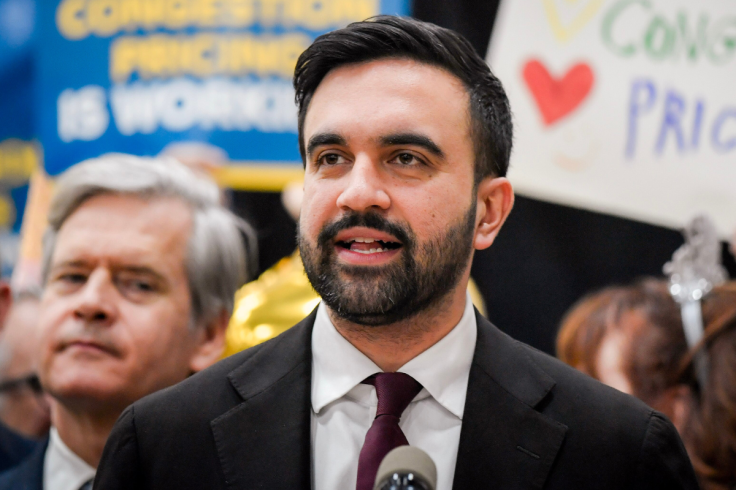
New York City Mayor Zohran Mamdani announced on Wednesday an immediate one-year ban on generative AI in public elementary and middle schools, halting classroom use for nearly 600,000 pupils from 2K (pre-kindergarten for two-year-olds) through the eighth grade.
The directive, introduced alongside Schools Chancellor Kamar Samuels, restricts student-facing software to safeguard critical thinking and preserve direct teacher-pupil relationships across the nation's largest school district.
Disabling Software Packages and Restricting Classroom AI
The policy follows shifting digital guidelines in New York, where officials banned ChatGPT in 2023 before reversing course months later. City leaders are now altering previous rules for roughly two-thirds of the student body, disabling automated functions within dozens of previously sanctioned learning programmes.
Under the new regulations, education officials will disable or eliminate the automated components of more than 38 classroom programmes that fail to meet updated oversight criteria. Companion chatbots, alongside public platforms such as ChatGPT and Claude, will be blocked across all school levels without exception.
Secondary schools will operate under a separate framework. High school pupils will receive twice-yearly literacy classes and supervised pilot access to selected platforms. Instructors may continue using automated tools for lesson planning and administrative tasks, though municipal guidelines explicitly forbid applying the software to grading or formal evaluations.
The administration has also recommended daily screen limits, suggesting a cap of 30 minutes for pupils in grades three to five and 45 minutes for grades six to eight. Distinct carve-outs will remain in place for English language learners and pupils with disabilities.
Union Scrutiny and Ongoing Debate Over School AI
While some technology developers argue algorithmic tools are necessary for modern education, city officials set out a different perspective during Wednesday's briefing.
'The tech industry wants us to believe that AI in early education is not only inevitable, but that it is necessary,' Mamdani said. 'We do not see it that way.' Schools teach children to question premises and interrogate assumptions, he argued, leaving officials an equal duty to scrutinise commercial software.
New York City is banning generative AI use for students in 8th grade and younger for the upcoming school year 🗽
— Culture Crave 🍿 (@CultureCrave) September 2, 2026
The ban is aimed at protecting human connection and independent learning, alongside new limits on screen time in schools pic.twitter.com/k8CRr0UpEl
The policy drew mixed initial reactions from classroom representatives. Michael Mulgrew, president of the United Federation of Teachers, welcomed screen caps and protections for special needs pupils, but warned that the directive leaves significant operational ambiguities for educators.
'If we are going to be serious, let's start at the source, rather than expect school communities or individual educators to figure out after the fact if what their school uses fits the new policy,' Mulgrew stated, urging municipal buyers to demand clear safety barriers directly from suppliers.
Testing the Realities of the New AI Mandate
Outside the school system, youth advocates questioned whether a twelve-month pause provides adequate time to assess lasting harm, a concern shared by many parents facing expanding tech ecosystems.
Josh Golin, executive director of Fairplay, cautioned that a single year is not nearly enough to evaluate classroom effects, maintaining that tech firms must prove their software does not damage human interaction or encourage cheating.
Enforcement also faces practical hurdles beyond the schoolhouse gates, where pupils can access commercial chat tools on home computers or mobile phones to complete homework.
Chancellor Samuels acknowledged the difficulty of policing domestic study habits, noting that the city must expand teacher understanding while leaning on parents to monitor digital habits at home.
With classes resuming next week, a newly formed Technology in Schools Coalition will monitor the moratorium's impact and assess the practicalities of managing AI use in homework.
© Copyright IBTimes 2026. All rights reserved.