

Trump's Own Former Venezuela Envoy Calls $100bn Oil Deal 'A Terrible Deal' and a New Form of Colonialism
Elliott Abrams criticises US-led oilfield concessions in Venezuela
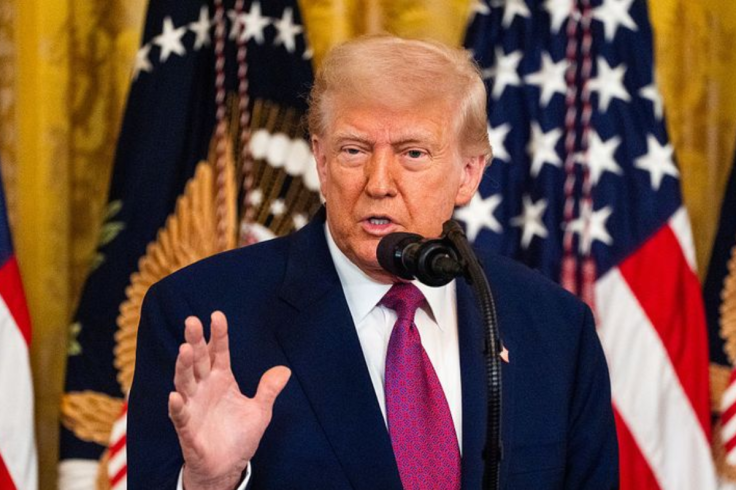
Former United States special representative for Venezuela Elliott Abrams has condemned a new £74bn ($100bn) oil deal between Washington and Caracas, branding it a 'terrible deal' and likening it to a new form of colonialism.
The sweeping pact, signed in Caracas on Wednesday, hands a US-led private entity century-long concessions over 17 major Venezuelan oilfields, sparking criticism from diplomats who once helped shape American policy in the region.
From the moment elite American troops forcibly removed Nicolás Maduro from power in January, President Donald Trump made securing control over Venezuelan crude a primary geopolitical objective.
Under concessions approved by interim Venezuelan President Delcy Rodríguez, the US government has partnered with a private firm to extract an estimated 65 billion barrels of oil, representing roughly a fifth of the entire 303 billion barrel national reserve.
The Mechanics of a Historic Concession
The US government retains a 35 per cent equity stake in the new drilling venture, along with veto power over the company board, which must maintain a majority of American citizens.
In exchange, Washington secures the right to purchase 20 per cent of the extracted crude at production cost, with the option to buy the remaining output at market rates to supply the Strategic Petroleum Reserve.
President Trump heralded the arrangement as the largest oil transaction in global history, promising falls in domestic petrol prices within two years, although industry experts question that timetable.
Luis Pacheco of the Baker Institute argues that a decade is a far more realistic timeframe, noting that the infrastructure demands at least £74bn ($100bn) in capital just to return to late-20th-century production levels.
The central unanswered question remains how North American Blue Energy Partners (NABEP) will raise the substantial capital required to fulfil these promises.
Alejandro Betancourt, the businessman leading the firm, aims to scale daily production to over one million barrels, yet American officials have explicitly stated they will contribute zero investment dollars to the physical operations.
Echoes of Imperialism and Domestic Backlash
For Abrams, the terms secured by Washington are one-sided. He argued that Rodríguez has surrendered a fifth of the national patrimony without securing adequate benefit, strictly to comply with demands dictated by the White House.
The White House has framed the deal as a revival of the Monroe Doctrine, asserting that it removes foreign influence and reinforces American dominance in the hemisphere.
This rapid policy shift has created tension within the Venezuelan opposition, who view the partnership with Maduro's former vice-president as a setback for efforts at democratic restoration.
Economist Ricardo Hausmann publicly accused American officials of prioritising asset seizure over liberation, choosing to ally with familiar oppressors rather than restoring constitutional order.
Securing Funding Amid Geopolitical Shifts
The speed of the agreement has also prompted scrutiny given the history of the executives involved.
Betancourt rose to prominence as an ally of Hugo Chávez before falling out with the regime, and he has more recently faced criminal investigations in Spain and Switzerland regarding allegations of money laundering, though Switzerland withdrew its extradition request earlier this year.
The Trump administration regards the executive as a proven operator capable of displacing Russian and Chinese energy companies. Meanwhile, Chevron already produces 300,000 barrels daily in the country and is pushing forward with separate investment plans.
Secretary of the Interior Doug Burgum defended the broader American strategy, arguing it shifts the geopolitical centre of energy markets away from Middle Eastern choke points.
Former oil minister Rafael Ramírez noted that leftist factions view the large-scale privatisation as a capitulation over their most valuable resource, raising concerns about renewed foreign control.
© Copyright IBTimes 2026. All rights reserved.