Department of War to Cut Ties With 'Woke Breeding Grounds' Ivy League Universities
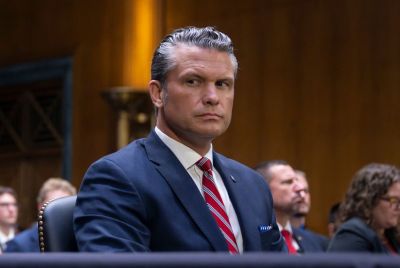
Defence Secretary Pete Hegseth has announced a ban on military attendance at top universities, citing ideological issues.

Defence Secretary Pete Hegseth has ordered the immediate cancellation of all military attendance at Princeton, Columbia, Yale, Brown, MIT, and a host of other elite universities, the same institutions where a number of his own senior Pentagon appointees earned their degrees.
The announcement, delivered in a video statement posted to X on Feb. 27, 2026, comes three weeks after the Pentagon severed ties with Harvard University and formally extends the ban to a broad range of unnamed institutions.
Hegseth offered no data to support his characterisation of the universities as ideologically compromised. The move deepens a confrontation between the Trump administration and higher education that has already cost universities billions in research funding.
The Announcement and What It Covers
Hegseth's directive calls for the 'complete and immediate cancellation of all Department of War attendance' at the named institutions, effective with the 2026-2027 academic year. The policy ends Pentagon-funded graduate-level professional military education, fellowships and certificate programmes at each affected school.
It does not, according to an analysis of the earlier Harvard memo, prohibit service members from attending those universities at their own expense. What it removes is Department of Defense sponsorship, including funded assignments, approved fellowships and formal professional military education credit.
For too long, the Ivy League and similar institutions have been subjecting our warriors to woke indoctrination—those days are over. pic.twitter.com/0xMC6BArDd
— Secretary of War Pete Hegseth (@SecWar) February 27, 2026
The practical scope remains unclear. Hegseth named Princeton, Columbia, MIT, Brown and Yale in his video but said the ban extends to 'many others' without specifying them. As of Friday Feb. 27, the Associated Press reported that the Pentagon had not responded to requests for further detail, and that Columbia, Brown, MIT and Harvard were still listed as eligible institutions in the Pentagon's own Tuition Assistance database, which covers the full tuition costs for active-duty personnel. The database had not been updated by the time of publication.
A separate, publicly disclosed Pentagon memo obtained by the Brown Daily Herald reportedly lists 93 military students at 22 institutions currently affected. It also proposes 21 new partner institutions to replace them, with selection criteria that reportedly include 'minimal relationships with adversaries' and 'minimal public expressions in opposition of the Department.' Pentagon spokesman Sean Parnell described the programmes being cut as having failed to meet standards for 'rigor, realism and mission relevance,' according to the same reporting.
The Harvard Precedent and the Escalation
The Harvard ban, formalised in a memo Hegseth signed on Feb. 6, 2026, served as the template. In a statement at the time, Hegseth said Harvard 'no longer meets the needs of the War Department or the military services,' adding that 'for too long, this department has sent our best and brightest officers to Harvard, hoping the university would better understand and appreciate our warrior class.' He also ordered the military services to evaluate all existing Ivy League graduate programmes for potential future cuts, a directive that, within three weeks, produced the broader ban announced on Friday.
That escalation surprised some observers precisely because Columbia and Brown had, in recent months, reached deals with the White House agreeing to government demands in exchange for the restoration of federal funding. Both institutions had effectively complied, yet both appear on the banned list. Harvard has taken the opposite approach.
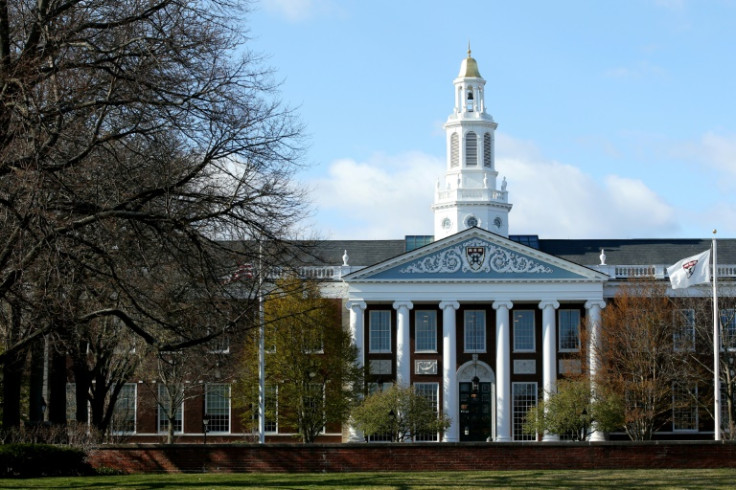
The university has challenged the administration's funding freeze in court, alleging, as a matter of law, that the government is retaliating against it for refusing to accept ideological conditions. Those lawsuits remain active.
The Tuition Assistance programme, which active-duty personnel use to fund graduate and certification courses not necessarily tied to their official military duties, may also face changes. CNN obtained a preliminary Army list classifying 34 institutions as 'moderate to high risk' of losing eligibility, a list that includes Cornell, Georgetown, Johns Hopkins, Stanford, NYU, Vanderbilt and the London School of Economics, among others.
More than 230,000 service members currently use Tuition Assistance, according to reporting by The Cornell Daily Sun, which means the operational disruption extends well beyond the narrow group of funded fellows and sponsored programme participants.
The Contradiction at the Pentagon's Own Top Table
The announcement carries an irony that several outlets noted immediately. Hegseth himself holds a bachelor's degree from Princeton and a master's degree from Harvard, the two institutions he named most prominently in his statement.
He made a point of symbolically returning his Harvard diploma in a 2022 Fox News segment, writing 'Return to Sender' on it with a marker. His deputy, Steve Feinberg, also attended Princeton. Army Secretary Dan Driscoll holds a law degree from Yale, while Navy Secretary John Phelan holds an MBA from Harvard Business School and completed a degree at the London School of Economics, according to CNN.
None of those credentials apparently disqualify the men who hold them from leading the Department of War. They do, however, complicate the argument that these universities are structurally incapable of producing leaders with sound American values.
On the military side, officials who spoke to CNN, without attribution, described the policy in notably different terms than Hegseth's video. One official called it an attempt to 'purge intellect, diversity of thinking, and critical thought from the military.'
That concern centres on a practical question, as the programmes Hegseth is cancelling are not weekend electives. They cover advanced strategy, engineering, management and emerging technology fields, including artificial intelligence. The Army, for example, held a formal partnership with Johns Hopkins under a 2023 Space Force agreement, Johns Hopkins now sits on the Army's moderate-to-high-risk list.
What is clear is that the ban forms part of a much larger reorientation Hegseth has pursued since taking office. It includes a ban on transgender troops, a review of women in combat roles, the removal of books addressing race and gender from military academy libraries, and the renaming of the Department of Defence as the Department of War, steps Hegseth has framed consistently as a return to 'lethality' and the rejection of what he calls ideological interference in military culture.
The question now before the courts, the Congress and the universities themselves is whether a defence secretary can use the military education budget as a political instrument, and whether any of the affected institutions will be willing to challenge him the way Harvard has.
© Copyright IBTimes 2026. All rights reserved.
- MOST POPULAR IN World