

Is Pope Leo XIV Sick? Pontiff Announces Impending Surgery After Doctors Find a Lung Nodule
The Vatican has not said whether the nodule is benign or malignant, while questions remain over the pontiff's planned November trip to South America
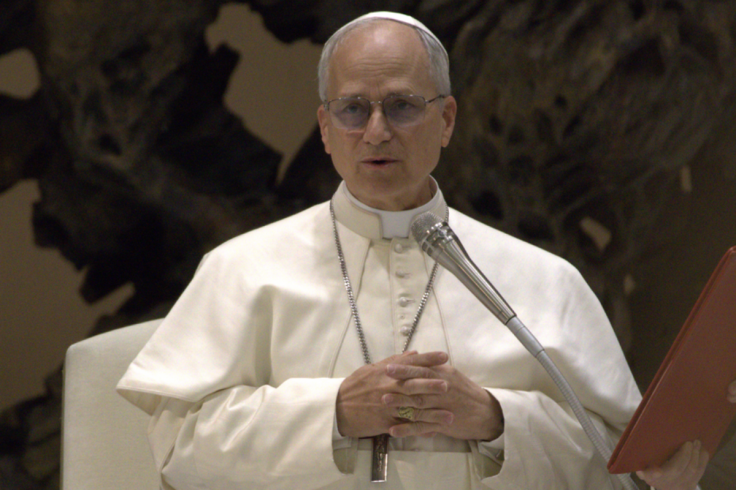
Pope Leo XIV will undergo surgery in the coming days after doctors discovered a localised nodule in his lung. The 71-year-old pontiff announced the finding during the Angelus prayer in St Peter's Square on Sunday, 11 October 2026.
The Vatican has confirmed that surgery is planned, but it has not disclosed whether the nodule is benign or malignant. The announcement has prompted questions about the Pope's health and whether the procedure could affect his planned November visit to South America.
Pope Leo XIV, born Robert Francis Prevost in Chicago, Illinois, succeeded Pope Francis after his election on 8 May 2025. He is the 267th pope and the first pontiff from the United States, according to his official Vatican biography.
During Sunday's address, the Pope explained that doctors had discovered the nodule during recent medical examinations. He said it had been detected at an early stage and was well localised.
The Pope added that his doctors considered surgery appropriate. Following their advice, he decided to undergo an operation to remove the nodule. He thanked the faithful for their spiritual support and asked them to pray for him.
The Vatican's official news service, Vatican News, published the Pope's announcement and details of the planned procedure on 11 October. Its report included a working English translation of his remarks.
What We Know About Pope Leo XIV's Surgery
Holy See Press Office director Matteo Bruni told journalists that the operation was scheduled for the beginning of the following week. Vatican News reported that the procedure would take place at the Agostino Gemelli Polyclinic in Rome.
The Vatican also indicated that the postoperative period was expected to last approximately one week. That estimate does not establish how quickly the Pope will resume all his usual duties. His medical team will determine the appropriate course of care.
So, is Pope Leo XIV sick? The confirmed information is limited to the medical finding and the planned operation. The Vatican has not disclosed the nodule's precise nature or announced a cancer diagnosis.
A lung nodule is a small area of abnormal tissue in the lung. Such findings can have different causes, and their significance depends on medical assessment. The discovery of a nodule does not, by itself, establish that a person has cancer.
The Pope's announcement also does not provide a complete account of his health. Without further information from the Vatican or his medical team, claims about the diagnosis, prognosis or seriousness of his condition would be premature.
The distinction matters because the word 'nodule' describes a finding rather than a confirmed disease. The planned operation indicates that doctors have recommended intervention, but it does not independently reveal the result of any future examination.
For now, the confirmed facts remain straightforward. Doctors identified a localised lung nodule during recent examinations, and the Pope agreed to surgery on medical advice. The Vatican has said the procedure is planned for the coming days.
Political Leaders Offer Support as November Trip Approaches
Political leaders also expressed support following the announcement. Italian Prime Minister Giorgia Meloni, Italian President Sergio Mattarella and Israeli President Isaac Herzog were reported to have sent messages wishing the Pope well.
Their statements should be checked against their original official publications before any direct quotations are reproduced. Such verification would also establish the precise wording and timing of each message.
The responses highlight the public interest surrounding the health of the head of the Catholic Church. However, individual messages of support should not be presented as evidence of a wider public reaction without additional reporting.
The Pope's health is also relevant to his planned international engagements. During Sunday's address, he referred to a November visit to Uruguay, Argentina and Peru. The itinerary includes countries with significant Catholic communities and longstanding links to the Church.
Peru has particular significance in the Pope's life. Before his election, Prevost spent years serving as a missionary and church leader there. His experience in the country formed an important part of his pastoral career.
The planned visit has therefore attracted attention beyond its diplomatic and religious significance. Nevertheless, the operation's timing alone cannot establish whether the Pope will be medically fit to undertake the journey.
The Vatican's announcement did not provide a detailed assessment of how the procedure might affect his schedule. Any definitive statement about travel arrangements should be based on an updated official itinerary or a subsequent announcement from the Holy See.
For now, the Pope's surgery remains the central development. The Vatican has confirmed the planned intervention and provided an approximate postoperative timeframe, but further medical details have not been released.
The next reliable update is likely to come from the Holy See or the hospital once further information can be confirmed. Until then, the available evidence supports neither a cancer diagnosis nor assurances about the precise course of the Pope's recovery.
© Copyright IBTimes 2026. All rights reserved.