Doctor Claims Trump Is 'Swelling Up' as Online Health Speculation Follows Ireland Trip
Adam James, who says he has worked as a physical therapist for 15 years, has not examined the president, and no doctor or White House statement supports the claim

US President Donald Trump is facing renewed online speculation about his health after a physical therapist claimed that his visible ankle swelling was caused by congestive heart failure.
Adam James, a licensed physical therapist who holds a Doctor of Physical Therapy degree, made the claim in a social media video. James has not examined or treated Trump, and there is no publicly available medical evidence showing that the president has been diagnosed with heart failure.
His claim also conflicts with medical information previously released by the White House. Trump was diagnosed with chronic venous insufficiency in July 2025 after undergoing vascular testing for swelling in his lower legs. His physician said at the time that cardiac tests were normal and found no signs of heart failure.
The renewed speculation emerged around Trump's weekend visit to Ireland on 12 and 13 September. The 80-year-old met Irish President Catherine Connolly and Prime Minister Micheál Martin in Dublin before travelling to his Trump International Golf Links resort in Doonbeg, County Clare, where he attended the Irish Open.
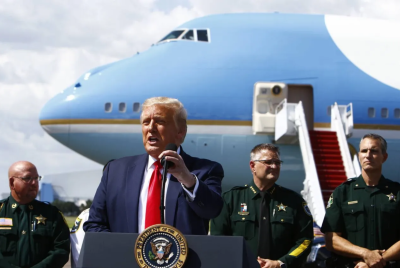
Trump had appeared at the Pentagon on 11 September for a ceremony marking the 25th anniversary of the 9/11 terrorist attacks. Photographs from his public appearances prompted further online discussion about apparent swelling around his ankles, although photographs alone cannot establish the cause or severity of a medical condition.
Trump's Medical Records Point to Chronic Venous Insufficiency
James, whose professional records identify him as John Adam James, PT, DPT, is registered as a physical therapist in Georgia. Public provider records list him as holding a Doctor of Physical Therapy qualification, rather than a medical degree as a physician or cardiologist.
In his social media commentary, James argued that Trump's ankle swelling appeared consistent with congestive heart failure and disputed the previously disclosed diagnosis of chronic venous insufficiency. He also raised concerns about international air travel if Trump were suffering from poorly controlled heart failure.
However, James has not examined the president and does not have access to Trump's complete medical records. His assessment therefore represents an opinion based on public appearances rather than a formal medical diagnosis.
The White House disclosed in July 2025 that Trump had reported mild swelling in both lower legs. According to a memorandum from Capt. Sean P. Barbabella, the physician to the president, Trump underwent bilateral lower-extremity venous Doppler ultrasounds that showed chronic venous insufficiency.
The tests found no evidence of deep vein thrombosis or arterial disease. Blood tests, including cardiac biomarkers and B-type natriuretic peptide testing, were within normal limits, while an echocardiogram showed normal cardiac structure and function. Barbabella specifically reported that no signs of heart failure, kidney impairment or systemic illness had been identified.
Trump underwent another annual examination at Walter Reed National Military Medical Center on 26 May 2026. In a report released three days later, Barbabella said slight lower-leg swelling remained but had improved from the previous year.
The examination included coronary CT angiography and an echocardiogram. According to the White House physician, Trump's heart chambers and valves were normal, his ejection fraction was preserved and his overall cardiac function was normal. Laboratory testing, including cardiac biomarkers and ProBNP, also remained within the stated normal ranges.
Those results do not establish that Trump's health could not have changed since May, but they provide no public medical support for James's claim that the president has congestive heart failure.
Why Ankle Swelling Alone Cannot Confirm Heart Failure
Heart failure can cause fluid to accumulate in the legs, feet and ankles when the heart is unable to pump blood effectively. The American Heart Association lists swelling, shortness of breath, fatigue and sudden weight changes among possible symptoms. However, swelling alone is not sufficient to diagnose the condition.
Chronic venous insufficiency can also cause swelling in the legs and ankles. The condition develops when veins in the legs have difficulty returning blood towards the heart, allowing blood to pool and increasing pressure inside the veins.
That distinction is important because the publicly disclosed testing conducted on Trump identified chronic venous insufficiency rather than heart failure.
James's concern about air travel also requires context. People with established heart failure may require additional precautions when travelling, particularly when their symptoms are severe or unstable. But that general medical consideration does not establish that Trump has the condition or that his recent flight to Ireland presented a specific cardiac risk.
Trump's health has attracted recurring scrutiny during his second term, particularly following photographs showing swelling around his ankles and bruising on his hands. The White House has previously attributed the ankle swelling to chronic venous insufficiency and the hand bruising to frequent handshaking combined with aspirin use.
As of 15 September, there is no publicly released medical diagnosis establishing that Trump has congestive heart failure. The latest detailed White House physical released in May described his cardiac function as normal and reported that his lower-leg swelling had improved.
James's comments may fuel further online debate, but without an examination, access to Trump's medical records or independent clinical evidence, they should be treated as an unverified medical opinion rather than confirmation of a serious heart condition.
© Copyright IBTimes 2026. All rights reserved.
- Recommended For You