Qatar AI Push Relies on Low-Cost Electricity as Long-Term Economic Risks Mount
Through its new firm, Qai, Doha plans to reach 500MW of capacity by 2029

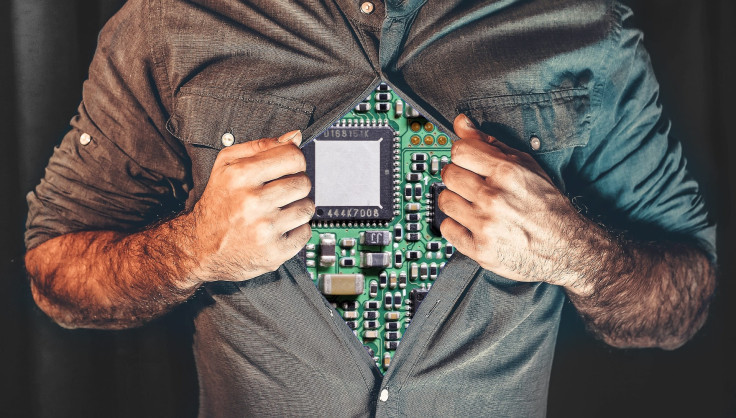
Qatar is betting big on artificial intelligence by leveraging its abundant, cheap energy to power massive data centres. While this strategy offers a clear competitive edge today, it tethered the nation's digital future to its volatile fossil fuel reserves.
As global markets shift, the long-term financial stability of this high-tech pivot remains under intense scrutiny.
A New Chapter for Qatar
Qatar plans to bridge the gap in the regional artificial intelligence race by utilising its massive financial resources and inexpensive energy. This strategy is designed to help the nation overtake nearby rivals that established themselves well ahead of time.
Qatar launches Qai, a new AI company under Qatar Investment Authority.
— مكتب الاتصال الحكومي (@GCOQatar) December 8, 2025
Qai will develop, operate and invest in advanced AI systems and infrastructure locally and globally, driving economic diversification in line with Qatar National Vision 2030 pic.twitter.com/SsfkJ2bcR8
Qatar has made its most significant move into the influential technology and finance sector with the launch of Qai. This project relies on the country's $526 billion (£393.57 billion) sovereign fund and a $20 billion (£14.96 billion) joint venture alongside Brookfield.
Beyond Fossil Fuels
This initiative follows large-scale investments in Saudi Arabia and the United Arab Emirates. It forms part of a general move by these nations to find new sources of wealth outside of the oil market. However, even though cheap power attracts major cloud firms like Google, Microsoft, and Meta that lead the AI industry, experts suggest the region's goals face deep-seated challenges that go beyond just building facilities.
Overcoming Industry Barriers
Gaining a foothold in the global AI market requires the Gulf to solve multiple problems at once. This involves adopting Western-style systems for information oversight, dealing with US controls on essential computer chips, and competing with the rest of the world to hire the most skilled professionals.
Success in the AI world will depend on these elements rather than on wealth alone. Qatar's ability to translate its financial strength into a genuine global impact hinges on overcoming these practical hurdles.
'The key component there we believe would be Qatar's ability to emulate the American policy on data privacy laws ... when you look around the world at the moment, the single biggest hindrance to significant AI deployment is the regulatory piece,' said Stephen Beard, who leads global data centres at Knight Frank, in a report by Reuters.
Key details about Qai remain scarce, but it is worth noting that Qai's arrival coincides with a period when companies are betting heavily on AI to streamline operations and cut costs. This has created an urgent need for the physical infrastructure that enables such technology.
According to Mohammed Soliman of the Middle East Institute, the sheer scale of demand means that American 'hyperscalers' welcome any new development in a country like Qatar that offers both cheap power and ready capital. 'In this phase of the AI buildout,' he noted, 'there's room for multiple players.'
Sustaining the Tech Boom
Analysts caution that meeting the needs of global cloud giants will take more than a quick fix; it requires years of steady funding and alignment with government policies. 'We expect $800 billion (£598.63 billion) to be spent on the AI data centre buildout in the Middle East over the next two years,' said Dan Ives, analyst at Wedbush.
Qatar's main advantage is its access to inexpensive electricity, which could help offset the high cooling costs in a desert environment—according to Emirates NBD, energy efficiency in Middle Eastern data centres—measured by PUE ratings—averages 1.79, which is notably higher than the global average of 1.56.
If Qatar continues to offer cheap energy and quickens its development, Beard believes the country could reach a capacity of 1.5 to 2 gigawatts by the end of the decade. This goal is modest compared to its neighbours: Saudi Arabia is aiming for 6 gigawatts through its Humain initiative by 2034, and the UAE is developing a 5-gigawatt campus via G42. Once completed, the UAE site will rank among the premier AI hubs globally.
Jonathan Atkin, the head of communications infrastructure at RBC, noted that reaching 500 megawatts by 2029 would be a significant milestone for Qatar. He suggested, however, that how much of that power is actually used will be just as important as the total capacity available. Currently, Qatar has only five data centres, while Saudi Arabia has 20 and the UAE has 35. These figures are small compared to the United States, which has over 5,000 facilities.
A Steep Climb Ahead
While Qatar possesses significant financial power, it must overcome a difficult challenge against established competitors. 'I think it is fair to say Qatar/Doha is the late entrant in a four-horse race,' noted Marc Einstein, a director at Counterpoint Research, pointing to Saudi Arabia and the UAE hubs of Abu Dhabi and Dubai. He added that although Qatar has certain advantages, its neighbours are currently in a much stronger position in terms of total volume and size.
Regulatory approval is just as vital as physical infrastructure. To obtain Nvidia's most sophisticated Blackwell processors, projects like Humain and G42 must comply with strict American guidelines on chip use. Qai will have to provide similar guarantees to officials in Washington.
'The U.S. wants a clear line of sight into where every chip is, who is using it, and what networks it touches. That means detailed reporting, on-the-ground checks, strict rules for technicians from high-risk countries ... It's something the U.S. will be watching closely over time,' Soliman said.
© Copyright IBTimes 2026. All rights reserved.
- MOST POPULAR IN Technology