

How Quants Became the 'Rockstars' of Trading
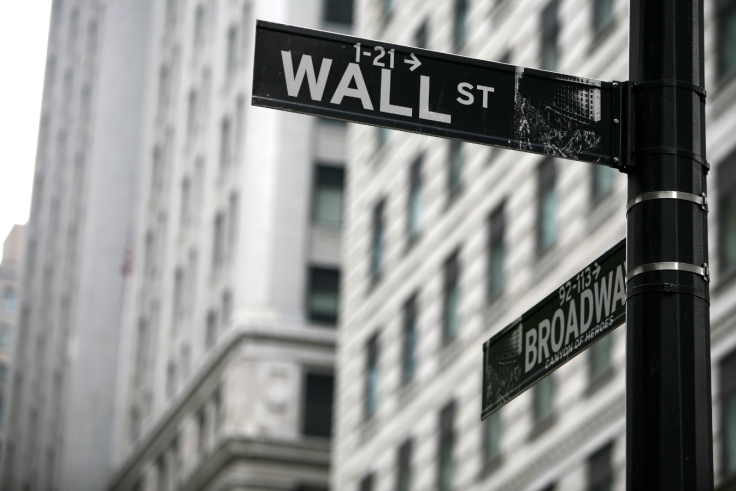
Financial traders have historically been viewed as 'adrenalin-fuelled' individuals who embrace a lavish lifestyle. However, with the development of trades made in the digital hands of computers, the most important people became those behind the algorithm: the quants. Quants are investment professionals who build complex mathematical models to predict market activity and reduce risk. Fast forward to today and quants have become the rockstars of the finance world, amassing tens of thousands of followers on X and loyal audiences across platforms.
Quant trading involves identifying and capitalising on trading opportunities using automated trading algorithms for profitable opportunities in the financial markets. AI and technology expert Rotem Farkash argues that quant trading has revolutionised financial markets. 'Several decades ago, successful firms began hiring gifted mathematicians to recognise patterns or trends in trading behaviour,' Farkash explained.
Farkash continued that 'the introduction of quantitative and algorithm-based trading revolutionised the investment industry by making markets increasingly accessible to individual investors'.
But who are these quant superstars who have transformed the trading landscape? Here are the top 3 who have shaped the landscape.
Jim Simons
No quants hall of fame is complete without Jim Simons. Jim Simons was a pioneering mathematician who revolutionised the world of investing. Through applying quantitative analysis and mathematical models to finance, he earned the nickname 'Quant King'.
Jim Simons taught at MIT and Harvard University before joining the Institute for Defense Analyses in Princeton, New Jersey. After his dismissal in 1968 over his public opposition to the Vietnam War, he quickly headed the mathematics department at Stony Brook University. In 1978, Simons left academia to start a hedge fund called Monometrics, which would become Renaissance Technologies in 1982. Unlike other investment firms, he hired mathematicians, computer scientists and physicists, which he described as the firm's 'secret sauce'. He realised that pattern recognition could be applied to trading in financial markets and developed a system with quantitative models.
Through this approach and his team, the flagship Medallion fund of Renaissance Technologies generated a staggering $100bn in trading profits over the three decades to 2018. Its 66% average annual return was remarkable. Therefore, it is not surprising that he has earned nicknames like the 'G.O.A.T' (Greatest Of All Time), as described by Clifford Asness, co-founder of hedge fund AQR.
Today quant funds hold nearly a third of the capital on Wall Street, but few have reached the success of RenTech. At heart Jim Simons was still a mathematician. He never took a single class on finance, was not interested in business, and did not start trading full time until he was 50. Proof that it is never too late to follow your passions.
Alex Gerko
A former FX quant trader for Deutsche Bank and head of FX trading of GSA capital, Alex Gerko founded algorithmic trading company XTX Markets in 2015. The Times reported Gerko, another mathematician, has hit 'rock star status', with followers describing him as a 'hero' and 'legend'.
As co-CEO of XTX, the firm has posted record profits in 2021 and became the largest emerging market FX provider in 2022. It handles $250bn worth of trades every day and is known for prioritising market data and artificial intelligence to build its trading models. Sources close to Gerko also called his team 'mega geeks, the kings of the geek world'.
Notably he was recognised as Britain's biggest taxpayer in 2022 and 2023, with estimated tax payments reaching £663m. He has also put his money towards many philanthropic ventures, such as donating £26m to seven UK universities at the end of 2025 to fund maths research, once again reinforcing this newer, intellectual image of finance.
Ken Griffin
Ken Griffin is founder and CEO of Citadel, a Miami-based hedge fund founded in 1990 that manages over $68bn in assets as of March 2026. Citadel is known for its use of quantitative analysis, data science, and high-tech modelling.
As a Harvard undergraduate, he began trading while famously convincing his dormitory to let him install a satellite dish so he could get up-to-date stock prices. The dish was installed in time for the Black Monday crash of 1987, when Griffin was already managing $265,000, leading to immense success. This attracted attention that would ultimately bankroll the launch of Citadel.
Once again, Citadel developed its prestige and profitability from hiring statisticians, physicists and mathematicians who had impressive quant skills and understood finance fast. In 2008, Citadel lost $9 billion in a single year, a loss that the firm did not recoup until 2012. This mindset to push through after a staggering blow, combined with the image of a self-taught genius who built an empire from a dorm room has garnered intense admiration in financial circles.
The rise of quants who have set up algorithmic trading hedge funds marks a profound shift in the identity of power within finance. Today it rests with those who understand maths, algorithms and machine intelligence. Figures like Jim Simons, Alex Gerko, and Ken Griffin embody this transformation, despite being outsiders to traditional finance. As a result, they have redefined its rules and reshaped its culture.
© Copyright IBTimes 2026. All rights reserved.