

'Not Poor Enough' for SNAP: Working Americans Turn to Food Banks as 4.5M Drop Off Food Aid in US
Food costs keep climbing as federal nutrition aid shrinks nationwide
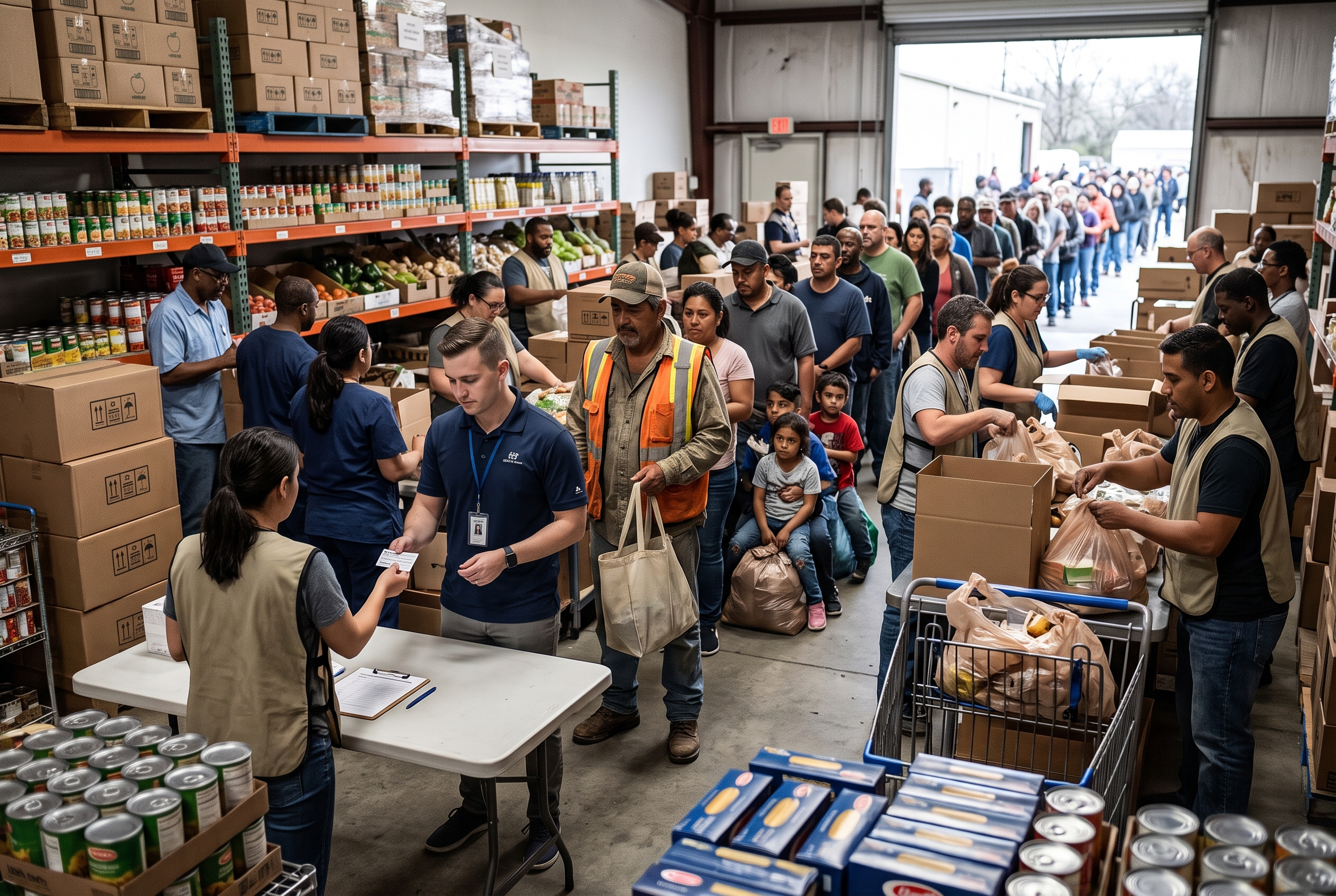
More than 4.5M people have lost federal food aid in the United States since last summer, and food banks now report a steady rise in a group they once saw far less often: working people with jobs, homes, and regular bills who still cannot cover the weekly shop.
The Center on Budget and Policy Priorities puts the fall in Supplemental Nutrition Assistance Program (SNAP) enrolment at more than 4.5M between the passage of the One Big Beautiful Bill Act in July 2025 and April 2026, based on federal and state data. It estimates that the number of children on SNAP has dropped by more than 1.5M over the same period.
The law expanded work requirements and removed exemptions that had covered groups such as military veterans and people experiencing homelessness. It also introduced financial penalties for states with high payment error rates. Those changes have moved millions off the rolls, some because they no longer qualify and others because the paperwork has become harder to clear.
Not everyone turning to a pantry has lost benefits. An employed renter who put off visiting a food pantry for months said he wasn't 'poor enough' to use one.
Food bank staff say that hesitation is common, and that more first-time visitors now arrive with payslips in hand.
Why Working Families Are Turning to Food Banks
Feeding America, the network behind hundreds of US food banks, says its members are buying record volumes of food, widening application help, and turning to farmers and retailers for extra supply.
Chief executive Denis McDonough has said the fall in SNAP enrolment does not mean fewer people need help. Many, he said, now find the benefit harder to obtain, while high grocery prices have pulled in households that never qualified for SNAP at all.
The average SNAP benefit came to about $187 (£137) per person a month in the 2024 financial year, according to the US Department of Agriculture. For a family of four, losing that support strips several hundred dollars from the monthly grocery budget, a shortfall food banks are now being asked to absorb.
The Cost Squeeze Behind the SNAP Cuts
New Mexico shows how fast demand can rise. Roadrunner Food Bank, the state's largest, told US Senator Ben Ray Luján at an 11 August roundtable that visits had climbed 79% between January 2025 and January 2026, the most recent figures available.
Katy Anderson, its vice president of strategy, partnerships, and advocacy, said the increase came both from people who had lost SNAP and from those who earn too much to qualify but cannot keep up with grocery bills.
'It's a challenging landscape for a lot of folks in New Mexico right now,' she said.
The Rio Grande Food Project, a smaller operation serving Albuquerque, logged about 5,600 visits in January 2026, up 23% on the same month a year earlier, according to executive director Ari Herring.
Grocery prices are still climbing. Food costs rose 3% nationally in July from a year earlier, the US Bureau of Labor Statistics reported, continuing an increase that began in the middle of 2024. A lost benefit and a higher till receipt tend to arrive in the same month.
Some states have moved to cover part of the gap. New Mexico's legislature set aside $8M (£5.9M) for food banks during a special session last October, money meant to offset federal cuts to schemes such as the Emergency Food Assistance Program. Luján called the funding temporary. 'It's a patch. I don't know what happens after that,' he said.
The national picture is now harder to measure. The Department of Agriculture's final annual food security report, published in December 2025, found that 47.9M people in 18.3M households had struggled to afford enough food at some point in 2024.
The agency plans to stop producing the report after three decades, leaving researchers with fewer tools to track hunger as the SNAP changes take full effect.
A further change lands in 2028. States with SNAP payment error rates of 6% or higher will then have to cover part of the benefit bill themselves, a rule that has already halved enrolment in Arizona, the sharpest fall in the country.
Feeding America and other groups are pressing Congress to push back the deadline.
© Copyright IBTimes 2026. All rights reserved.