Saquon Barkley Injury Update: Eagles Star's Shock Exit Explained After Painful Arm Stinger Against Titans
The Eagles running back was taken to the medical tent and later returned to the sideline wearing a neck roll, while his status remained questionable
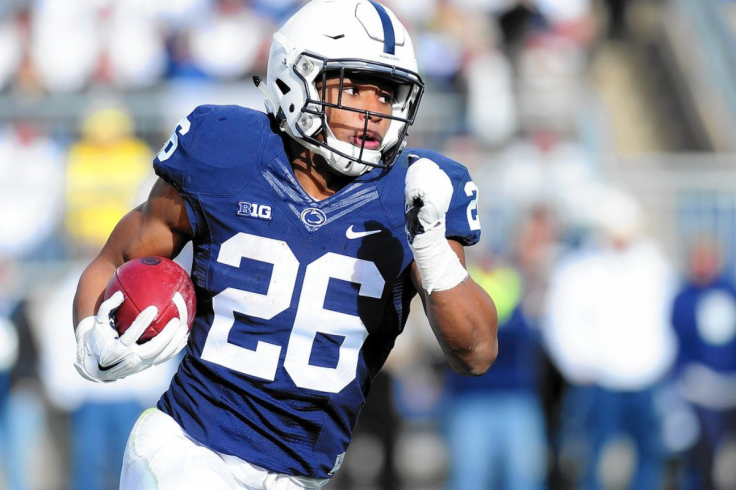
Philadelphia Eagles running back Saquon Barkley gave his team an early-season injury scare after being forced off the field just one play into Sunday's clash with the Tennessee Titans with a painful left-arm stinger.
The $40 million (£30m) star, coming off a strong Week 1 performance, clutched his left arm after a heavy collision with Titans All-Pro defensive lineman Jeffery Simmons. He was escorted into the sideline medical tent at Nissan Stadium before heading down the tunnel, raising immediate concerns over his availability.
Medical Tent Drama and Tunnel Alarm
The injury occurred on Philadelphia's first offensive snap of the game in Nashville. Barkley took a handoff from quarterback Jalen Hurts and was tackled for no gain by Simmons. The 29-year-old running back remained on the turf briefly, holding his left shoulder before heading to the bench in clear discomfort.
After an assessment in the blue medical tent, staff directed Barkley down the tunnel towards the visitors' locker room for further evaluation. The team later confirmed he had suffered a left-arm stinger and listed him as questionable to return for the rest of the game.
Barkley later returned to the Philadelphia bench wearing a neck roll, a protective collar attached to the shoulder pads that supports the neck and surrounding muscles after nerve trauma.
What Is an Arm Stinger?
A stinger, often referred to as a 'burner' in American football, occurs when nerves in the brachial plexus between the neck and shoulder are compressed or stretched during a high-impact tackle.
The injury can cause intense radiating pain, burning sensations and sudden weakness or numbness down the affected arm. While stingers can be very painful immediately after impact, they rarely result in structural bone or ligament damage if treated carefully.
Medical staff are typically cautious before allowing players to return to contact to avoid aggravating the nerve or causing longer-term strength issues.
Massive Financial Stakes and High-Flying Expectations
The incident underlined the value of the Eagles' recent investment in Barkley. When Philadelphia signed him to a contract worth up to $40 million (£30m), the deal was seen as a key move in their push for another deep play-off run.
Barkley had already started well with a strong Week 1 display against the Washington Commanders. His role in the running game, his impact on defensive fronts and his contributions as a receiving option are central to head coach Nick Sirianni's offence. His exit on the opening play disrupted that plan immediately.
Offensive Chaos and Multi-Injury Nightmare
Barkley's departure unsettled the Eagles' first drive, which still progressed 15 plays but stalled in the red zone.
On third-and-goal, Hurts threw an interception to Titans defensive back Amani Hooker, who returned the ball 92 yards to set up an early Tennessee touchdown.
Soon after, tight end Dallas Goedert suffered a knee injury and also headed to the medical tent, further reducing the options in Philadelphia's offence.
Backfield Depth Thrust Into the Spotlight
With Barkley out in the early stages, running back Tank Bigsby stepped in. He finished off an important drive with a two-yard touchdown run to level the score at 7-7.
Rookie Will Shipley was also used in change-of-pace and third-down situations. Bigsby and Shipley provided short-term cover, but the Eagles' longer-term ambitions are closely tied to Barkley's availability.
Eagles supporters and fantasy football managers will be waiting for Sirianni's post-game medical update to see whether Barkley has any ongoing nerve symptoms before next week's game.
© Copyright IBTimes 2026. All rights reserved.
- Recommended For You