

Six Flags' Month of Trouble: Fatal Goliath Fall, X2 Injury Claims, $5B Debt and Stock Slide
A fatal coaster incident, separate injury lawsuits and mounting financial pressure have put Six Flags under intense scrutiny across its US parks
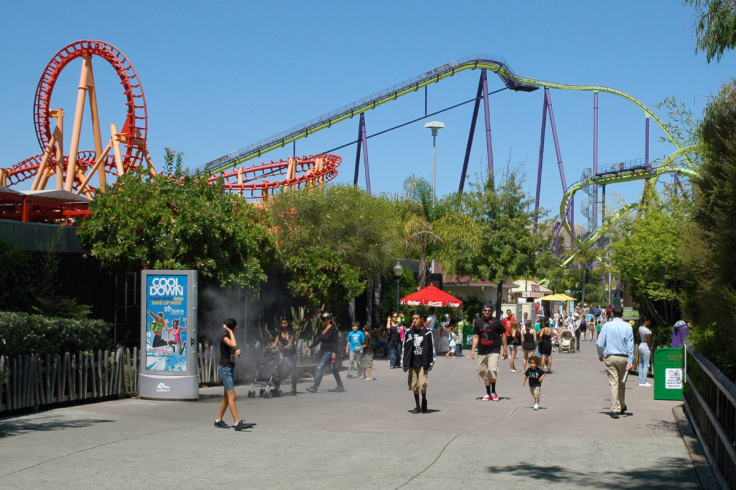
Six Flags faced intensified scrutiny in Georgia on 12 October after a man died following his ejection from the Goliath roller coaster at Six Flags Over Georgia, according to police. The incident prompted precautionary ride closures as the US amusement park operator confronted existing lawsuits, heavy borrowing and a sharp fall in its shares.
Six Flags merged with Cedar Fair in July 2024, bringing more North American amusement parks under one company. The enlarged business has since been selling or closing attractions while seeking to strengthen its financial performance.
Cobb County police identified the victim as Hassan Jihad Ibn Kariem, 42, of Atlanta. Officers responding at approximately 3.58pm found him unresponsive beneath the ride. Preliminary interviews with witnesses and employees indicated he had been ejected and struck other visitors before falling, police said.
Witnesses separately described seeing a passenger leave his seat while Goliath was operating. The attraction uses lap-bar restraints, but neither those accounts nor the police statement establishes why Kariem was ejected. Several other people were injured, although authorities have not disclosed details of their conditions.
Six Flags expressed condolences and said it was co-operating with the investigation. It temporarily closed nine other roller coasters across six parks in the United States and Canada as a precaution. Those closures do not establish that any of the attractions has a mechanical defect.
Stock Slide Deepens Pressure From $5 Billion Debt
Six Flags shares closed at $10.20 (£7.74) on 13 October, down 14.4% for the session, after falling as low as $9.80 (£7.44) during trading. The sell-off followed the fatality in Georgia, although market timing alone cannot establish why individual investors sold.
The company's difficulties predated the incident. In results published on 6 August, Six Flags reported second-quarter revenue of $864.9 million (£656.29 million), a 7% decline from a year earlier. Its net loss attributable to the company increased to $202.6 million (£153.68 million) from $99.6 million (£75.55 million).
The 2025 comparison included seven parks sold before the 2026 operating season and another property that closed after 2025. Across parks operating in both periods, revenue rose 2.4% and attendance increased 4%. On the broader reported basis, attendance fell 7% to 13.1 million visits.
The distinction matters for assessing demand at the parks Six Flags still operates. Its management pointed to stronger season-pass visitation and membership sales, even as the group reported a substantially larger net loss.
Borrowing presents another challenge. At the end of June, Six Flags reported $5 billion (£3.80 billion) in total debt and $4.9 billion (£3.72 billion) in net debt, after deducting cash. Moody's downgraded its credit ratings in November 2025, citing weak operating performance, while S&P Global Ratings lowered its rating to B+ in February 2026.
Six Flags X2 Lawsuits and Permanent Closure
Separately, three lawsuits in California allege serious brain injuries following rides on X2 at Six Flags Magic Mountain. Lawyers for the plaintiffs have said more than 100 additional people reported injuries they associate with the coaster over two years. These accounts are allegations, not court findings or a verified tally of injuries caused by the ride.
X2 reaches speeds of up to 76 mph and features seats that rotate through 360 degrees. The ride closed in July before the park announced on 29 September that it would be retired permanently.
Park president Brian Oerding said X2 had consistently passed numerous safety tests, but the park had decided to close it amid concerns about guest confidence. The decision was not an admission that a defect caused the injuries described in the lawsuits. The California Division of Occupational Safety and Health opened an investigation following the July incidents, according to the Associated Press.
Medical specialists interviewed by TIME have explained how rapid acceleration, changes in direction and rotational forces may affect the brain and blood vessels. Their comments about potential mechanisms do not establish the cause of any particular claimant's injuries.
The Georgia death and California lawsuits involve different rides and different sets of circumstances. In Georgia, police are still examining how Kariem was ejected from Goliath.
© Copyright IBTimes 2026. All rights reserved.