

'Play Tetris': Six Flags Tragedy Witness Receives Unexpected Advice to Help Prevent Traumatic Flashbacks
A witness to the fatal Six Flags roller coaster incident was advised to play Tetris to reduce traumatic flashbacks, an unusual suggestion backed by promising scientific research
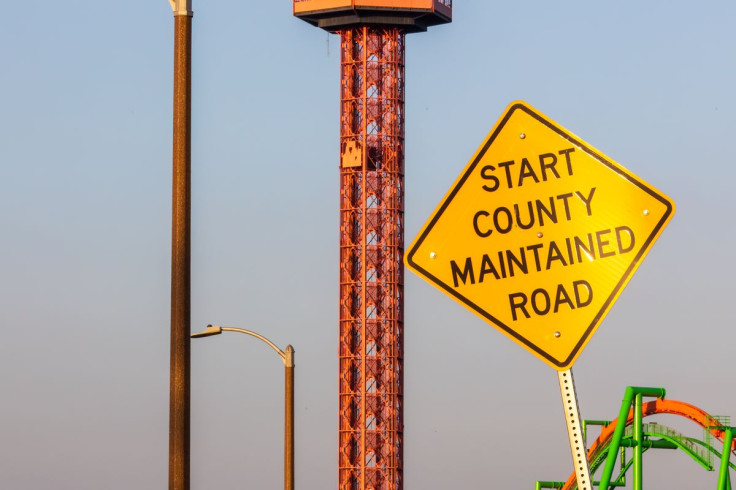
A person died and several others were injured after reportedly falling from the Goliath roller coaster at Six Flags Over Georgia, in an incident witnesses say was even captured in a souvenir ride photograph.
In the hours that followed, as one shaken onlooker wrote online that they did not think they would 'ever get that image out of my head,' an unexpected piece of advice began circulating on social media: play Tetris.
While the suggestion might sound unusual, scientific research indicates that the classic puzzle game could help reduce intrusive memories following traumatic experiences, although experts caution that it is not a proven standalone treatment for post-traumatic stress disorder (PTSD).
Six Flags Witness Says Image 'Will Stay With Them'
The advice emerged after a person claiming to have witnessed the tragedy shared their experience on Threads, describing the moment a passenger reportedly fell from the Goliath roller coaster on Monday, 12 October 2026.
'Please pray hard. I just saw a person fly out their seat while riding the Goliath at Six Flags. It was awful,' the witness wrote.
'I do not think I will ever get that image out of my head.'
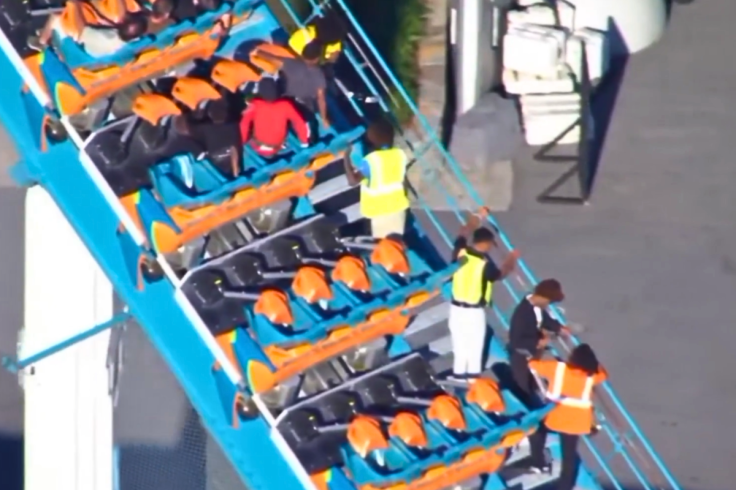
The incident left one person dead and several others injured, according to Cobb County authorities. Witnesses told local broadcaster 11Alive that the man struck parts of the roller coaster after falling from his seat.
One witness also claimed that the incident was captured in a souvenir photograph taken during the ride.
'He was in our pictures,' the witness said, adding that the man struck the ride several times before falling.
A photograph shared on social media was also described as capturing the moment the incident occurred.
Six Flags subsequently announced temporary closures of similar attractions across its parks while authorities investigated the incident.
'Play Tetris' Advice Sparks Debate Over Coping With Trauma
Responding to the witness's post, one Threads user suggested playing the popular puzzle game to help manage potentially distressing memories.
'I know this sounds odd, but you should play Tetris,' the commenter wrote, adding that research had found the game could reduce unwanted visual memories and flashbacks, particularly when played within 72 hours of a traumatic event.
Others echoed the recommendation, including a commenter identifying themselves as a therapist who also encouraged seeking professional help.
Another user claimed that playing Tetris had helped them after witnessing a dead body.
However, not everyone welcomed the suggestion. One commenter argued that the number of people recommending a video game highlighted shortcomings in access to mental healthcare.
Despite the mixed reactions, the advice is not entirely without scientific support.
Can Playing Tetris Really Reduce Traumatic Flashbacks?
A study first published online in Molecular Psychiatry in 2017 investigated whether playing Tetris could reduce intrusive memories among people who had recently experienced traumatic events.
Researchers recruited 71 patients who had been involved in or witnessed motor vehicle accidents. Participants received either a brief psychological intervention involving a trauma-memory reminder followed by approximately 20 minutes of Tetris, or a control intervention.
The results showed that participants receiving the Tetris-based intervention experienced approximately 62 per cent fewer intrusive memories during the following week.
Those in the intervention group reported an average of 8.73 intrusive memories, compared with 23.26 among participants in the control group.
The researchers suggested that engaging the brain's visual and spatial processing abilities could interfere with processes involved in forming intrusive visual memories.
However, the findings did not establish that playing Tetris alone would produce the same results, as the intervention also involved recalling aspects of the traumatic experience.
Why Timing Could Be Key After Trauma
The Threads commenter's recommendation to play Tetris within 72 hours also has a connection to scientific research.
A 2019 randomised controlled study involving 86 healthy volunteers examined whether a Tetris-based intervention could reduce intrusive memories when administered three days after participants watched distressing film footage.
The research explored whether targeting traumatic memories after their initial formation could influence how frequently unwanted images returned.
However, watching distressing footage in a controlled laboratory setting differs significantly from witnessing a real-life fatal accident.
The findings therefore do not establish a universal 72-hour deadline for preventing flashbacks or developing PTSD.
More recent research has also produced mixed results. A 2025 study published in the Journal of Traumatic Stress, involving 94 participants, examined whether repeated Tetris gameplay provided greater benefits than a single intervention.
Although participants who played Tetris once reported fewer intrusive memories than those in the control group, the differences were not statistically significant. The findings raised questions about whether playing Tetris independently, without a structured intervention, produces the same benefits observed in earlier studies.
Can Tetris Prevent PTSD?
Researchers believe Tetris may help because the game requires players to rotate, arrange and position falling blocks, engaging mental processes involved in visual and spatial memory.
These tasks may compete with the brain's ability to generate vivid, unwanted images associated with traumatic experiences.
However, reducing intrusive memories is not the same as preventing PTSD, which can involve nightmares, avoidance, heightened anxiety and other persistent symptoms.
A 2023 systematic review and meta-analysis examined research into cognitive interventions designed to reduce intrusive memories, identifying promising findings while highlighting the need for further evidence.
For people who have witnessed traumatic events, Tetris may offer a distraction or complement to other forms of support. However, persistent flashbacks or psychological distress should be assessed by a qualified mental health professional.
While research suggests that Tetris-based interventions may help reduce intrusive memories, the game is not a substitute for professional mental health care. People experiencing persistent flashbacks, nightmares or emotional distress following a traumatic event are encouraged to seek support from a qualified mental health professional.
© Copyright IBTimes 2026. All rights reserved.