

'Boost Their Own Popularity': Peter Thiel Accuses Barack Obama and Pope Leo of Exploiting AI Fears
The billionaire investor made the claims in private lectures, linking opposition to artificial intelligence with warnings about regulation, political power and the Antichrist.
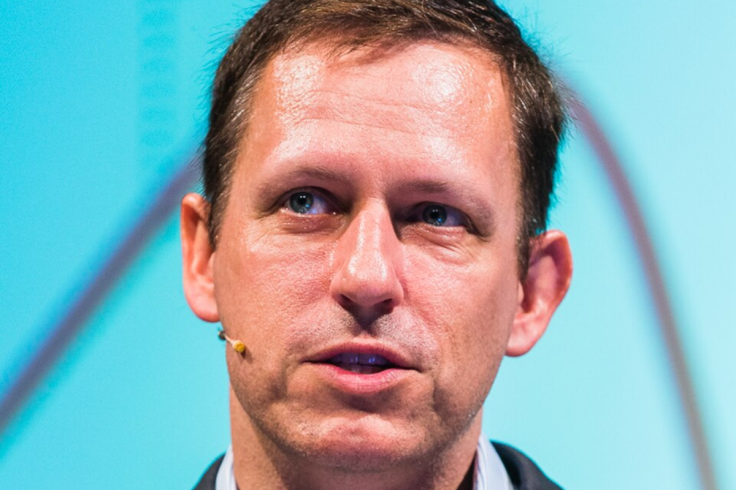
Peter Thiel has accused Barack Obama and Pope Leo XIV of capitalising on public fears about artificial intelligence (AI) to boost their own popularity, according to recordings of private lectures obtained by POLITICO. The billionaire investor made the remarks during talks in Nashville on 28 September and 5 October 2026, linking opposition to AI with his warnings about the Antichrist and the dangers of global regulation.
The comments extend Thiel's longstanding opposition to government intervention in technology into religious and political territory. They also raise questions about the relationship between the investor and Vice President JD Vance, whose entry into politics received substantial financial backing from Thiel.
Thiel Ties AI Backlash To Political Power
'Many people know that AI is politically unpopular and want to leverage that to boost their own popularity,' Thiel said, according to the recordings. 'Both Obama and the pope fall into this category. Obama knows the Democrats have no ideas, but they can at least oppose AI.'
Thiel's remarks followed Obama's September call for Democrats to develop a more comprehensive approach to AI. The former president's intervention appears to have prompted the billionaire's criticism, although the recordings do not independently establish Obama's motivations.
At the heart of Thiel's argument is a belief that political opposition to AI could restrict technological progress. He has framed the Antichrist as a figure who would halt innovation while advancing a system of global governance and regulation.
Thiel's framing casts the debate over technological control as a wider struggle over political authority and the direction of society.
However, opposition to AI regulation does not, by itself, establish that political leaders are exploiting public anxiety. Thiel's comments express his interpretation of their positions, rather than independently verified evidence of their intentions.
Thiel Says Pope Is Using AI To Deflect Scrutiny
Thiel's criticism of Pope Leo XIV was particularly pointed. He suggested that the pontiff's attention to artificial intelligence was intended to divert scrutiny from sexual abuse scandals involving the Catholic Church.
'He needed something politically popular to distract from the church's child sex abuse scandals, and he found it in AI,' Thiel said, referring to the pope's first encyclical on AI.
The material provided does not establish that the pope adopted his position on AI to distract from the Church's past scandals. The allegation should therefore remain clearly attributed to Thiel and should not be treated as a verified explanation of the pontiff's intentions.
The dispute highlights competing views about how religious institutions should respond to emerging technologies. AI raises questions about its development, oversight and effects on society, while Thiel's argument centres on the risk that regulation could become a means of restricting innovation.
His decision to invoke the Antichrist while criticising the head of the Catholic Church gives the disagreement a sharper religious dimension. It also distinguishes his intervention from the more conventional arguments against regulation voiced by some technology investors.
The Vatican's position is reflected in the encyclical cited in the supplied report. However, no response from the pope or his representatives was included in the material provided.
Political Stakes for JD Vance and the Tech Industry
Thiel's political connections give the controversy implications beyond the technology industry. He was an early supporter of President Donald Trump and a major financial backer of Vance's transition from venture capitalism into politics.
Vance's conversion to Catholicism adds another dimension to Thiel's criticism of Pope Leo XIV. The dispute could invite scrutiny of the relationship between Vance's religious identity, his political alliances and the technology industry's opposition to regulation.
That does not mean Vance endorses Thiel's remarks. The supplied material contains no direct statement from the vice president supporting the billionaire's accusations against the pope or his interpretation of the Antichrist.
Democrats have already begun criticising Vance over his connections to Thiel as political positioning for the 2028 presidential election develops. The latest comments could provide another point of contention, although their effect on Vance's political standing remains uncertain.
According to the supplied report, representatives for Thiel, Obama, Vance and the Vatican did not respond to requests for comment.
The recordings offer an insight into how Thiel connects technology policy with religious ideas and political power. Yet the central dispute remains one of interpretation. Whether AI regulation threatens innovation is a matter of policy debate, while claims that public figures are exploiting those fears require evidence of their motives beyond the accusations themselves.
© Copyright IBTimes 2026. All rights reserved.