

Ilhan Omar Gets One Thing Trump Was Denied During His Criminal Cases, Todd Blanche Reveals
Todd Blanche contrasts Ilhan Omar's freedom to discuss her investigation with Trump's past gag orders
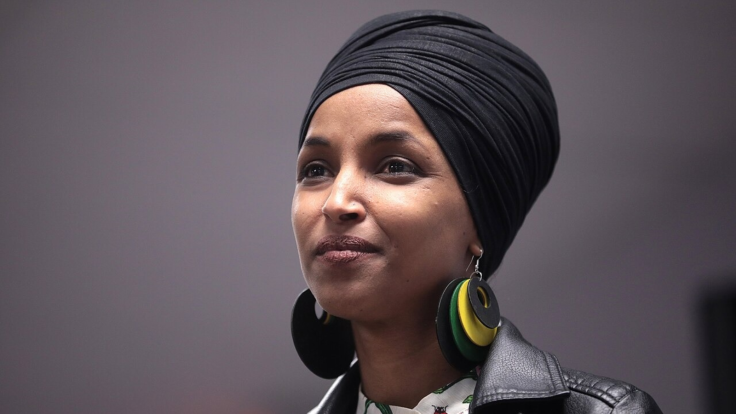
US Attorney General Todd Blanche has drawn a comparison between the restrictions President Donald Trump faced during his criminal proceedings and Democratic Representative Ilhan Omar's freedom to speak publicly about an ongoing federal investigation involving her. The remarks come amid renewed tensions between the two politicians following a federal search of Omar's Washington, DC home and her allegations that the Trump administration is using law enforcement to target political opponents.
Blanche, who previously represented Trump as his personal lawyer, said the administration was not seeking to restrict Omar's public comments about the investigation. His remarks revisit the gag orders imposed on Trump during earlier legal proceedings and the extent to which politicians should be able to discuss cases involving them.
Why Todd Blanche Says Ilhan Omar Can Speak Freely About Her Investigation
Speaking to Miranda Devine on the Pod Force One podcast, in an interview recorded on 14 October and published on 21 October, Blanche contrasted Omar's ability to comment publicly on the investigation with restrictions Trump faced during several legal battles. He declined to discuss the specifics of the inquiry involving the Minnesota Democrat but rejected suggestions that the Justice Department was attempting to silence her.
'To the extent that [Omar's] commented on it, one of the things that she said is that we're not going to keep her quiet, right? We're not trying to keep her quiet,' Blanche told Devine.
'There's no effort by the Department of Justice, unlike the last Department of Justice that worked very hard to keep President Trump quiet by getting gag orders and the like – that's not what we're doing,' he added.
Blanche also accused Democrats of 'gaslighting the American people' by claiming Trump was weaponising the Justice Department against Omar. His argument rests on the contrast between the restrictions Trump faced in court and the administration's stated position that Omar is free to speak publicly about the investigation.
In the classified documents case, by contrast, prosecutors sought restrictions on Trump's public statements, but the judge rejected the request. The cases therefore involved different circumstances, and it would be misleading to suggest that every restriction sought by prosecutors was granted.
What Trump's Gag Orders Covered
The comparison centres on court-imposed restrictions that limited Trump's public statements during some of his legal cases. The distinction requires context, because judges imposed the gag orders, not the Biden administration directly.
In the federal election interference case in Washington, DC, a judge imposed a limited order restricting Trump's comments about certain people involved in the proceedings.
Similar restrictions were imposed in his New York criminal hush-money case and civil fraud proceedings. Those cases were brought by the Manhattan district attorney and the New York attorney general, not the Justice Department.
In the classified documents case, by contrast, prosecutors sought restrictions on Trump's public statements, but the judge rejected the request. It would therefore be misleading to suggest that every restriction sought by prosecutors was granted.
Omar Accuses Trump of Targeting Political Opponents
On 12 October 2026, federal agents searched Omar's Washington, DC, home under a judicially authorised warrant as part of an ongoing federal investigation. Reports have linked the inquiry to allegations concerning her immigration and naturalisation paperwork. However, the allegations remain unproven, Omar has not been charged, and the search itself does not establish that she committed wrongdoing.
Omar responded the same day on X (formerly Twitter), saying she was safe but describing the search as 'an attempt to target political enemies and weaponize federal law enforcement'. 'For ten years, Trump has targeted me with baseless lies and smear campaigns,' she wrote. 'This is just the latest escalation in his campaign of political intimidation.' She concluded: 'I will not be silenced.'
The latest developments have brought their longstanding feud back into focus, with Omar alleging political retaliation and the administration maintaining that the investigation is a law enforcement matter.
Trump and Omar's Hostility Over the Years
The latest dispute follows years of public hostility between Trump and Omar, whose political differences became especially prominent during Trump's first presidency. In July 2019, Trump targeted Omar and three other progressive Democratic congresswomen, telling them to return to the countries they came from, despite three of the four being born in the United States.
The comments prompted widespread condemnation, with critics accusing Trump of using racist and xenophobic rhetoric. At a rally in North Carolina that month, the crowd chanted 'Send her back' as Trump continued criticising Omar, further escalating their confrontation.
Omar, who was born in Somalia and became a naturalised US citizen in 2000, has repeatedly challenged Trump's rhetoric and policies. She has also faced criticism over past comments about Israel and allegations concerning her immigration history, which she has denied. In 2019, Trump urged her to resign from Congress and called her apology over her comments on Israel 'lame'.
© Copyright IBTimes 2026. All rights reserved.