

Trump Accused Of 'Low Energy' In PA Rally: Strategist Calls President 'Fading'
GOP strategist says Donald Trump is 'fading' after a 'low-energy' rally in Pennsylvania, raising concerns for the 2026 midterms.
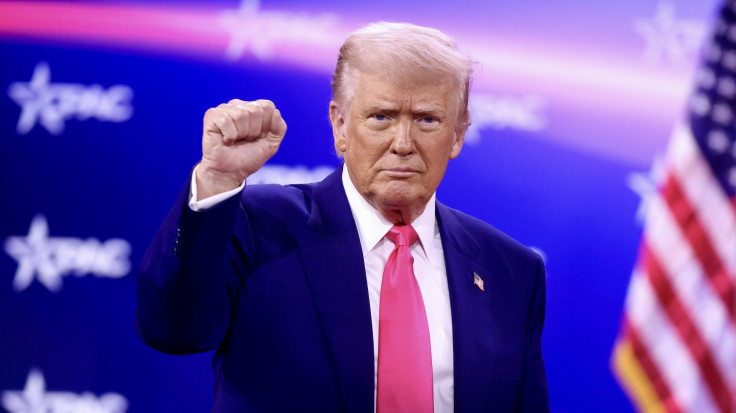
For a politician who built his brand on relentless, maximalist energy, the accusation is the ultimate political poison: 'low energy.' It was a term Donald Trump famously weaponised against his rivals, most notably former primary rival Jeb Bush, whom he relentlessly mocked as 'Low Energy Jeb'; now, it is being flung directly back at him.
Just weeks after securing his victory over Democrat Kamala Harris in the 2024 election, the President has hit the campaign trail for a series of barnstorming rallies, only for the move to reportedly backfire dramatically within his own Republican circles.
The immediate fallout surrounds his 90-minute speech in Mount Pocono, Pennsylvania, on Tuesday, December 9. The event, held at the Mount Airy Casino Resort, was billed by the White House as a necessary, post-election reset, focusing specifically on the punishing affordability crisis plaguing working families and whipping up enthusiasm for the crucial 2026 midterms. What was delivered, according to one of the GOP's most respected veterans, was a meandering, unfocused ramble that exposed a concerning lack of stamina.

Donald Trump's Campaign Juggernaut Stalls Amid Whispers of 'Fading'
The damning critique came from , a former top Republican strategist who has advised high-profile figures including John McCain, Mitt Romney, Jeb Bush, and Arnold Schwarzenegger. Murphy, who co-hosts the popular Hacks on Tap podcast, took to X on Wednesday, December 10, to confirm what he suggested was an anticipated decline in the President's signature vigour.
'A few hours after we discussed on @HacksOnTap why Trump has cut back rallies so much, it was pretty evident at his event today in PA just why,' Murphy wrote. He went on to offer an unsparing assessment of the event's quality, despite the presence of a packed, loyal crowd.
The speech was, in Murphy's view, 'Meandering, more confusion, and mental weakness than usual. Even a bit, shall we say, low-energy. Weaker optics, too. He's clearing [sic] fading'.
The use of 'low-energy' is particularly cutting, resurrecting a taunt Trump made famous, yet the surrounding commentary—focusing on 'confusion' and 'mental weakness'—strikes at a deeper narrative that has dogged the 79-year-old President throughout his tenure.
For a politician who thrives on projecting indomitable strength, the notion that his campaign juggernaut is running on fumes presents a serious threat to the carefully curated image of Republican dominance.
The failure to stick to the script—a core focus on the affordability crisis—further suggests a lack of discipline that could prove costly as the party looks ahead to the next election cycle. Indeed, reports indicate that Trump ultimately dismissed the cost of living issue the White House intended to focus on, claiming the affordability crisis was a 'hoax' manufactured by the Democrats during the rambling address.
The Strategic Gamble: Why Donald Trump is Dragged Back to the Hustings
The question remains: why is a newly re-elected president already back on the road in the deepest, coldest part of the US winter? The answer lies not with Mr Trump himself, but with the high-stakes 2026 midterms and the strategic direction of his Chief of Staff, Susie Wiles.
Wiles, the 68-year-old political operative and the force behind Mr Trump's campaign success, is determined to ensure the President remains front and centre in voters' minds. She understands that while the typical party infrastructure drives traditional turnout, the specific, lower-propensity voters who form the core of the Trump base need a personal call to action.
'This is being covered, like, all over the world, this is crazy, because I haven't made a speech in a little while', the President told his rallygoers, acknowledging the highly unusual nature of his immediate return to campaign-style events. He then offered a revealing admission of his own preference, referring to his November 2024 victory: 'You know, when you win, you say, I can now rest'.

But resting is clearly not an option if the GOP is to maintain control of Congress in 2026. Wiles's marching orders for Trump are clear: prioritise the economy and drive turnout.
Her pragmatic, data-driven approach places the President at the heart of the party's long-term success. She explained the strategy simply: 'We plan to put him on the ballot because so many of those low-propensity voters are Donald Trump voters.'
Despite the White House's best efforts to dictate a consistent, economic message, the Pennsylvania speech quickly drifted into familiar territory—a characteristic that fuelled Murphy's scathing assessment.
As Trump continues his roadshow, the debate inside the Republican tent is no longer about his electoral effectiveness, but whether the 'low-energy' label—a charge he once delighted in applying to others—will finally stick to him. The outcome of the 2026 midterms may ultimately depend on the answer.
The spectacle of Donald Trump's post-victory roadshow has inadvertently raised a critical question for the Republican Party: is their champion 'fading'?
While Chief of Staff Susie Wiles is banking on the President's mere presence to turn out low-propensity voters and deliver a win in the 2026 midterms, the internal murmurs from strategists like Mike Murphy suggest a core problem with the message and the messenger's stamina. This low-energy performance, contrasting sharply with his carefully crafted image, presents a clear vulnerability.
© Copyright IBTimes 2026. All rights reserved.