

Trump Moves To Limit Public Input on Data Centres as Critics Warn Communities Could Lose Their Voice
Trump defends data centres as an EPA proposal to ease public participation rules faces criticism from communities and environmental groups
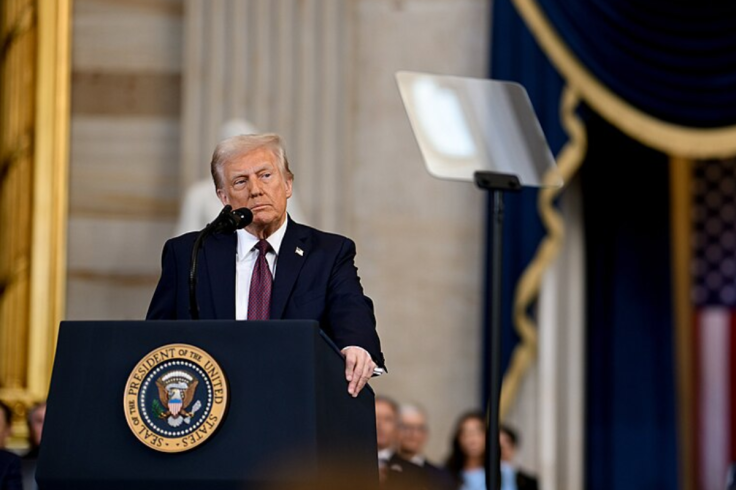
President Donald Trump is backing a push to make it easier to build data centres across the US, as his administration moves to remove federal minimum requirements for public participation in certain air pollution permits.
The Environmental Protection Agency proposed the change in July, and Trump has since intensified his criticism of communities opposing data centres, warning on social media that rejecting them could leave America 'backwards and poor'.
The proposal does not directly ban residents from speaking about data centre projects. Instead, it would give state and local air agencies greater discretion over whether the public is notified about certain permits, when they are notified and how long they have to respond.
If adopted, the federal government would no longer require a minimum level of public participation for permits covering 'minor' sources of air pollution.
The rule is aimed at the permitting system under the Clean Air Act, rather than data centre construction as a whole. But data centres increasingly rely on diesel generators and natural gas turbines for electricity, meaning some projects can fall within the category covered by the proposal.
Data Centre Push Puts Public Input Under Pressure
The EPA says its proposal is intended to cut unnecessary delays rather than silence communities. Administrator Lee Zeldin said state and local authorities 'closest to the issues and the public' should have greater control over permitting decisions.
The agency also argues that minor sources generally have lower emissions and limited environmental effects compared with major sources. It says the proposal would not change existing emissions standards or remove other environmental protections.
Critics see a different risk. If public participation becomes optional, they argue, communities could lose an important opportunity to find out about pollution-producing equipment planned near their homes before permits are issued.
The Environmental Protection Network, a group made up of former EPA employees, warned in August that the proposal could leave communities unaware of major industrial developments, including fossil-fuel-powered facilities built to supply rapidly expanding AI data centres.
Nearly 200 organisations also urged the EPA to withdraw the proposal, according to recent reporting.
The timing is significant because opposition to data centres has been spreading well beyond traditional environmental groups.
Residents have raised concerns about electricity demand, water consumption, noise and the potential effect on household utility bills. In Pennsylvania, Republican and Democratic officials have faced pressure over large projects, while Governor Josh Shapiro recently introduced requirements for greater community engagement and transparency around new data centre developments.
Trump Defends Data Centres as Backlash Grows
Trump has made clear where he stands. In a recent post, he argued that communities should welcome data centres because they can bring jobs, economic growth and lower taxes.
'The only reason that communities throughout the U.S.A. should not want Data Centers is if they want to end up being backwards and poor,' Trump wrote. He added that if the US 'kill[s] the Golden Goose', China would benefit.
Trump orders Americans to stop complaining about data centers disrupting their communities in new post:
— Headquarters (@HQNewsNow) August 31, 2026
“The only reason that communities throughout the U.S.A. should not want Data Centers is if they want to end up being backwards and poor.” pic.twitter.com/jeGajPSZoq
The comments came as opposition to data centre expansion was becoming an increasingly visible political issue. Sources reported that Trump has been defending the industry amid bipartisan resistance, with some Republicans also questioning the impact of large projects on electricity prices and local communities.
The administration's policy has consistently favoured faster data centre construction. In 2025, Trump signed an executive order aimed at accelerating federal permitting for data centre infrastructure.
This year, the EPA has also issued guidance intended to give developers greater flexibility in building power facilities for data centres.
At the same time, the political argument is becoming harder to dismiss as a simple fight between technology enthusiasts and environmental activists.
Texas has now frozen new data centre grid connections amid concerns over enormous and potentially speculative electricity demand, while Pennsylvania has imposed additional requirements on developers. Reuters reported on 1 September that data centre power requests across parts of the US exceed 700 gigawatts, far above projected actual use.
The EPA's proposal has already gone through its public comment period, which closed on 21 August after the agency initially proposed the rule in July. It has not yet become final.
Communities may still have opportunities to challenge projects under state and local rules, but under the proposed federal framework, whether residents receive a formal public hearing or comment period could increasingly depend on the authorities handling each permit.
© Copyright IBTimes 2026. All rights reserved.