

Donald Trump Blocks Fort Hood Execution Stream as Millions 'Would Rather Not Watch Him Die' Online
The former Army major is scheduled to be executed at Fort Hood on 3 December 2026, but the public will not be able to watch online
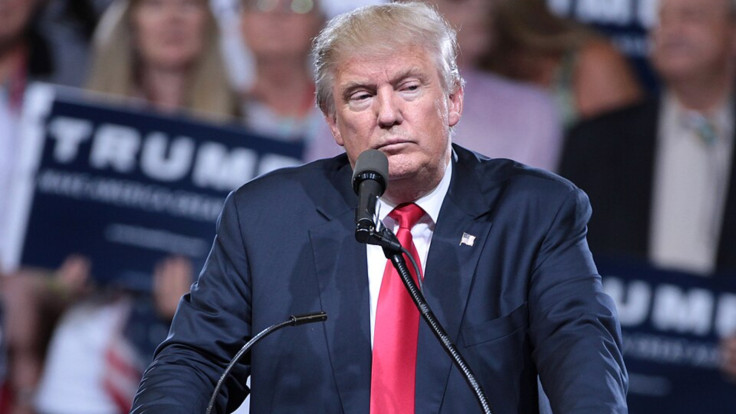
US President Donald Trump has cancelled plans to livestream the scheduled execution of Nidal Malik Hasan, reversing a proposal backed by Defence Secretary Pete Hegseth.
The execution of the former Army major remains scheduled for 3 December 2026 at Fort Hood, Texas.
Trump's decision means the public will not be able to watch the planned firing squad execution online. The announcement followed criticism of the proposed broadcast from lawmakers and other public figures.
Vice-President JD Vance had expressed doubts about the plan, while House Speaker Mike Johnson raised concerns about the potential use of execution footage by terrorist groups.
The controversy centred on whether broadcasting an execution would deter violence or turn a punishment into a public spectacle.
Hasan was convicted by a military court in 2013 over the November 2009 shooting at Fort Hood. The attack killed 13 people and left others injured. The court-martial found Hasan guilty of 13 counts of premeditated murder and 32 counts of attempted premeditated murder.
The US Army announced on 7 October 2026 that Hasan's execution had been scheduled for 3 December at Fort Hood. The announcement followed President Trump's approval of the death sentence on 2 October. The Army said the execution would take place by firing squad at 1p.m. Central Standard Time.
NBC News reported that the president's decision followed discussions within his administration. The report cited unnamed US and White House officials who described the planning process and Trump's changing position.
Trump Explains Why the Fort Hood Execution Will Not Be Streamed
Trump announced the reversal in a Truth Social post on Thursday, 15 October. He acknowledged the argument that a livestream might deter terrorism but also recognised that some people would not want to watch an execution.
'I think streaming the execution for all to see might have been a strong deterrent for the World to witness how America deals with Terrorists and SCUM like Hasan but, many very good and well meaning people would rather not watch him die, through streaming, or through any other visual device.'
He then confirmed that the scheduled execution would not be broadcast. 'He will die, as scheduled, by firing squad, but this event will not be streamed,' Trump wrote.
The decision reverses an idea Hegseth publicly promoted the previous week. Hegseth had said that people would be able to watch Hasan's execution. The proposal drew objections from people concerned about the consequences of turning a state execution into a widely accessible online event.
Trump's statement also said that immediate family members of the victims could attend the execution in person if they wished. The cancellation therefore concerns the public livestream, rather than an announced change to the execution date or method.
NBC News reported that an unnamed White House official said Trump's understanding of Hasan's paralysis contributed to his decision. The report also cited an unnamed US official who described the initial support for the broadcast and the administration's subsequent change of direction.
Lawmakers Raised Concerns About the Execution Livestream
Vance publicly questioned whether the broadcast would proceed after the plan was announced. He said, 'I don't know that's going to happen,' and added that he would not watch if it did. His comments signalled uncertainty within the administration before Trump's formal announcement.
Johnson also expressed concern about the proposal. In an interview with CBS News, the House speaker warned that footage of the execution could be used by future terrorists as a recruitment tool. He said policymakers needed to consider the broader consequences before deciding whether the public should be allowed to watch.
The objections reflected concerns about the purpose and potential effects of a livestream. Supporters of the original proposal argued that showing the execution could demonstrate the consequences of terrorism. Critics questioned whether the broadcast would achieve that aim or instead provide propaganda material and turn a military procedure into a spectacle.
The case also carries historical significance. The US military last carried out an execution in 1961, when Army Private John A. Bennett was hanged at Fort Leavenworth, Kansas. Bennett had been convicted of rape and attempted murder.
The last US military execution by firing squad was that of Army Private Eddie Slovik in 1945. Slovik was executed after being convicted of desertion during the Second World War. Hasan's scheduled execution would therefore mark a rare return to a method not used by the military for more than eight decades.
For now, the Army's announced date remains 3 December 2026. Trump's reversal has removed the planned public livestream, while leaving the scheduled execution by firing squad unchanged. The distinction matters: the decision addresses how the execution may be viewed, not whether the sentence has been formally cancelled.
© Copyright IBTimes 2026. All rights reserved.